
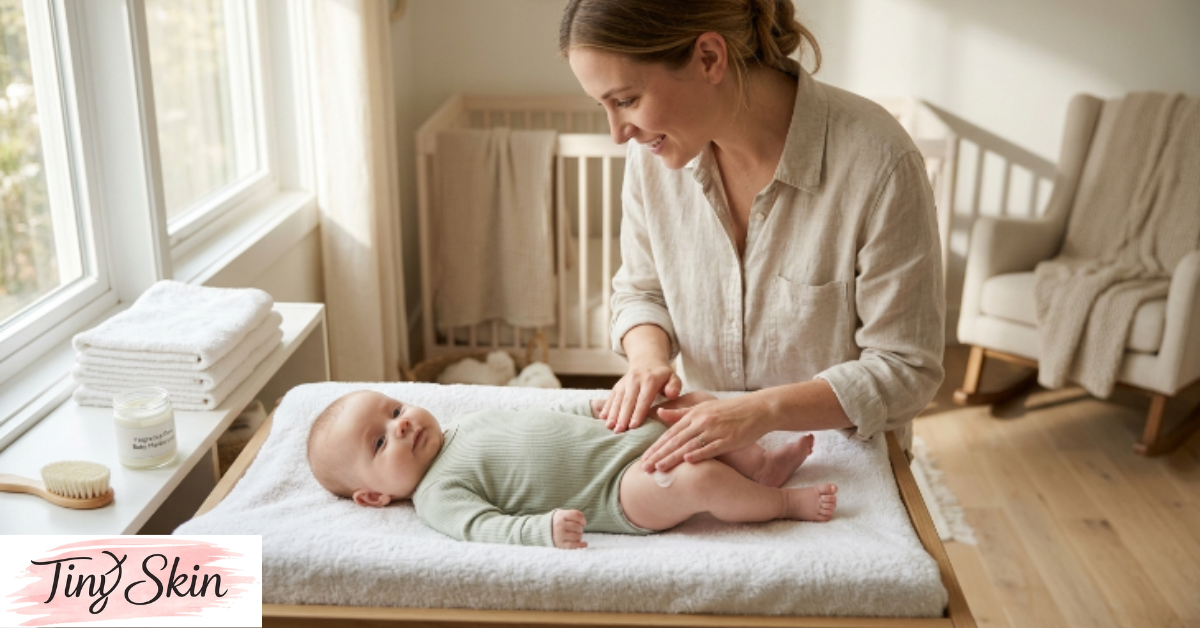

It’s 11 p.m. and you’re staring at a red, blotchy patch on your baby’s cheek or thigh, phone in hand, typing the same question a thousand parents have typed before you. Is this an allergy? Did I do something wrong? Should I be worried right now?
Take a breath. You’re not alone, and this is one of the most common skin issues parents deal with in the first year. Most cases of baby contact dermatitis look scarier than they actually are, and the vast majority clear up with a few simple changes at home. This guide walks you through exactly what’s going on, what to do tonight, and when it’s actually time to call the pediatrician.
Quick Answer: Baby contact dermatitis is skin irritation caused by direct contact with something — like fabric, soap, saliva, or a new lotion. It usually shows up as red, dry, or slightly bumpy patches. Most cases improve within a few days once the trigger is removed and the skin is kept moisturized and protected.
Understanding Baby Contact Dermatitis
What’s Actually Happening on Your Baby’s Skin
A baby’s skin barrier — the outer layer that locks in moisture and keeps irritants out — is thinner and less developed than an adult’s. It simply hasn’t finished building its defenses yet. That makes it far more reactive to things that wouldn’t bother older kids or adults at all.
Think of your baby’s skin like a house with the paint not fully dried. Anything that touches it — a new detergent, a rough tag, drool pooling on the chin — can leave a mark much more easily than it would on a fully “sealed” surface.
Irritant vs. Allergic Contact Dermatitis
There are actually two types, and knowing the difference matters:
- Irritant contact dermatitis happens when something physically irritates the skin (think: friction, moisture, harsh soap). This is the more common type in babies.
- Allergic contact dermatitis happens when the immune system reacts to a specific substance, like a fragrance or a fabric dye. This type tends to develop over repeated exposures, not instantly.
Both look similar on the surface, but irritant dermatitis usually resolves faster once you remove the cause.
Common Causes and Recognizing the Signs
What Usually Triggers It
Babies come into contact with dozens of new substances every single day, and any of them can be the culprit. The most common triggers dermatologists see include:
- Saliva and drool pooling around the mouth, chin, or neck folds
- Fragranced baby wipes, soaps, or lotions
- New laundry detergent or fabric softener
- Diapers, especially if left on too long or if the brand doesn’t suit your baby’s skin
- Rough fabric tags, wool, or synthetic materials
- Sunscreen or bug spray with added fragrance or alcohol
- Certain foods touching the skin, like citrus or tomato during feeding
What the Rash Actually Looks Like
Contact dermatitis in babies tends to show up as:
- Red or pink patches, sometimes with a slightly raised texture
- Dry, flaky, or rough-feeling skin
- Mild swelling in the affected area
- Occasional small bumps or blisters in more irritated spots
- A rash that’s localized to wherever the trigger touched the skin, not spread all over the body
That last point is actually one of the biggest clues. If the rash follows a clear pattern — like a ring around the mouth from drool, or a line where a diaper elastic sits — that’s a strong sign it’s contact-related, not something internal like a food allergy or viral rash.
Step-by-Step Solution: How to Treat It at Home
Step 1: Identify and Remove the Trigger
Think back over the last 24 to 48 hours. Did you try a new wipe brand? Switch detergents? Introduce a new food your baby’s face touched? Why this works: contact dermatitis is, by definition, caused by direct contact — so removing the source is often the single most effective step you can take.
Practical tip: Keep a simple note on your phone every time you introduce a new product. It makes tracing the trigger back so much easier the next time a rash shows up.
Step 2: Cleanse Gently, Not Aggressively
Wash the area with lukewarm water and, if needed, a fragrance-free, gentle cleanser. Avoid scrubbing — pat, don’t rub. Why this works: harsh cleansing strips the skin’s natural oils, which are already limited in babies, making irritation worse.
Practical tip: For drool rash, gently pat the chin and neck dry every few hours instead of letting saliva sit on the skin.
Step 3: Moisturize Generously and Often
Apply a thick, fragrance-free moisturizer or a basic barrier ointment (like one containing petrolatum or zinc oxide) two to three times a day. Why this works: a strong moisture barrier helps the skin heal itself and blocks further irritants from getting in.
Practical tip: Apply moisturizer right after a bath while the skin is still slightly damp — it locks in more hydration.
Step 4: Protect the Area From Repeat Contact
If it’s a diaper rash situation, let your baby have some diaper-free time on a towel. If it’s around the mouth, a thin layer of a protective balm before meals can help. Why this works: reducing repeated friction or moisture exposure gives inflamed skin the chance to actually calm down.
Practical tip: Change diapers more frequently than usual during a flare — even 20 minutes of extra wet time can slow healing.
Step 5: Dress Your Baby in Soft, Breathable Fabrics
Stick to 100% cotton clothing and cut out or cover scratchy tags. Why this works: synthetic fabrics trap heat and moisture against the skin, both of which worsen irritation.
Practical tip: Turn clothes inside out if a tag can’t be removed — it’s a two-second fix that makes a real difference.
How to Choose the Right Ingredients for Sensitive Baby Skin
Ingredients to Look For
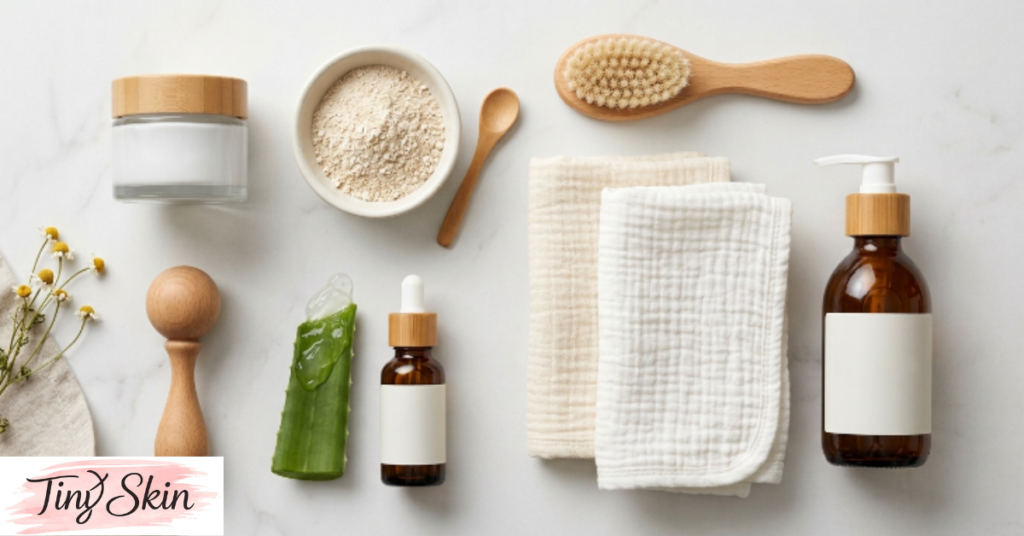
- Fragrance-free formulas (not just “unscented,” which can still contain masking fragrance)
- Petrolatum or zinc oxide for barrier repair
- Ceramides, which help rebuild the skin’s natural barrier
- Oat extract (colloidal oatmeal), known for calming irritated skin
- Hypoallergenic labeling, ideally dermatologist-tested for infants
Ingredients to Avoid
- Added fragrance or perfume, one of the most common triggers for babies
- Alcohol-based products, which can dry out already-compromised skin
- Dyes, especially in wipes and detergents
- Essential oils, even “natural” ones can be surprisingly irritating to infant skin
- Sulfates in cleansers, which can strip protective oils
Keep things simple. When it comes to baby skin, fewer ingredients almost always means fewer chances for a reaction.
Common Mistakes Parents (Unknowingly) Make
Switching products too often. Trying a new cream every day to “fix” the rash actually introduces new potential irritants before the skin has time to recover.
Over-bathing. Bathing too frequently, especially with bubble baths or scented soaps, strips natural oils and can prolong irritation.
Using thick makeup-style concealers or heavy creams “just in case.” More product isn’t always better — overloading irritated skin can trap heat and worsen inflammation.
Ignoring the diaper area during a facial rash (or vice versa). Contact dermatitis can pop up in more than one spot at once if the trigger is something like a new detergent used on all their clothes.
Waiting too long to simplify the routine. Priya, a first-time mom, noticed a rough red patch on her son’s chin that she assumed was “just drool rash” for two weeks. Once she switched to a fragrance-free wipe and started applying a barrier balm before meals, it cleared up in four days. Sometimes the fix really is that simple — the hard part is spotting the trigger early.
When to See a Doctor: Red Flags
Most contact dermatitis clears up at home within a few days to a week. But you should contact a pediatrician or dermatologist if you notice any of the following:
- The rash spreads rapidly or covers a large portion of the body
- You see oozing, pus, or a yellow crust, which can signal infection
- Your baby has a fever along with the rash
- The area becomes increasingly swollen, hot to the touch, or very painful
- Blisters form, especially large or fluid-filled ones
- The rash doesn’t improve after a week of consistent home care
- Your baby seems unusually fussy, isn’t feeding well, or seems unwell overall
Trust your instincts here. You know your baby better than any article ever could, and there’s no harm in getting a professional opinion if something feels off.
This article is for informational purposes only; always consult a dermatologist or doctor for personalized advice.
Frequently Asked Questions
How long does baby contact dermatitis usually last?
Most cases improve within three to seven days once the irritant is removed and the skin is kept moisturized. If it lingers beyond a week despite consistent care, it’s worth checking in with a doctor.
Is baby contact dermatitis contagious?
No, contact dermatitis is not contagious. It’s a reaction to something touching the skin, not an infection that can spread to others, though a secondary skin infection, if one develops, would need separate treatment.
How is contact dermatitis different from eczema?
Eczema tends to be a chronic, recurring condition often linked to genetics and immune response, while contact dermatitis is typically triggered by a specific external substance. That said, babies with eczema often have more reactive skin overall and may develop contact dermatitis more easily.
Can I use regular baby lotion on a dermatitis flare?
It depends on the lotion. Fragrance-free, simple formulas are usually fine, but scented or ingredient-heavy lotions can actually make irritation worse. When in doubt, stick to a bare-bones, dermatologist-tested option.
What home remedies actually help?
Gentle cleansing, frequent moisturizing with a fragrance-free barrier cream, and removing the trigger are the most consistently helpful steps. Avoid home remedies involving essential oils or unproven ingredients, as they can add irritation rather than reduce it.
Should I stop using diapers or clothing that seems to cause the rash?
Yes, if you notice a clear pattern between a specific product and the rash location, it’s worth switching brands or materials, at least temporarily, to see if symptoms improve.
The Bottom Line
Baby contact dermatitis looks alarming, but it’s usually just your baby’s sensitive skin reacting to something it touched, and it’s almost always manageable at home. The key takeaway: identify the trigger, simplify the skincare routine, and give the skin time and moisture to heal.
You’re doing a good job, even at 11 p.m. with a search bar open and a worried heart. If the rash follows the red flags above, don’t hesitate to reach out to your pediatrician. Otherwise, keep it simple, stay consistent, and your little one’s skin should be back to normal soon. Feel free to bookmark this guide for the next skin surprise — because with babies, there’s always another one coming.

