
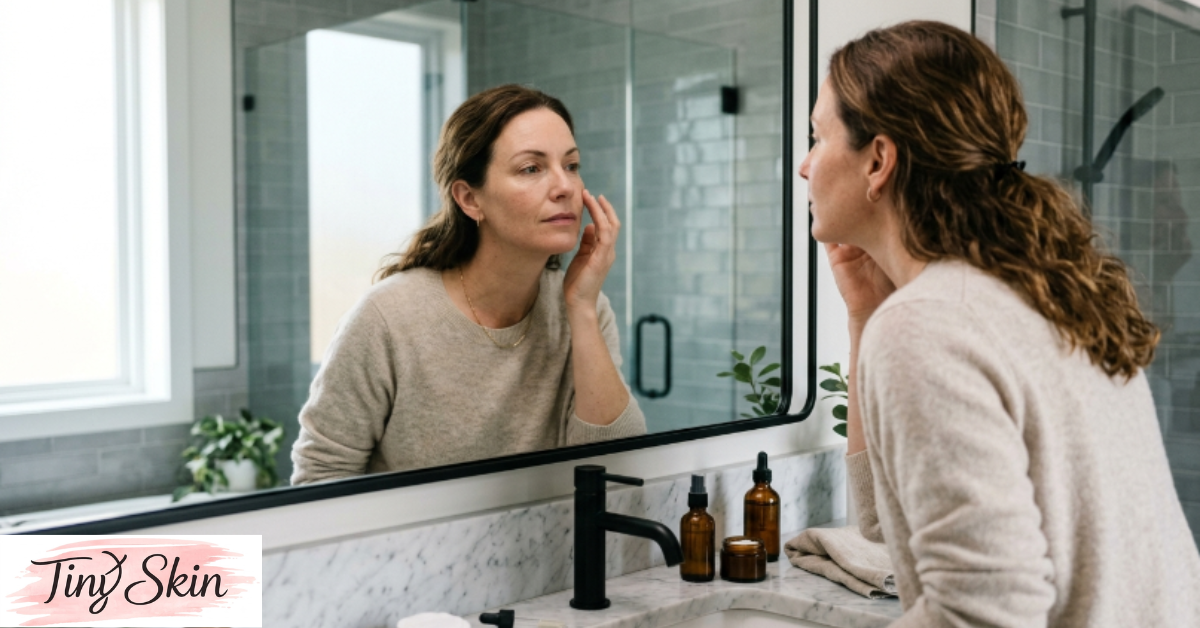

ANSWER: Ozempic face looks like sagging, hollow, or deflated skin on the cheeks, temples, and jawline caused by rapid fat loss. Common signs include sunken cheeks, loose jowls, deeper nasolabial folds, and a tired or aged appearance, even though the weight loss itself is healthy.
If you’ve lost weight quickly on a GLP-1 medication and suddenly feel like your face looks older, tired, or somehow “different,” you’re not imagining it. So many people ask the same thing once the scale starts moving: what does Ozempic face look like, and why is it happening to me? The short answer is that rapid fat loss in the face can leave skin looking loose, hollow, and less supported than before. It’s a real, well-documented side effect of fast weight loss, not a sign that something is wrong with you.
This guide breaks down exactly what Ozempic face looks like, why it happens, and what you can actually do about it, without fear-mongering and without fake promises.
Why Ozempic Face Happens: The Science Behind It
Ozempic, along with other GLP-1 medications like Wegovy and Mounjaro, works by slowing digestion and reducing appetite. This leads to steady, often significant, fat loss across the whole body, including the face.
Here’s the part most people don’t expect: your face has fat pads that give it structure. These small pockets of fat sit under the skin in the cheeks, temples, and around the jaw. They act like natural cushioning, keeping skin looking smooth, full, and youthful.
When you lose weight quickly, those fat pads shrink too. But skin doesn’t always shrink at the same pace. This mismatch is what creates the “deflated” appearance people describe when searching for what Ozempic face looks like.
The Role of Collagen and Elastin
Skin’s firmness depends on collagen and elastin, two proteins that keep it bouncy and tight. Collagen production naturally slows with age, which is why Ozempic face tends to be more noticeable in people over 40.
If collagen levels are already declining, the skin has less ability to “snap back” after fat loss. That’s why two people can lose the same amount of weight, and one might see minimal facial changes while the other notices sagging much more.
Why Speed of Weight Loss Matters
Slow, gradual weight loss usually gives skin more time to adjust. Rapid loss, which is common with GLP-1 medications, doesn’t give skin that same adjustment window. This is one of the main reasons Ozempic face has become such a widely searched topic.
What Ozempic Face Actually Looks Like: Step-by-Step Signs to Check
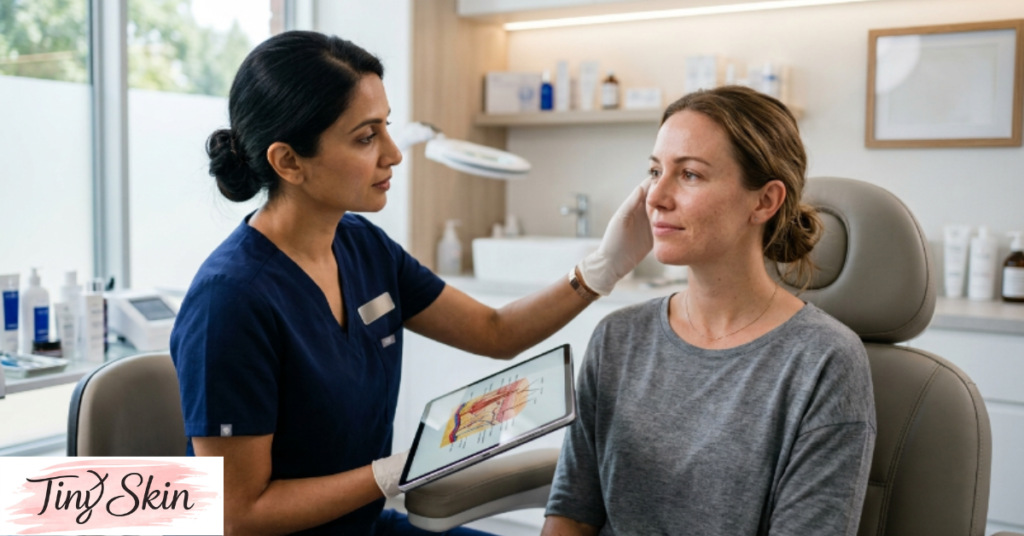
Not sure if what you’re seeing is Ozempic face or just normal aging? Here’s how to check, step by step.
Step 1: Look at your cheeks in natural light. Hollow or sunken cheeks, especially under the cheekbones, are one of the earliest signs.
Step 2: Check your jawline and jowls. Loose skin along the jaw, sometimes called jowling, is a classic feature of what Ozempic face looks like in the lower face.
Step 3: Examine your nasolabial folds. These are the lines running from your nose to the corners of your mouth. If they’ve deepened suddenly, fat loss is likely a factor.
Step 4: Look at your temples. Sunken or hollow temples are another telltale sign, since this area has very little fat cushioning to begin with.
Step 5: Assess overall skin tone and texture. Some people notice their skin looks thinner, crepey, or duller after rapid weight loss.
Step 6: Compare recent photos. Side-by-side photos from before and after weight loss often make Ozempic face much easier to identify than a mirror alone.
If you’re checking off several of these signs, you’re likely seeing genuine facial fat loss rather than typical aging.
Ingredient and Product-Type Comparison for Supporting Skin Firmness
There’s no single product that reverses fat loss, but the right ingredients can support skin structure while your body adjusts. Here’s a simple breakdown.
| Ingredient/Product Type | What It Does | Best For |
|---|---|---|
| Retinoids (retinol/tretinoin) | Boosts collagen production over time | Fine lines, mild sagging |
| Peptide serums | Signals skin to produce more collagen | Early-stage skin laxity |
| Hyaluronic acid | Adds hydration and plumpness | Dry, deflated-looking skin |
| Niacinamide | Strengthens skin barrier, improves tone | Overall skin resilience |
| Facial oils/rich moisturizers | Locks in moisture, softens texture | Crepey or thin-feeling skin |
| Dermal fillers (professional) | Restores lost volume directly | Moderate to advanced volume loss |
Retinoids are generally considered one of the most researched options for supporting collagen over time, though results take months, not weeks.
Peptides work more gently and are a good starting point if your skin feels sensitive or reactive.
Hyaluronic acid won’t rebuild fat pads, but it can make hollow areas look softer and more hydrated almost immediately.
Professional options like fillers are a personal choice and should always be discussed with a licensed provider, not decided based on social media trends.
Common Mistakes to Avoid With Ozempic Face
Trying to fix Ozempic face can backfire if you fall into these common traps.
- Over-exfoliating. Stripping the skin barrier makes sagging and dullness look worse, not better.
- Skipping sunscreen. UV exposure breaks down collagen faster, accelerating skin laxity.
- Losing weight too fast on purpose. Extreme calorie restriction on top of medication can worsen facial fat loss.
- Ignoring hydration and protein intake. Both are essential building blocks for skin repair.
- Jumping straight to invasive procedures. Give skincare and lifestyle changes a few months before considering fillers or surgery.
- Comparing your face to filtered photos online. Many “Ozempic face” before-and-afters are edited or angled for dramatic effect.
A slower, more consistent approach almost always gives skin the best chance to adapt.
When to See a Dermatologist
Most cases of Ozempic face are cosmetic rather than medical, but there are times when professional input matters.
You should consider seeing a dermatologist or your prescribing doctor if:
- Skin sagging is affecting your confidence or mental health
- You notice sudden, severe changes rather than gradual ones
- You’re considering fillers, laser treatments, or skin-tightening procedures
- You have persistent dryness, irritation, or skin breakdown
- You want a personalized plan based on your skin type and weight loss goals
A dermatologist can also rule out other causes of facial changes, since not every case of sagging skin is related to GLP-1 medication use. This is especially important if changes seem disproportionate to your weight loss.
Frequently Asked Questions
Does Ozempic face go away on its own?
In some cases, mild Ozempic face improves slightly as skin gradually adapts and collagen rebuilds over months. However, more noticeable sagging often needs targeted skincare, lifestyle support, or professional treatment to improve significantly.
How long does it take for Ozempic face to appear?
Ozempic face can appear within a few months of noticeable weight loss, especially if the loss happens quickly. The faster the weight comes off, the sooner facial volume changes tend to show up.
Can you prevent Ozempic face while losing weight?
You can reduce your risk by losing weight at a slower, steadier pace, staying hydrated, eating enough protein, and supporting your skin with collagen-boosting ingredients like retinoids from the start.
Is Ozempic face permanent?
Ozempic face isn’t necessarily permanent. Skin often improves somewhat with consistent skincare and time, though some people choose fillers or skin-tightening treatments for more complete correction.
Does everyone who loses weight on Ozempic get Ozempic face?
No, not everyone develops it. Age, genetics, how much weight is lost, and how quickly it’s lost all influence whether facial changes become noticeable.
Conclusion
Ozempic face is a real, explainable side effect of rapid fat loss, not a personal failure or something you have to just live with. Once you understand what does Ozempic face look like and why it happens, you can respond with the right skincare habits, patience, and, if needed, professional support instead of panic. Start with small, consistent changes like a collagen-supporting serum, daily sunscreen, and steady hydration, then reassess in a few months to see how your skin has responded.

