


If you’ve spent the last few weeks Googling every version of “weird ring-shaped rash that won’t go away,” you’ve probably landed here for a reason. Maybe a dermatologist already gave you the name — granuloma annulare — and now you’re trying to figure out what to actually do about it. A granuloma annulare treatment cream is usually the first thing people reach for, and honestly, that makes sense. It’s non-invasive, it’s something you can start right away, and it doesn’t involve needles or oral medications with a long list of side effects.
Here’s the thing, though: not every cream works the same way for this condition, and a lot of people end up frustrated because they expect overnight results from something that, by nature, takes time. This article is going to walk you through what granuloma annulare actually is, why it shows up, which creams and topical treatments dermatologists actually recommend, and what you can realistically expect in terms of timeline and results. No fluff, no miracle claims — just the kind of honest breakdown I’d give a client sitting across from me.
What Is Granuloma Annulare, Exactly?
Granuloma annulare is a benign, non-contagious skin condition that shows up as small, raised bumps arranged in a ring or circular pattern. It most commonly appears on the hands, fingers, feet, elbows, or ankles, though it can technically pop up almost anywhere. The color ranges from skin-toned to reddish or slightly purplish, depending on your skin tone and how long you’ve had it.
The strange part? Nobody fully understands why it happens. Researchers believe it’s related to a localized immune response — basically, your body’s immune cells attack the collagen in a specific area of skin for reasons that aren’t entirely clear. It’s not an infection. It’s not caused by poor hygiene. And it’s definitely not something you did wrong.
There are a few different types worth knowing about:
- Localized granuloma annulare — the most common form, usually just one or two rings on the hands or feet.
- Generalized granuloma annulare — widespread patches across larger areas of the body, more common in adults.
- Subcutaneous granuloma annulare — firm nodules under the skin, more common in kids.
- Perforating granuloma annulare — a rarer type where the bumps ooze or crust slightly.
Knowing which type you’re dealing with actually matters, because it affects how well topical treatment will work. Localized cases tend to respond better to creams than generalized ones — that’s just the reality of it.
Does Granuloma Annulare Actually Need Treatment?
This surprises a lot of people: in many cases, granuloma annulare goes away on its own within two years, even without any treatment at all. Sound familiar to something your doctor might have told you? If so, they weren’t brushing you off — that’s genuinely how this condition often behaves.
That said, “it might go away eventually” isn’t exactly comforting when you’ve got a visible rash on your hand every day. That’s where a granuloma annulare treatment cream comes in. Treatment isn’t usually about curing the condition faster (though it can help) — it’s about managing the appearance, reducing any itching or discomfort, and preventing the rings from spreading further.
If your case is mild and not bothering you much, some dermatologists will genuinely recommend a watch-and-wait approach. But if it’s itchy, spreading, or affecting your confidence, a treatment plan built around the right topical cream is a completely reasonable next step.
Best Granuloma Annulare Treatment Cream Options
Let’s get into the part you’re actually here for. There isn’t a single over-the-counter cream that’s FDA-approved specifically “for granuloma annulare” — this is important to understand upfront so you don’t waste money chasing a product that doesn’t exist. Instead, dermatologists typically prescribe treatments that fall into a few categories.
Topical Corticosteroids
This is usually the first line of treatment. A prescription-strength granuloma annulare treatment cream containing a corticosteroid — like clobetasol or betamethasone — helps calm the inflammatory response happening under the skin. For thicker or more stubborn rings, your dermatologist might also cover the area with a bandage after applying the cream (this is called occlusion), which helps the medication absorb more effectively.
A word of caution here: these creams shouldn’t be used indefinitely. Long-term use of strong steroid creams can thin the skin, especially on delicate areas like the hands or face. This is a mistake a lot of people make — they find something that works and just keep using it well past the recommended timeframe. Always follow your dermatologist’s specific instructions on duration.
Calcineurin Inhibitors (Tacrolimus and Pimecrolimus)
For people who can’t use steroids long-term, or for treatment on sensitive skin areas, tacrolimus ointment (Protopic) or pimecrolimus cream (Elidel) are common alternatives. These work by suppressing the local immune response without the skin-thinning risk associated with steroids. In my experience following skincare research over the years, these tend to be a favorite among dermatologists for facial or long-term use precisely because they’re gentler on the skin barrier.
Topical Retinoids
Less commonly prescribed, but retinoid creams have shown some benefit in certain granuloma annulare cases, particularly for the generalized form. They work differently than steroids — by influencing skin cell turnover — and results tend to take a bit longer to show up.
Combination and Compounded Creams
Some dermatologists will prescribe a compounded cream that blends a corticosteroid with other active ingredients tailored to your specific skin and severity level. If your case hasn’t responded to standard over-the-counter or first-line prescription options, ask your dermatologist whether a compounded formula makes sense for you.
[internal link opportunity here — link to an article on “prescription vs. over-the-counter skin creams”]
How to Apply Granuloma Annulare Treatment Cream Correctly
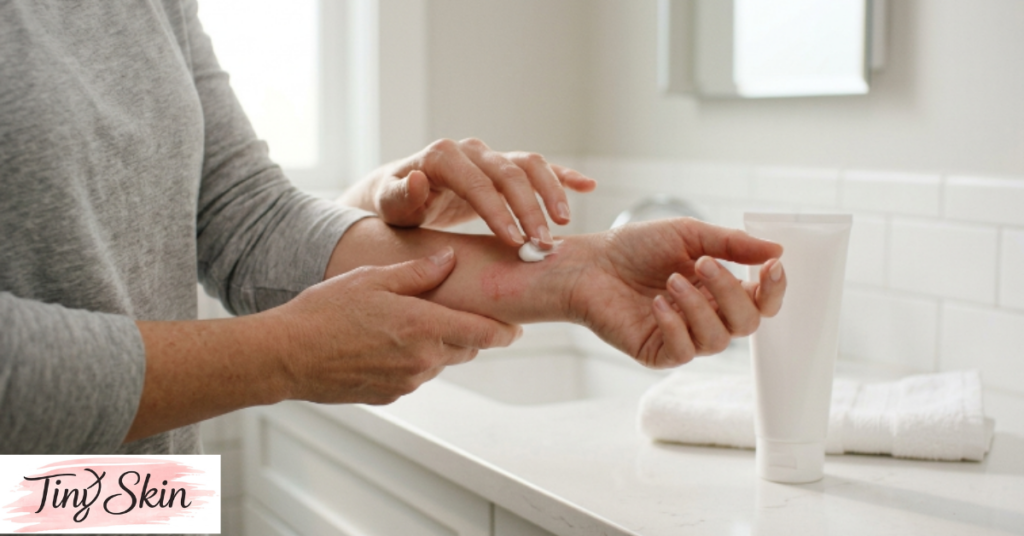
This part gets overlooked more than you’d think. Even the best granuloma annulare treatment cream won’t do much if it’s not applied correctly and consistently. Here’s a practical routine to follow:
- Cleanse the area gently with a mild, fragrance-free cleanser and pat dry — don’t rub.
- Apply a thin layer of the prescribed cream directly onto the rings, not just around them.
- Avoid over-application. More product doesn’t mean faster results; it just increases the risk of irritation or skin thinning.
- Follow the frequency exactly as prescribed — usually once or twice daily, but this varies by product strength.
- Moisturize separately afterward if your skin feels dry, using a fragrance-free, non-comedogenic moisturizer.
- Be consistent for at least 4–8 weeks before judging whether the cream is working. This isn’t a two-day fix.
If you’re someone who tends to forget skincare steps (no judgment — most of us do), try pairing your cream application with something you already do daily, like brushing your teeth or your evening phone scroll. Little habit stacking tricks like this genuinely make a difference in treatment adherence.
What Results Should You Realistically Expect?
In reality, most people using a granuloma annulare treatment cream start noticing a reduction in redness and bump size within 3 to 6 weeks. Full flattening of the rings can take a few months. Some stubborn cases take longer, and a small percentage of people find that topical creams alone aren’t enough — which is when dermatologists move on to other options like cryotherapy, light therapy, or injectable corticosteroids.
It’s worth setting realistic expectations here because disappointment is what usually causes people to give up on treatment too early, right before it would’ve started working. Give it time. Track your progress with photos every couple of weeks instead of checking the mirror daily — daily checks make gradual improvement nearly impossible to notice.
Common Mistakes People Make When Treating Granuloma Annulare
Let’s talk about where things tend to go wrong, because avoiding these mistakes will save you time and frustration.
- Stopping treatment too early. Symptoms improving doesn’t mean the condition is gone. Stopping the cream the moment things look better often leads to a flare-up.
- Using steroid cream on and off indefinitely without medical guidance. This increases the risk of skin thinning and doesn’t actually address the root inflammatory process long-term.
- Trying random “natural” remedies from social media — apple cider vinegar, tea tree oil, and similar DIY treatments haven’t been shown to meaningfully treat granuloma annulare and can sometimes irritate the skin further, delaying real progress.
- Skipping the dermatologist visit entirely. Self-diagnosing skin rings as granuloma annulare based on a Google image search is risky — several other conditions (like ringworm or nummular eczema) can look similar but require completely different treatment.
- Picking at or scratching the rings. This can worsen inflammation and, in rare cases, lead to secondary infection.
Prevention: Can You Stop Granuloma Annulare From Coming Back?
Unfortunately, there’s no guaranteed way to prevent granuloma annulare, since the exact trigger isn’t fully understood. That said, a few general skin-health habits seem to lower flare-up frequency for some people:
- Protecting skin from unnecessary trauma or friction, particularly on hands and feet.
- Managing underlying conditions like diabetes or thyroid disorders, which have been loosely associated with higher granuloma annulare occurrence in some studies.
- Keeping skin well-moisturized to support overall skin barrier health.
- Minimizing sun exposure to affected areas, since some cases seem to worsen with UV exposure.
If you’ve dealt with granuloma annulare once, there’s a reasonable chance it could reappear at some point, sometimes in a completely different spot. This isn’t something you caused, and it isn’t a reflection of poor skin care — it’s simply how this particular condition tends to behave in certain people.
[internal link opportunity here — link to an article on “skin conditions triggered by underlying health issues”]
When to See a Dermatologist Instead of Self-Treating
A granuloma annulare treatment cream from your dermatologist will always outperform anything you self-prescribe based on internet research — this article included. That’s just the honest truth. You should book a dermatology appointment if:
- The rings are spreading rapidly or covering large areas of your body.
- Over-the-counter hydrocortisone hasn’t helped after a couple of weeks.
- The area becomes painful, oozes, or shows signs of infection (increased warmth, pus, red streaking).
- You’re unsure whether it’s actually granuloma annulare versus something else, like ringworm.
- You have an underlying health condition, such as diabetes, that could be connected.
A proper diagnosis — sometimes involving a simple skin biopsy — takes the guesswork out of treatment and gets you on the right cream faster instead of cycling through trial and error.
[internal link opportunity here — link to an article on “how dermatologists diagnose skin rashes”]
Expert Tips for Managing Granuloma Annulare Day-to-Day
A few extra pointers that tend to make a real difference, based on how dermatology practices generally guide patients through this:
- Keep a symptom journal noting flare-ups, stress levels, and any new products you’ve introduced — patterns sometimes emerge that are worth mentioning at your next appointment.
- Choose fragrance-free laundry detergent if the rings are on areas that rub against clothing, like ankles or wrists.
- Don’t layer multiple active skincare ingredients (like retinol or exfoliating acids) directly over the treated area unless your dermatologist specifically approves it.
- Be patient with yourself. Visible skin conditions can affect confidence, and that’s a completely valid thing to feel — but this condition is benign and, in most cases, very manageable with the right approach.
FAQs
Is there an over-the-counter granuloma annulare treatment cream that works?
Mild cases sometimes respond to over-the-counter hydrocortisone cream, but most people need a prescription-strength topical steroid or calcineurin inhibitor for meaningful improvement. It’s best to consult a dermatologist before relying on OTC products long-term.
How long does it take for granuloma annulare cream to work?
Most people see initial improvement within 3 to 6 weeks of consistent use, though full resolution can take a few months. Some cases naturally resolve within one to two years even without treatment.
Can granuloma annulare be cured permanently?
There’s no guaranteed permanent cure, since the exact cause isn’t fully understood. Many cases resolve on their own over time, and treatment creams primarily help manage symptoms and appearance rather than “curing” it outright.
Is granuloma annulare contagious?
No. Granuloma annulare is not contagious and cannot be spread through skin contact. It’s related to an internal immune response, not an infection.
What’s the difference between granuloma annulare and ringworm?
They can look similar since both form ring-shaped patches, but ringworm is a fungal infection with a scaly, often itchy border, while granuloma annulare typically has smooth, firm bumps without scaling. A dermatologist can confirm the difference, sometimes with a simple skin scraping test.
Can stress trigger granuloma annulare flare-ups?
While not definitively proven, some patients report flare-ups coinciding with periods of high stress or illness, which may relate to general immune system activity. It’s not considered a primary cause, but managing stress is good practice regardless.
Final Thoughts
Dealing with granuloma annulare can feel unsettling, especially when the rings are visible and you don’t have a clear answer for why they showed up. But here’s the reassuring part: this is a well-documented, benign condition, and the right granuloma annulare treatment cream — used consistently and under proper guidance — genuinely helps most people see real improvement.
Give any treatment plan time to work, avoid the common mistakes we covered above, and don’t hesitate to loop in a dermatologist if things aren’t improving or you’re simply unsure what you’re dealing with. Your skin didn’t do anything wrong here, and with the right approach, this is very much manageable. Start with a proper diagnosis, get a cream suited to your specific case, and stay consistent — that combination is what actually moves the needle.

