

Introduction
Have you noticed a new spot on your skin and wondered if it looks normal? Many people search for “what does skin cancer look like” after spotting a mole that seems different from the rest. Skin cancer often starts as a small, painless change. However, early detection makes treatment far more effective. This guide walks you through the visual signs, from color changes to irregular borders, so you know exactly what to look for. Understanding these warning signs helps you protect your skin and catch problems early, before they become serious.
Key Takeaways
- Skin cancer often appears as a new mole, a changing spot, or a sore that won’t heal.
- The ABCDE rule (Asymmetry, Border, Color, Diameter, Evolving) helps you spot warning signs.
- Melanoma, basal cell carcinoma, and squamous cell carcinoma each look different on skin.
- Sun-exposed areas like the face, neck, arms, and back are common locations.
- Any mole that changes size, shape, or color needs a dermatologist’s review.
- Early detection significantly improves treatment outcomes.
What Does Skin Cancer Look Like? A Quick Overview
A Change Is the First Clue
Skin cancer rarely appears out of nowhere. Instead, it usually shows up as a change to your skin. This could be a new growth, a mole that shifts in color, or a patch that feels rough.
Dermatologists recommend paying attention to anything that looks “different from the rest” of your moles. This is sometimes called the “ugly duckling sign.”
Common Visual Signs
Look out for these general signs:
- A mole with uneven color or shape
- A sore that bleeds or doesn’t heal within a few weeks
- A rough, scaly patch that doesn’t go away
- A shiny or waxy bump
- A dark streak under a fingernail or toenail
Why Early Recognition Matters
Additionally, catching these changes early gives you the best chance at simple, effective treatment. Waiting too long allows abnormal cells more time to grow deeper into the skin.
Most skin cancers develop slowly, which means you often have time to notice and act. However, some forms, like nodular melanoma, can grow faster and need quicker attention.
The Main Types of Skin Cancer and Their Appearance
Basal Cell Carcinoma (BCC)
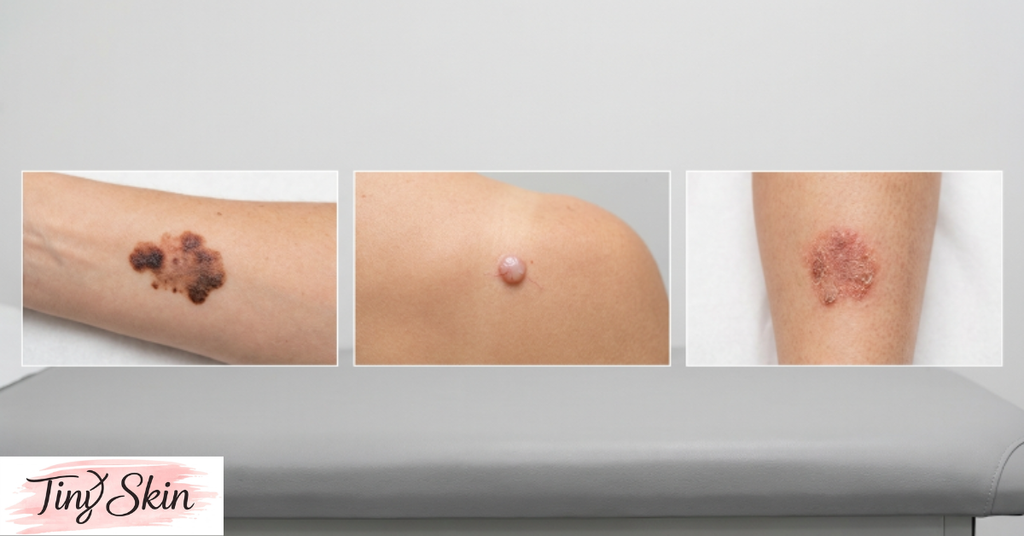
Basal cell carcinoma is the most common type of skin cancer. It often looks like a pearly or waxy bump, sometimes with visible tiny blood vessels.
It can also appear as a flat, flesh-colored or brown scar-like lesion. BCC usually grows slowly and rarely spreads to other parts of the body.
Squamous Cell Carcinoma (SCC)
Squamous cell carcinoma often looks like a firm, red nodule or a flat lesion with a scaly, crusted surface. It may feel tender to the touch.
This type tends to appear on sun-exposed skin, such as the ears, face, and hands. Unlike BCC, SCC has a higher chance of spreading if left untreated.
Melanoma
Melanoma is less common but more serious because it can spread quickly. It typically appears as a mole with irregular borders, uneven color, or asymmetry.
Moreover, melanoma can develop from an existing mole or appear as a completely new spot. Dark brown, black, or even pink-toned patches are all possible.
The ABCDE Rule for Checking Moles
Dermatologists widely use the ABCDE method to help people evaluate moles at home. This simple checklist makes visual self-exams easier.
What Each Letter Means
- A – Asymmetry: One half of the mole doesn’t match the other half.
- B – Border: Edges look ragged, blurred, or notched instead of smooth.
- C – Color: The mole has multiple colors, such as brown, black, red, or white.
More Signs to Watch
- D – Diameter: The spot is larger than 6mm, roughly the size of a pencil eraser.
- E – Evolving: The mole changes in size, shape, color, or texture over time.
Using the Rule Correctly
If a mole matches two or more of these criteria, it’s worth getting checked. However, even one unusual feature is reason enough to consult a dermatologist.
This rule isn’t a diagnosis tool. Instead, it helps you decide when professional evaluation is necessary.
Skin Cancer vs. Normal Skin Marks: Comparison Table
| Feature | Normal Mole | Possible Skin Cancer Sign |
|---|---|---|
| Shape | Round, symmetrical | Asymmetrical, irregular |
| Border | Smooth, well-defined | Blurred, jagged, or notched |
| Color | Single, even shade | Multiple colors or uneven shading |
| Size | Usually under 6mm | Often larger than 6mm |
| Change over time | Stays the same | Grows, changes color, or itches/bleeds |
Comparison of Skin Cancer Types
| Type | Common Appearance | Typical Location | Growth Rate |
|---|---|---|---|
| Basal Cell Carcinoma | Pearly bump or scar-like patch | Face, neck, ears | Slow |
| Squamous Cell Carcinoma | Red, scaly, crusted lesion | Hands, ears, lips | Moderate |
| Melanoma | Irregular, multi-colored mole | Anywhere, including back and legs | Fast |
Where Skin Cancer Commonly Appears on the Body
Sun-Exposed Areas
Skin cancer most often develops on areas that receive frequent sun exposure. These include:
- Face, nose, and ears
- Neck and shoulders
- Arms and hands
- Scalp, especially in people with thinning hair
Less Obvious Locations
However, skin cancer can also appear in places rarely exposed to sun. These spots are easy to miss during a self-check.
- Soles of the feet
- Under fingernails or toenails
- Genital area
- Inside the mouth in rare cases
Why Full-Body Checks Matter
Because skin cancer can appear almost anywhere, dermatologists recommend a full-body skin exam. Mirrors or a partner can help you check hard-to-see areas like your back and scalp.
Regular checks make it far easier to notice new or unusual spots.
How Skin Cancer Symptoms Change Over Time
Early Stage Changes
In the early stages, skin cancer often causes only subtle changes. A mole might slightly darken or its border might become a little less defined.
At this point, the spot may not cause any pain or discomfort at all.
Progressing Signs
As it develops further, symptoms usually become clearer. You may notice:
- Increasing size over several weeks or months
- Itching or tenderness in the area
- Bleeding or oozing without injury
- A sore that keeps returning after healing
Advanced Warning Signs
In more advanced cases, the lesion may become raised, ulcerated, or start to feel hard. Additionally, nearby lymph nodes might swell if the cancer has started spreading.
This is why tracking changes over time, not just a single snapshot, matters so much.
When to See a Dermatologist
Red Flags That Need Attention
You should schedule a dermatologist visit if you notice:
- A new mole appearing after age 30
- Any mole that has changed in the last few months
- A sore that hasn’t healed in three weeks
- Persistent itching, bleeding, or tenderness on a spot
What Happens During a Skin Check
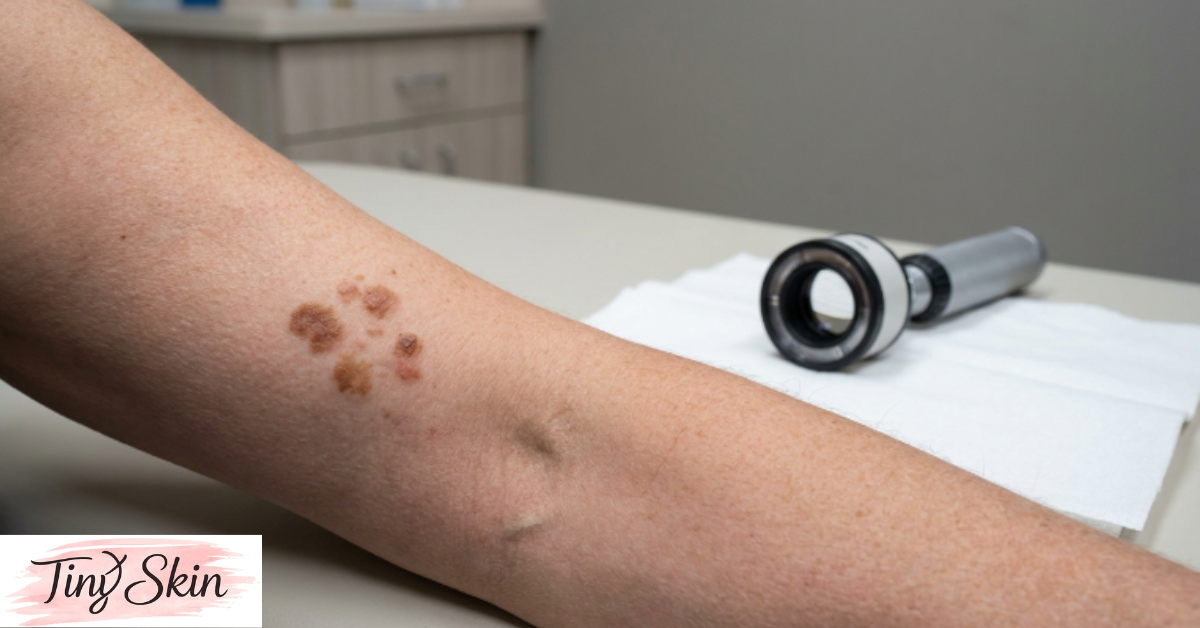
A dermatologist typically examines your skin using a dermatoscope, a special magnifying tool. This allows a closer look at pigment patterns invisible to the naked eye.
If a spot looks suspicious, they may recommend a biopsy for accurate diagnosis.
How Often to Get Checked
Most dermatologists suggest an annual skin exam for average-risk adults. However, people with many moles, fair skin, or a family history of skin cancer may need more frequent visits.
Don’t wait for pain before booking an appointment. Skin cancer often doesn’t hurt until it has progressed.
How to Perform a Self-Check at Home
Setting Up Your Check
Choose a well-lit room and use a full-length mirror along with a hand mirror. This combination helps you see your back, scalp, and other hard-to-reach areas.
Check your skin roughly once a month to notice changes early.
Step-by-Step Process
- Start with your face, ears, and neck
- Check your chest, arms, and hands, including nails
- Examine your back and shoulders using the mirrors
- Look over your legs, feet, and soles
- Don’t forget your scalp and the areas between your toes
Tracking Changes
Take photos of moles you want to monitor. Comparing images over time makes it much easier to spot gradual changes.
If anything looks new, unusual, or different from your other moles, book a dermatologist appointment promptly.
FAQs
What does skin cancer look like in its earliest stage?
In the earliest stage, skin cancer often looks like a small, flat, or slightly raised spot with uneven color or borders. It may resemble a new mole or a change to an existing one. There’s usually no pain at this point, which is why regular skin checks matter.
Can skin cancer look like a normal pimple or bump?
Yes, some skin cancers, especially basal cell carcinoma, can resemble a small pimple or pearly bump. However, unlike a pimple, this bump typically doesn’t heal and may slowly grow larger. Persistent bumps that don’t resolve within a few weeks should be evaluated.
Does skin cancer always look dark or black?
No, skin cancer can appear in many colors, including pink, red, brown, or even skin-toned. Amelanotic melanoma, for example, often lacks the dark pigment people expect. Any unusual growth deserves a professional look, regardless of color.
Can skin cancer appear on skin that’s never been sunburned?
Yes, skin cancer can develop on areas without direct sun exposure, including the soles of feet, under nails, or the genital area. Genetics, immune function, and other factors also play a role, not just sunburn history alone.
How fast does skin cancer typically grow?
Growth speed varies by type. Basal cell carcinoma often grows slowly over months or years, while melanoma can progress within weeks. This is why any changing mole should get prompt evaluation, regardless of how gradual it seems.
Is it possible to self-diagnose skin cancer from photos alone?
No, photos can help you track changes, but only a dermatologist can accurately diagnose skin cancer. Visual self-checks are useful for spotting concerns early, but a biopsy remains the only definitive diagnostic method.
Conclusion
Knowing what skin cancer looks like empowers you to catch problems early. From asymmetrical moles to sores that won’t heal, small visual changes often carry big meaning. Regular self-checks, combined with the ABCDE rule, give you a strong first line of defense. However, no online guide replaces a professional evaluation. If you’ve spotted anything unusual on your skin, don’t wait. Book a dermatologist appointment today and get the peace of mind you deserve. Early detection remains one of the most powerful tools against skin cancer.

