

Introduction
Noticed a red, itchy patch that seems to be spreading in a circle? You are probably asking yourself what does ringworm look like, and whether your skin problem matches it. Despite its name, ringworm has nothing to do with worms. It is a common fungal skin infection that affects people of all ages.
The good news is that ringworm is easy to identify once you know its typical features. This guide walks you through its appearance, symptoms, and treatment options, so you can act quickly and confidently. Dermatologists agree that early recognition leads to faster, simpler treatment.
What Does Ringworm Look Like? Key Visual Signs
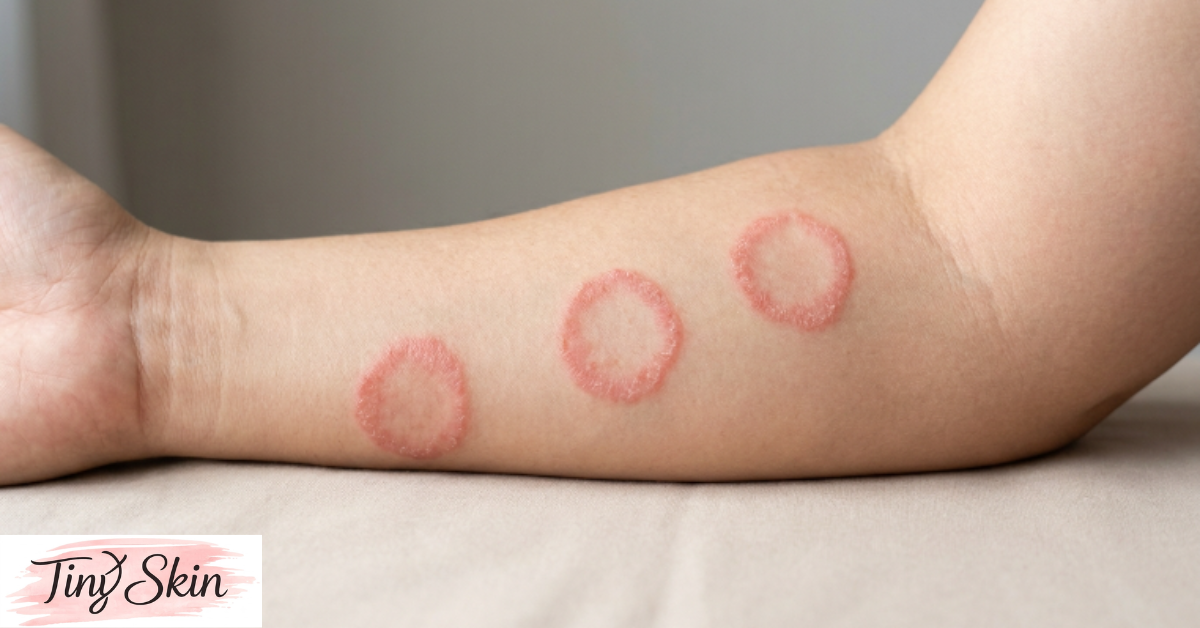
Understanding what does ringworm look like starts with its most recognizable feature: a ring-shaped rash. However, the appearance can change depending on how long the infection has been present.
Early Stage Appearance
In its earliest form, ringworm often looks like a small, flat, scaly patch. It may appear pink or red and slightly raised at the edges. Many people mistake this early stage for a simple dry patch or bug bite.
Advanced Ring Pattern
As the infection grows, it typically forms a distinctive ring. The outer edge is usually red, raised, and scaly, while the center may look clearer or slightly discolored. This “active border, clearing center” pattern is the classic sign dermatologists look for.
Ringworm on Different Skin Tones
Ringworm does not look the same on every skin tone. On lighter skin, it usually appears pink or red. On medium to darker skin tones, it often looks brown, gray, or violet instead. Additionally, the ring shape may be less defined on textured or darker skin, making professional diagnosis even more valuable.
- Lighter skin: red or pink ring with a scaly border
- Darker skin: brownish, grayish, or purplish discoloration
- All skin tones: raised, defined edge with a flatter center
Common Symptoms of Ringworm Beyond Appearance
Appearance alone does not always confirm ringworm. Several accompanying symptoms help distinguish it from other rashes.
Itching and Irritation
Persistent itching is one of the most common ringworm symptoms. The itch tends to be concentrated along the raised border of the rash rather than the entire affected area.
Scaling and Flaking
The skin along the ring’s edge often becomes dry, flaky, or scaly. This scaling can sometimes be mistaken for eczema or psoriasis, which is why comparing symptoms carefully matters.
Redness and Inflammation
Mild to moderate redness usually surrounds the affected area. In some cases, the skin may feel warm or mildly tender, particularly if the infection has been present for a while or has been scratched frequently.
Additional symptoms may include:
- Slightly raised, blister-like bumps at the border
- Hair loss in the affected area (if on the scalp)
- Multiple rings merging into a larger patch over time
- Mild swelling around the rash
Moreover, symptoms can worsen with heat, sweat, and tight clothing, since fungi thrive in warm, moist environments.
Where Ringworm Commonly Appears on the Body
Ringworm can develop almost anywhere, but certain areas are more prone to infection due to moisture and friction.
Body (Tinea Corporis)
This is the classic form most people associate with ringworm. It commonly appears on the arms, legs, chest, or torso as one or more circular, scaly patches.
Scalp (Tinea Capitis)
Scalp ringworm often causes patchy hair loss, scaling, and sometimes small black dots where hair has broken off. This form is especially common in children and may require prescription treatment.
Feet and Groin
Ringworm on the feet is known as athlete’s foot, while groin ringworm is called jock itch. Both thrive in warm, sweaty conditions and often cause peeling, cracking, or a burning sensation rather than a clear ring shape.
Common high-risk areas include:
- Underarms and skin folds
- Feet, especially between the toes
- Groin and inner thighs
- Scalp and beard area
- Nails (causing thickening and discoloration)
Ringworm vs Other Skin Conditions
Many skin conditions mimic ringworm, which often leads to confusion and delayed treatment. Comparing key differences can help you understand what does ringworm look like compared to similar issues.
| Condition | Shape/Pattern | Border | Common Trigger |
|---|---|---|---|
| Ringworm | Circular, ring-shaped | Raised, scaly, well-defined | Fungal infection |
| Eczema | Irregular patches | Flat, poorly defined | Allergens, dry skin, stress |
| Psoriasis | Thick, silvery plaques | Raised, well-defined | Immune system response |
| Allergic Rash (Contact Dermatitis) | Follows contact area | Flat or slightly raised | Irritants, allergens |
| Nummular Eczema | Coin-shaped patches | Flat, crusted | Dry skin, irritation |
Why Confusion Happens
Both ringworm and nummular eczema form round patches, which explains why misdiagnosis is common. However, ringworm typically has a clearer, less inflamed center, while eczema tends to be uniformly red and scaly throughout.
Why Professional Diagnosis Matters
Since treatments differ significantly, using the wrong product can worsen symptoms. Antifungal creams help ringworm but do nothing for eczema, and steroid creams can sometimes make a fungal infection spread further.
KEY TAKEAWAYS
- Ringworm typically appears as a red or discolored ring with a raised, scaly border.
- On darker skin tones, ringworm often looks brown, gray, or purple instead of red.
- Itching, scaling, and a clearing center are hallmark symptoms.
- It commonly affects the body, scalp, feet, groin, and nails.
- Ringworm is often confused with eczema, psoriasis, or allergic rashes.
- Accurate diagnosis is essential before starting any treatment.
What Causes Ringworm? Understanding the Fungal Infection

Ringworm is caused by dermatophytes, a group of fungi that feed on keratin found in skin, hair, and nails. Understanding the cause helps explain why it spreads so easily.
How It Spreads
Ringworm spreads through direct skin-to-skin contact, contaminated surfaces, or even pets. Gyms, locker rooms, and shared towels are common transmission points because fungi survive well on damp surfaces.
Risk Factors
Certain conditions make someone more likely to develop ringworm:
- Excessive sweating or humid climates
- Weakened immune system
- Close contact with infected people or animals
- Sharing clothing, towels, or sports equipment
- Minor skin injuries that allow fungi to enter
Additionally, children and athletes are at higher risk due to close physical contact and shared equipment. Dermatologists recommend prompt treatment to reduce the chance of spreading it to others.
How Is Ringworm Diagnosed?
While visual identification offers strong clues, a proper diagnosis ensures accurate treatment.
Visual Examination
A dermatologist will typically examine the rash’s shape, color, and border pattern first. This step alone often provides a strong indication of ringworm, especially in classic ring-shaped cases.
Skin Scraping Test
For confirmation, doctors may perform a skin scraping and examine it under a microscope using a potassium hydroxide (KOH) preparation. This test detects fungal elements and helps rule out other conditions.
Wood’s Lamp Examination
In some scalp cases, a Wood’s lamp (a special UV light) may be used, since certain fungal strains fluoresce under this light. However, not all ringworm types glow, so this method is not always conclusive on its own.
Treatment Options for Ringworm
Most ringworm cases respond well to treatment, especially when addressed early.
| Treatment Type | Best For | Typical Duration | Notes |
|---|---|---|---|
| OTC Antifungal Creams (clotrimazole, terbinafine) | Mild body ringworm | 2-4 weeks | Apply exactly as directed, even after symptoms fade |
| Prescription Antifungal Creams | Moderate cases | 2-4 weeks | Stronger concentration than OTC options |
| Oral Antifungal Medication | Scalp or nail ringworm | 4-8 weeks | Requires a doctor’s prescription and monitoring |
| Medicated Shampoo | Scalp ringworm (supportive care) | Alongside oral treatment | Helps reduce fungal spread, not a standalone cure |
Over-the-Counter Options
Mild cases on the body often respond to OTC antifungal creams. It’s important to continue treatment for the full recommended period, even if the rash appears to clear early.
Prescription Medication
Scalp and nail infections usually require oral antifungal medication, since topical treatments cannot penetrate hair follicles or nails effectively.
Home Care Tips
Alongside medical treatment, keeping the area clean and dry supports healing. Avoid sharing personal items, and wash clothing and bedding in hot water to reduce reinfection risk.
When to See a Dermatologist and Prevention Tips
Knowing when to seek professional care can prevent complications and speed up recovery.
Warning Signs You Shouldn’t Ignore
See a dermatologist if:
- The rash spreads despite OTC treatment
- Ringworm appears on the scalp or nails
- You develop fever or significant swelling
- The rash affects a large area of the body
- You have a weakened immune system
Prevention Strategies
Preventing ringworm largely comes down to hygiene and reducing fungal exposure:
- Keep skin clean and dry, especially in skin folds
- Avoid sharing towels, clothing, or grooming tools
- Wear breathable fabrics and moisture-wicking socks
- Disinfect gym equipment and shared surfaces before use
- Treat pets showing signs of fungal infection promptly
Moreover, wearing sandals in public showers and locker rooms significantly lowers the risk of picking up fungal infections.
FAQs
What does ringworm look like in its early stages?
In early stages, ringworm looks like a small, flat, scaly patch that may be pink or red. It often resembles a dry skin patch before developing into a defined ring shape with a raised, scaly border over the following days.
Is ringworm always shaped like a perfect circle?
Not always. While ringworm is known for its ring shape, patches can be oval, irregular, or overlapping, especially when multiple infections merge. The raised, scaly border is usually a more reliable identifying feature than a perfect circle.
Can ringworm look different on darker skin tones?
Yes. On darker skin, ringworm often appears brown, gray, or violet rather than red. The ring pattern may also be less obvious, which makes professional evaluation especially important for accurate diagnosis.
How long does ringworm take to go away?
With consistent antifungal treatment, body ringworm typically clears within two to four weeks. Scalp or nail infections may take longer, often four to eight weeks, since they usually require oral medication.
Is ringworm contagious even without visible symptoms?
Ringworm can spread before symptoms become obvious, particularly through contaminated surfaces or animals. This is why hygiene practices, like avoiding shared towels, matter even if no rash is currently visible.
Can I treat ringworm at home without seeing a doctor?
Mild body ringworm often responds to OTC antifungal creams. However, scalp, nail, or widespread ringworm usually needs prescription treatment, so consulting a dermatologist is recommended if symptoms persist or worsen.
Conclusion
Now that you know what does ringworm look like, from its ring-shaped border to how it appears differently across skin tones, you’re better equipped to identify it early. Prompt recognition and treatment prevent the infection from spreading to others or worsening over time.
However, self-diagnosis has limits, especially when other skin conditions mimic ringworm’s appearance. If you notice a persistent, itchy, ring-shaped rash, don’t wait it out. Consult a dermatologist for an accurate diagnosis and a treatment plan suited to your skin.

