

Introduction
Your baby’s diaper rash is not going away. You have tried barrier cream and changed diapers often, yet the skin still looks red and angry. Candida diaper rash may be the reason. This yeast infection is common in babies, and ordinary rash creams cannot clear it. The good news is that it responds well to the right treatment.
In this guide, you will learn how to spot candida diaper rash, why it happens, and how to treat it safely. You will also see how it differs from simple irritation and when to call your pediatrician. We wrote this article for parents and caregivers in Russia and beyond, using plain language and advice that matches pediatric and dermatology guidance. Read on to feel more confident about your baby’s skin care.
What Is Candida Diaper Rash?
Candida diaper rash, also called yeast diaper rash or fungal diaper rash, is a fungal infection of the skin under the diaper. A yeast called Candida albicans causes it. This yeast lives harmlessly on skin and in the gut. However, a warm, damp diaper gives it ideal conditions to grow.
How Yeast Takes Over Baby Skin
Healthy skin bacteria normally keep yeast in check. When skin stays wet, or when antibiotics reduce those bacteria, yeast multiplies fast. It then invades the damaged top layer of skin and causes a stubborn rash.
How Common Is It?
Pediatric sources note that a diaper rash lasting more than three days often involves yeast. Moreover, studies suggest that candida is a frequent cause of persistent rashes in infants. Candida also lives in the digestive tract, so yeast in stool can reach the skin easily. Doctors therefore consider it whenever a rash refuses to heal.
Is It Contagious?
Candida does not spread like a cold. However, it can pass between a baby’s mouth and a breastfeeding mother’s nipples. Healthy adults rarely develop problems from touching a baby’s rash. Even so, everyone should wash their hands after each diaper change.
How to Recognize Candida Diaper Rash
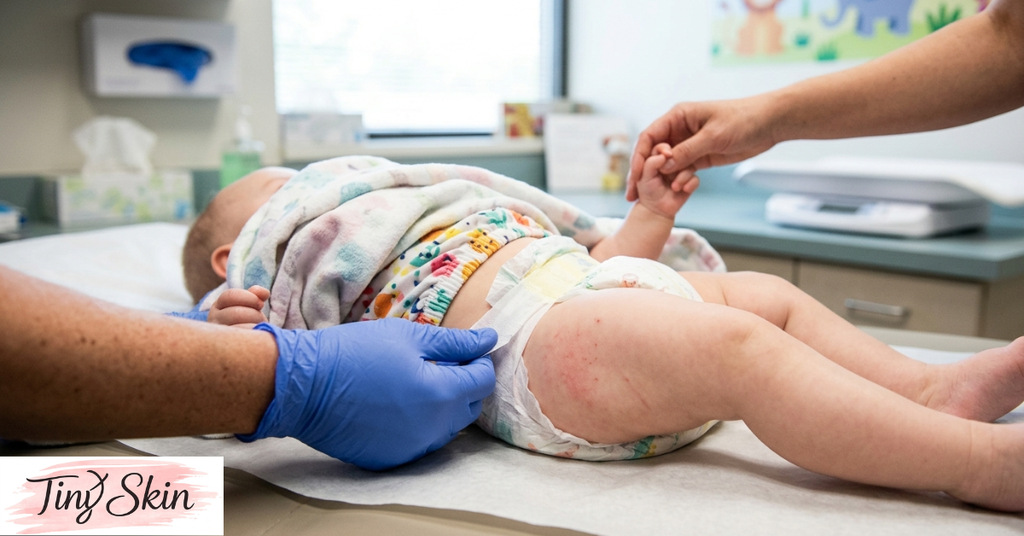
Early recognition speeds up healing. Look for the following signs, and compare them with your baby’s skin.
Main Symptoms
Parents most often notice these signs:
- Bright red, “beefy” patches with sharp, well-defined edges
- Small red bumps or pimples around the main rash, called satellite lesions
- Redness that sits deep in skin folds, such as the groin and thigh creases
- Shiny, raw, or slightly scaly skin
- A rash that lasts longer than three days despite barrier cream
Not every baby shows all these signs. However, even two or three together should raise suspicion.
Does It Hurt?
Many babies fuss, cry, or squirm during diaper changes. The skin may feel warm and tender. Sensitive babies may also sleep poorly. Some babies, however, show very little discomfort. Keep a simple log of rash changes, so your doctor sees the full picture.
Check the Mouth Too
Oral thrush often appears alongside candida diaper rash. Gently look inside your baby’s mouth. White patches on the tongue or cheeks that do not wipe away suggest thrush. Mention them to your doctor. Thrush and diaper rash share the same yeast, so treating both prevents reinfection.
Candida Diaper Rash vs. Regular Diaper Rash
Many parents mistake candida diaper rash for ordinary irritation. However, the two need different treatments.
Quick Comparison Table
| Feature | Candida Diaper Rash | Irritant Diaper Rash |
|---|---|---|
| Color | Bright, beefy red | Pink to red |
| Edges | Sharp, well-defined border | Fuzzy, blends into normal skin |
| Satellite spots | Common | Absent |
| Skin folds | Often affected | Usually spared |
| Response to zinc oxide cream alone | Poor; rash lingers beyond 3 days | Usually improves in 2-3 days |
| Main treatment | Antifungal cream plus barrier cream | Frequent changes plus barrier cream |
These features are guides, not a diagnosis. Skin tone also changes how redness looks. On darker skin, the rash may look purple, brown, or dark red instead of bright red.
Other Look-Alike Conditions
Several other conditions also cause redness in the diaper area:
- Seborrheic dermatitis: greasy, yellowish scales, often with scalp involvement
- Allergic contact dermatitis: a reaction to wipes, detergents, or fragrance
- Impetigo (bacterial infection): honey-colored crusts or pus-filled blisters
- Psoriasis: sharply defined plaques with silvery scales
Why the Right Diagnosis Matters
Using the wrong cream can slow healing. For example, steroid creams may worsen a yeast infection. Therefore, ask your pediatrician before applying any medicated product.
Causes and Risk Factors of Candida Diaper Rash
Candida diaper rash needs moisture, warmth, and a weakened skin barrier. Several everyday situations provide all three.
Moisture, Heat, and Friction
A wet diaper traps urine and stool against the skin. This breaks down the protective barrier. Overnight wear and tight fits make the problem worse. Additionally, scented wipes and harsh soaps can inflame the skin and invite yeast. Plastic-backed covers also trap extra heat.
Antibiotics and Illness
Antibiotics kill helpful bacteria along with harmful ones. As a result, yeast can overgrow on the skin and in the gut. Diarrhea also raises the risk. Antibiotics taken by a breastfeeding mother may contribute too, so tell your doctor about them. However, never stop a prescribed course on your own. Instead, report the rash and let your doctor decide.
Other Risk Factors
- Starting solid foods, which changes stool
- Infrequent diaper changes
- Irritating diapers, wipes, or detergents
- Pacifiers or bottle nipples carrying yeast from thrush
- A recent yeast infection in the mother
Additionally, babies with weakened immunity or chronic illness can develop repeated infections, so persistent cases need medical review.
How to Treat Candida Diaper Rash Safely
Treatment combines antifungal medicine with good skin care. Always follow your pediatrician’s advice.
Antifungal Creams
Doctors often prescribe nystatin, clotrimazole, or miconazole cream for candida diaper rash. Parents apply a thin layer at every diaper change. Treatment usually lasts one to two weeks. Keep using the cream for a few days after the skin looks clear, unless your doctor says otherwise.
Daily Care Routine
Follow these steps at each diaper change:
- Wash the area with warm water and a soft cloth.
- Pat the skin dry. Do not rub.
- Let the skin air-dry for a few minutes.
- Apply a thin layer of the prescribed antifungal cream.
- Add zinc oxide barrier cream on top if your doctor agrees.
- Fasten the diaper loosely.
Treatment Options Compared
| Option | Purpose | Key Notes |
|---|---|---|
| Nystatin cream for babies | Kills yeast | Widely used in infants; follow the prescription |
| Clotrimazole or miconazole cream | Kills yeast | Check age and dose with your doctor |
| Zinc oxide paste | Protects skin | Does not kill yeast |
| Oral antifungal medicine | Treats thrush or widespread infection | Only if prescribed |
| Hydrocortisone cream | Reduces inflammation | Avoid alone; may worsen yeast |
Availability and prescription rules vary by country, so ask your pharmacist what you can buy locally.
How to Prevent Candida Diaper Rash From Returning
Candida diaper rash often returns if skin stays damp. Prevention is simple, but it needs consistency.
Keep the Area Dry
Moisture is the biggest driver of this infection, so every dry minute helps.
- Check diapers often and change them as soon as they are wet or soiled.
- Give your baby diaper-free time on a clean towel after each bath.
- Pat the skin dry instead of rubbing.
- Skip talcum and cornstarch powders, because babies can inhale the fine particles.
Choose Diapers and Wipes Wisely
Pick the right size, since tight diapers trap heat. Choose fragrance-free wipes or plain warm water. Superabsorbent disposable diapers pull moisture away from the skin. If you use cloth diapers, wash them hot and add an extra rinse to remove yeast.
Manage Medicines and Feeding
Research on probiotics for diaper rash is limited, so ask your doctor before using them. If your baby takes antibiotics, watch the skin closely. Furthermore, wash pacifiers and bottle nipples daily when thrush is present. Wash your hands after every change as well.
Common Mistakes With Candida Diaper Rash
Loving parents sometimes make small errors that prolong candida diaper rash. Fortunately, each mistake is easy to fix.
Scrubbing and Harsh Products
Rubbing hard damages the skin further. Skip alcohol wipes, scented soaps, and bubble baths. Powders also cause problems, because babies can inhale the fine particles. Instead, rinse gently with warm water and pat dry.
Stopping Treatment Too Early
Redness fades before the yeast disappears. If you stop the cream too soon, the rash often returns within days. Therefore, finish the full course your doctor recommends. Mark the end date on your calendar.
Trying Unproven Home Remedies
Vinegar soaks, baking soda pastes, essential oils, and similar remedies lack solid evidence. Moreover, they can sting or burn broken skin. Parents in many countries share folk remedies, but infant skin calls for caution. Always ask first, even about natural products.
When to See a Doctor About Diaper Rash
Most cases of candida diaper rash respond well to treatment. Nevertheless, some situations need medical care.
Warning Signs
Call your pediatrician if you notice:
- No improvement after three days of home care
- Blisters, pus, open sores, or bleeding
- Fever
- A rash spreading to the belly, back, or arms
- A rash in a baby younger than six weeks
- Repeated episodes
What the Doctor Will Do
The doctor will examine the skin and ask about recent antibiotics, feeding, and your diaper routine. Sometimes, they scrape a small skin sample to confirm yeast under a microscope. Then they prescribe the right antifungal. Bring the names of any creams you have used.
When to Get Urgent Help
Seek urgent care if your baby has a high fever, looks very sleepy, or refuses to feed. In Russia, you can call 103 or 112 for emergency help. Do not wait if you feel worried. You know your baby best.
Key Takeaways
- Candida diaper rash is a yeast infection that looks bright red, with sharp edges and satellite spots.
- A rash that lasts longer than three days despite barrier cream may involve yeast.
- Moisture, antibiotics, and tight or infrequent diaper changes raise the risk.
- Antifungal cream, gentle cleaning, and air time form the core of treatment.
- Avoid steroid creams, powders, and home remedies unless your doctor approves them.
- See a pediatrician for fever, blisters, spreading rash, or no improvement within three days.
FAQs
What does candida diaper rash look like?
Candida diaper rash looks bright red with sharp edges. Small red bumps, called satellite lesions, often appear around the main patch. The rash tends to settle in skin folds and looks shiny or raw. It usually does not improve with regular barrier cream within three days.
How do I know if my baby’s diaper rash is yeast?
Suspect yeast if the rash lasts longer than three days, has satellite spots, or sits deep in skin folds. Your baby may also have oral thrush or recent antibiotics. Because other conditions look similar, a pediatrician should confirm the diagnosis before you start medicated cream.
Does candida diaper rash go away on its own?
Rarely. Yeast thrives on moist skin, so the rash usually lingers or worsens without antifungal treatment. Frequent changes and air time help, but most babies need an antifungal cream. With proper treatment, improvement typically begins within a few days, and the rash often clears within one to two weeks.
Can I use zinc oxide or petroleum jelly on a yeast rash?
Yes, as a barrier, but they do not kill yeast. Apply the antifungal cream first. Then add a thin layer of zinc oxide or petroleum jelly on top if your pediatrician agrees. This protects the skin from moisture while the medicine works.
Is candida diaper rash contagious?
It does not spread easily like a cold. However, yeast can pass between a baby’s mouth and a breastfeeding mother’s nipples. Wash hands after each diaper change and clean pacifiers daily. Tell your doctor if you notice nipple pain or itching, since you may both need treatment.
Can I use hydrocortisone cream on a yeast rash?
Avoid it unless a doctor prescribes it. Steroid creams can weaken the skin’s local defenses and may make a yeast infection worse. Pediatricians sometimes combine a mild steroid with an antifungal for severe inflammation, but this should happen only under medical supervision.
Conclusion
Candida diaper rash can look alarming, but it is very treatable. Look for bright red skin, satellite spots, and a rash that will not heal within three days. Then start the right plan: antifungal cream, gentle cleaning, plenty of dry time, and a protective barrier. Prevent repeat episodes by changing diapers quickly and treating thrush at the same time. Remember that every baby’s skin is different. If you suspect candida diaper rash, consult your pediatrician or a dermatologist rather than guessing with home remedies. Early care brings faster relief for your baby and fewer sleepless nights for you. Book an appointment today, and explore our related guides on baby skin care for more trusted advice.
Medical disclaimer: This article is for education only and does not replace professional medical advice.

