
Introduction
You brush your child’s hair and notice a smooth, round, bald spot. Your heart sinks. You wonder what went wrong and whether it will spread.
First, take a breath. Alopecia areata in children is more common than most parents think. It is also not your fault, and it is not contagious. The condition happens when the immune system mistakenly attacks hair follicles. Many children regrow their hair, and several treatments can help.
This guide explains the signs, causes, and diagnosis. It also covers treatments, school and emotional support, and what to expect long term. Read on to learn when to see a doctor and how to help your child feel confident.
What Is Alopecia Areata in Children?
Alopecia areata is an autoimmune condition that causes patchy hair loss. In other words, the body’s defense system attacks its own hair follicles. The follicles shrink and slow hair production. However, they stay alive, which is why regrowth is possible.
An Autoimmune Condition, Not an Infection
Your child did not catch this from anyone. Immune cells called T-cells wrongly target the follicles. Researchers are still studying exactly why this happens.
How Common Is It?
Doctors estimate that about 2 percent of people develop alopecia areata at some point in life. Furthermore, many first notice it in childhood. It affects boys and girls equally.
Is It Contagious?
No. Your child can share hats, combs, and pillows safely. Children with alopecia areata can also play sports and swim. Explain this to teachers and classmates so your child avoids unfair teasing.
Signs and Symptoms to Watch For
Early detection helps you act quickly. Therefore, learn what to look for.
Bald Patches
Most children develop one or more round or oval bald patches. The skin looks smooth and healthy. It is usually not red, scaly, or painful. Some children report mild tingling or itching before a patch appears.
Nail Changes
Tiny pits, ridges, or rough texture on the nails can accompany hair loss. Consequently, check your child’s fingernails too. Nail changes help doctors confirm the diagnosis.
Main Types
Doctors classify alopecia areata by how much hair is lost.
| Type | What It Looks Like | Key Point |
|---|---|---|
| Patchy | One or several round bald spots | Most common; regrowth is often possible |
| Ophiasis | Band of loss along the sides and back of the scalp | Often harder to treat |
| Totalis | Loss of all scalp hair | Less common |
| Universalis | Loss of hair on the entire body, including eyebrows and lashes | Rare |
| Diffuse | Overall thinning, not distinct patches | Can look like other conditions |
Parents sometimes notice short, broken hairs shaped like exclamation marks at the edge of a patch. Doctors recognize this as a classic sign of active disease.
Causes and Risk Factors
No single cause explains alopecia areata in children. Instead, several factors work together.
The Immune System
Immune cells surround the hair follicles and interrupt hair growth. This is the central mechanism behind the condition.
Genetics and Family History
Genes play a role. Studies suggest that a notable share of affected children have a relative with the condition. However, many children have no family history at all.
Related Conditions
Doctors link alopecia areata to other autoimmune or allergic conditions. These include:
- Thyroid disease
- Vitiligo (patchy loss of skin color)
- Eczema, asthma, and hay fever
- Down syndrome
What Does Not Cause It
Many parents blame themselves. In fact, poor diet, shampoo, tight hairstyles, or cutting hair do not cause alopecia areata. Stress may trigger flares in some children, but experts do not consider it the sole cause. Therefore, avoid guilt and focus on support.
How Doctors Diagnose Alopecia Areata in Children
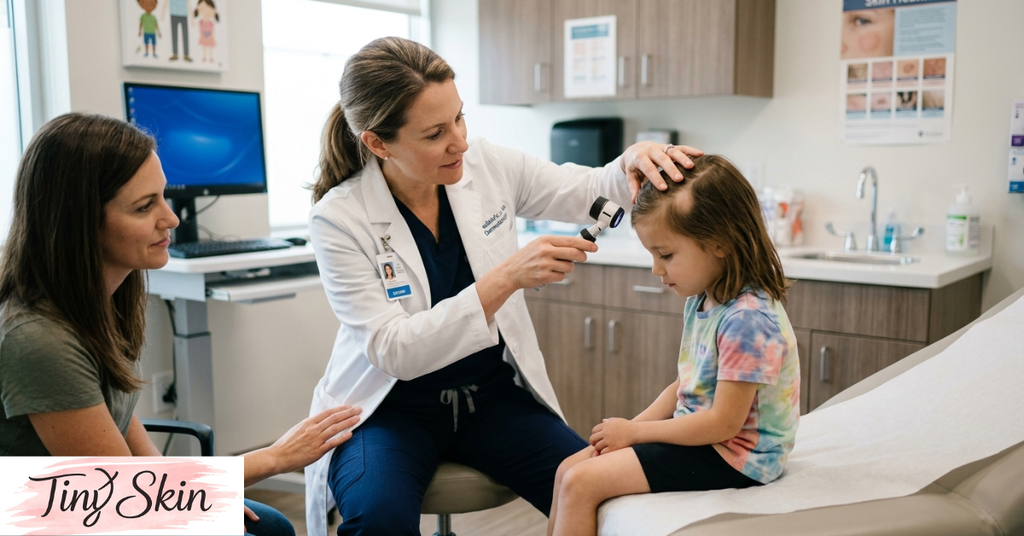
A pediatric dermatologist can usually diagnose the condition by looking at the scalp. In Russia, you can start with your local pediatrician and ask for a referral to a
pediatric dermatologist or trichologist.
What to Expect at the Appointment
The doctor will ask when the hair loss began and whether it has spread. They will also ask about family history and recent illnesses. Next, they examine the scalp, nails, and eyebrows. Sometimes they use a dermatoscope, a small magnifying device.
Conditions That Look Similar
Several conditions mimic alopecia areata. Accurate diagnosis matters because treatments differ.
| Condition | Scalp Appearance | Key Clue |
|---|---|---|
| Alopecia areata | Smooth, round patch; usually no scale | Exclamation-mark hairs, nail pitting |
| Tinea capitis (fungal infection) | Scaly, sometimes red; broken hairs | Contagious; needs lab test and antifungal medicine |
| Trichotillomania | Irregular patches; broken hairs of uneven length | Child pulls hair, often unconsciously |
| Telogen effluvium | Diffuse thinning | Follows fever, illness, or major stress by 2-3 months |
When to Test Further
Sometimes doctors order blood tests, especially for thyroid function. Additionally, they may take a scalp sample to rule out a fungal infection.
Treatment Options for Kids
There is currently no permanent cure. Nevertheless, treatments can encourage regrowth. Doctors choose them based on age, how much hair is missing, and how the child feels about it. Some mild cases need no treatment, since hair may return on its own.
Topical Treatments
Doctors often start with corticosteroid creams or foams to calm inflammation. They may add minoxidil to stimulate follicles. Use these exactly as directed, because overusing steroids can thin the skin.
Injections and Immunotherapy
For older children and teens with a few patches, doctors may inject small amounts of corticosteroid into the scalp. This can sting, so many younger children cannot tolerate it. Topical immunotherapy is another specialist option. It applies a chemical that triggers a mild allergic reaction and redirects the immune attack.
Newer Medicines
JAK inhibitors block immune signals. The U.S. FDA approved ritlecitinib for people aged 12 and older in 2023. Doctors may consider these drugs for severe cases, but they need close monitoring. Availability and approval differ by country. Therefore, ask your specialist what is available and appropriate in Russia.
| Treatment | Typical Use | Main Consideration |
|---|---|---|
| Topical corticosteroids | Mild to moderate patches, all ages | Skin thinning if overused |
| Topical minoxidil | Often combined with steroids | Slow results; may take months |
| Steroid injections | Older children, limited patches | Painful; temporary scalp dents possible |
| Topical immunotherapy | Extensive loss | Specialist-only; causes itching and redness |
| Oral JAK inhibitors | Severe, long-lasting cases | Needs lab monitoring; approval varies by age and country |
Never start adult medicines or supplements without a doctor’s advice. Hair vitamins and “miracle” oils lack solid proof for this condition.
Emotional Support and School Life
Hair loss affects more than the scalp. It can shake a child’s confidence, especially during the school years. As a result, emotional care is part of treatment.
Talking With Your Child
Use simple, honest words. For example: “Your body’s defense team is a little confused, and it’s not anyone’s fault.” Let your child ask questions. Furthermore, praise their strengths, not their appearance.
Working With the School
Tell teachers about the diagnosis. Ask them to stop any teasing quickly. Also, request permission for hats or scarves in class if your child wants them. Some schools arrange a short talk so classmates understand the condition.
Wigs, Hats, and Scalp Care
Wigs, headbands, and scarves can boost confidence. Let your child choose. Meanwhile, protect bald skin with sunscreen and a hat, because exposed scalp burns easily. If hair loss includes eyelashes or eyebrows, ask the doctor about protecting the eyes from dust.
Consider counseling if your child withdraws, feels anxious, or avoids school. In addition, support groups let families share tips and reduce isolation.
Outlook: Will the Hair Grow Back?
The honest answer is that it varies. Alopecia areata in children is unpredictable, so patience matters.
Factors That Affect Regrowth
Doctors generally see better outcomes when:
- The child has only a few small patches.
- Hair loss started later in childhood.
- There is no nail involvement.
- The scalp has no band-like (ophiasis) pattern.
Conversely, very early onset, extensive loss, and other autoimmune or allergic conditions can make recovery slower.
Relapses Can Happen
Hair may regrow, then fall out again. Regrown hair is sometimes white or fine at first, and color often returns later. Therefore, do not panic if a patch reappears. Contact your doctor, who can adjust the plan.
Long-Term Care
Regular follow-up visits help track progress. Keep photos taken in the same light every month. This helps you and the doctor see slow changes. Above all, remember that hair loss does not harm your child’s physical health or intelligence.
Key Takeaways
- Alopecia areata in children is an autoimmune condition. It is not contagious, and parents do not cause it.
- The most common sign is smooth, round bald patches, sometimes with nail pitting.
- A pediatric dermatologist can diagnose it and rule out look-alikes such as fungal infection.
- Treatments such as topical steroids and minoxidil can help, but no treatment offers a guaranteed cure.
- Hair often regrows, but relapses are common, so long-term follow-up matters.
- Emotional support and school understanding are as important as medical care.
FAQs
Can alopecia areata in children go away on its own?
Yes, in many mild cases. Small patches often regrow within months to a year without treatment. However, relapses are common, and extensive hair loss is less likely to resolve alone. See a pediatric dermatologist to confirm the diagnosis and discuss monitoring.
What triggers alopecia areata in a child?
Doctors do not know one exact trigger. Genetics and an overactive immune system play key roles. Illness or emotional stress may precede a flare in some children. Importantly, diet, shampoo, and hairstyles do not cause the condition, so parents should not blame themselves.
Is alopecia areata painful or itchy for kids?
Usually no. The skin looks smooth and normal. Some children feel mild tingling or itching just before a patch forms. If the scalp is scaly, red, or very itchy, ask a doctor to check for a fungal infection or eczema.
Which doctor treats hair loss in children?
A pediatric dermatologist is the best choice. In Russia, ask your pediatrician for a referral to a детский дерматолог or a trichologist. If the doctor suspects related conditions, they may also recommend an endocrinologist, for example for thyroid concerns.
Can my child with alopecia areata play sports and swim?
Absolutely. The condition does not limit physical activity. Pool water and sports gear will not worsen it. Apply sunscreen to bald areas, and let your child wear a swim cap or hat if they prefer.
Does alopecia areata run in families?
Sometimes. A family history of alopecia areata, thyroid disease, or other autoimmune conditions raises the risk. Nevertheless, many affected children have no relatives with the condition. Genetics only partly explains who develops it.
Conclusion
Alopecia areata in children can feel frightening at first. However, you now know that it is an autoimmune condition, not an infection and not your fault. Treatments can help, and hair often regrows. Equally important, your support gives your child confidence while they heal.
Do not wait if you notice bald patches, nail changes, or a scaly scalp. Book an appointment with a pediatric dermatologist today for an accurate diagnosis and a personalized plan. Bring photos and your family history. Early guidance gives you answers, and it gives your child the best chance of a calm, confident future.
