

Introduction
An ingrown toenail can turn every step into a painful reminder. The nail edge digs into the skin, the toe swells, and tight winter boots make everything worse. Many people in Russia delay treatment because they hope the problem will fade on its own. Sometimes it does. However, a nail that keeps returning often needs professional care.
This guide explains ingrown toenail removal in plain language. You will learn what causes the problem, which home steps are safe, and how doctors remove the painful part of the nail. Additionally, you will see what recovery looks like and how to prevent a repeat. Read on to decide whether home care is enough or whether you should book a visit with a podiatrist or surgeon today.
What Is an Ingrown Toenail and Why Does It Happen?
An ingrown toenail (medical term: onychocryptosis) happens when the edge of a nail grows into the soft skin beside it. The big toe suffers most often. The skin reacts with pain, redness, and swelling. Over time, bacteria can enter the broken skin and cause an infection.
Common Causes of Ingrown Toenails
Several everyday habits push the nail into the skin:
- Cutting nails too short or rounding the corners
- Wearing tight, narrow, or pointed shoes
- Injuring the toe, for example by stubbing it or dropping a heavy object on it
- Having naturally curved or thick nails
- Sweating heavily inside closed shoes
Moreover, family history plays a role. If your parents had ingrown nails, you may develop them too.
Who Has a Higher Risk?
Teenagers, runners, and football players see this problem often because their feet take repeated pressure. Additionally, people with fungal nail infections face a higher risk. Winter adds another factor in Russia. Heavy boots and damp socks squeeze feet for hours. People with diabetes or poor circulation need extra caution, since foot wounds heal slowly in these conditions.
Knowing the cause helps you pick the right treatment. It also helps you avoid needing ingrown toenail removal again.
Signs Your Ingrown Toenail Needs Attention
Spotting the problem early gives you more options. Symptoms usually move through clear steps.
Early Symptoms
At first, the nail edge feels tender. The skin looks slightly red and feels warm. Pressing the toe hurts, and shoes make the pain sharper. At this stage, simple home care often works.
Signs of Infection
Infection changes the picture quickly. Watch for these warning signs:
- Throbbing pain, even at rest
- Pus or yellow-green drainage
- Redness that spreads beyond the nail fold
- Soft, overgrown, bleeding tissue next to the nail
- Fever or red streaks moving up the foot
Fever and red streaks are urgent. Seek medical help the same day.
The Three Stages of Ingrown Toenails
Doctors often describe ingrown toenails in three stages. The table below shows how symptoms and treatment change.
| Stage | What You See and Feel | Typical Approach |
|---|---|---|
| Stage 1 | Mild redness, swelling, and tenderness | Warm soaks, correct trimming, roomy shoes |
| Stage 2 | Increased pain, drainage, and clear infection | Medical visit, possible antibiotics, minor procedure |
| Stage 3 | Long-term swelling, overgrown tissue, repeated flare-ups | Surgical ingrown toenail removal, often with root treatment |
Stage 3 hurts the most. However, it responds well to treatment. It usually calls for ingrown toenail removal by a professional.
Safe Home Care Before Ingrown Toenail Removal

If symptoms are mild, you can try home care for a few days. Good home care may prevent the need for ingrown toenail removal. However, it cannot fix severe or infected cases.
Warm Soaks
Soaking softens the skin and eases swelling. Follow these steps:
- Fill a basin with warm, not hot, water.
- Soak the foot for 15 to 20 minutes.
- Repeat three to four times a day.
- Dry the toe thoroughly with a clean towel.
Adding Epsom salt is optional. Evidence for it is limited, but many people find it soothing.
Gently Lifting the Nail Edge
After a soak, some people place a tiny wisp of clean cotton under the nail edge. This lifts the nail away from the skin as it grows. Change the cotton daily. Stop immediately if pain increases or pus appears. Skip this method entirely if you have diabetes or numb feet.
What You Should Not Do
Several popular tricks make things worse:
- Do not cut a V shape into the nail. Dermatologists call this a myth.
- Do not dig under the nail with sharp tools.
- Do not attempt ‘bathroom surgery’ on an infected toe.
- Do not apply strong chemicals or irritating herbal compresses.
Remember: home care is not true removal. It only buys time while the nail grows out.
When to See a Doctor for Ingrown Toenail Removal
Not every ingrown nail needs surgery. However, certain situations call for professional help.
Clear Signs You Need a Professional
Book a visit if you notice any of these:
- No improvement after several days of home care
- Pus, bleeding, or overgrown tissue
- Pain that stops you from walking or sleeping
- Ingrown nails that keep coming back on the same toe
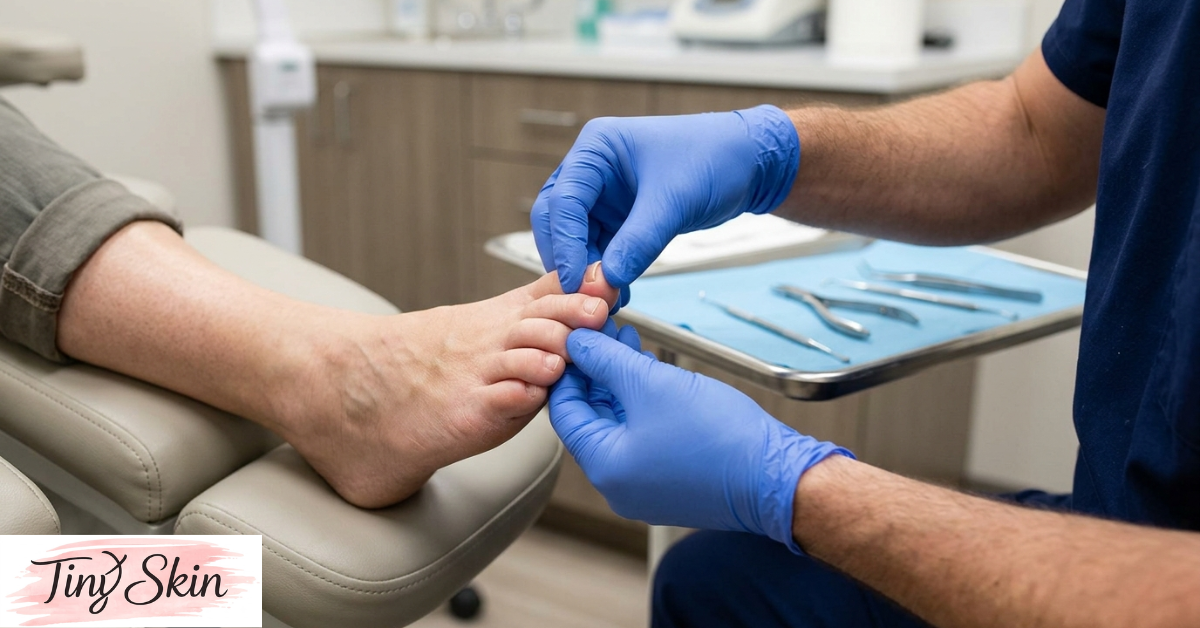
Professional ingrown toenail removal often takes less than an hour in a clinic room. The doctor numbs the toe first, so the procedure itself is tolerable.
Higher-Risk Groups
See a doctor early if you have diabetes, nerve damage, poor circulation, or a weakened immune system. Small foot problems can become serious in these groups. Therefore, never treat an ingrown nail yourself if you belong to one of them.
Which Specialist Should You Choose?
In Russia, a podiatrist (podolog) or a surgeon at a clinic or polyclinic usually performs the procedure. Dermatologists help when fungus or another skin condition contributes. Ask the clinic which technique it uses. A good doctor explains your options, risks, and aftercare before starting.
Medical Ingrown Toenail Removal Procedures Explained
Doctors rarely remove the whole nail. Most ingrown toenail removal procedures target only the painful edge. This approach protects the rest of the nail and speeds healing.
Partial Nail Avulsion
Podiatrists and surgeons often call this the ‘wedge’ procedure, or partial nail avulsion. The steps are simple:
- The doctor numbs the toe with a local anesthetic.
- The doctor cuts a narrow strip from the ingrown edge.
- The doctor lifts the strip out from under the skin fold, all the way to the root.
- The doctor cleans the area and applies a bandage.
Chemical Matricectomy
Doctors can add one more step. They apply a chemical, most often phenol, to the nail root (matrix) where the removed strip grew. This treatment helps stop that strip from growing back. Studies suggest that adding root treatment lowers the chance of recurrence compared with removing the strip alone. However, the toe may drain for longer afterward.
Total Nail Removal and Other Options
Surgeons reserve complete nail removal for badly damaged or thickened nails. Additionally, nail braces can help mild to moderate cases without cutting anything. The table compares your main choices.
| Option | How It Works | Best For | Chance of Return |
|---|---|---|---|
| Nail brace | A small spring or strip gently lifts and reshapes the nail | Mild to moderate cases, curved nails | Varies; depends on correct, long-term use |
| Partial avulsion alone | Removes the painful nail strip | First episode, no root treatment wanted | Higher than with root treatment |
| Partial avulsion plus phenol | Removes the strip and treats the nail root | Repeated or infected cases | Lower than avulsion alone |
| Total nail removal | Removes the entire nail | Severely damaged or thick nails | Regrowth possible; the nail may grow back thick or uneven |
Your doctor will recommend the best ingrown toenail removal method based on your stage, nail shape, and general health.
Recovery After Ingrown Toenail Removal
Good aftercare protects the results of ingrown toenail removal. Healing time varies, but most people follow a similar path.
The First 48 Hours After Ingrown Toenail Removal
The numbness fades after a few hours. Then soreness appears. To stay comfortable:
- Rest and raise your foot above heart level when possible
- Keep the bandage dry and in place until your doctor says otherwise
- Use over-the-counter pain relief only as the label or your doctor directs
- Wear open or very roomy footwear
Weeks One to Four
Follow your doctor’s dressing instructions carefully. Most clinics suggest steps like these:
- Remove the old dressing as instructed.
- Rinse or soak the toe if your doctor recommends it.
- Pat the area dry and apply a clean dressing.
- Return to normal shoes only when the skin feels comfortable.
Some drainage is normal, especially after chemical treatment. Many people return to normal activity within one to two weeks. Sports may need a little longer.
When to Call Your Doctor
Contact the clinic if you notice increasing pain, spreading redness, foul-smelling pus, or fever. Toenails grow slowly, so full regrowth can take a year or longer.
How to Prevent Ingrown Toenails for Good
Prevention is easier than treatment. A few daily habits protect your toes.
Trim Your Nails the Right Way
- Cut straight across, not in a curve
- Leave the corners visible; do not dig into them
- Keep the nail slightly long so the edge stays above the skin
- Use clean, sharp clippers
- Soften thick nails in warm water before cutting
Choose Better Shoes and Socks
Shoes with a roomy toe box reduce pressure. Leave about a thumb’s width of space in front of your longest toe. Additionally, choose breathable cotton or moisture-wicking socks, especially inside winter boots. Change damp socks quickly.
Build Simple Foot Habits
Inspect your feet regularly. Treat fungal infections early, because thick nails curve more easily. Moreover, wear protective footwear at work if heavy objects could fall on your feet.
| Common Belief | Dermatology Fact |
|---|---|
| Cutting a V in the nail relieves pressure | The nail does not grow toward the V, so it does not help |
| Rounding the corners prevents ingrowth | Rounded corners often make the problem worse |
| Every ingrown nail needs the whole nail removed | Most cases only need the painful edge treated |
Following these habits lowers your risk of another round of ingrown toenail removal.
Key Takeaways
- Ingrown toenails happen when a nail edge grows into nearby skin, often because of poor trimming or tight shoes.
- Mild cases may improve with warm soaks, correct trimming, and roomy footwear.
- Pus, spreading redness, fever, or repeated flare-ups mean you need a doctor.
- Ingrown toenail removal usually targets only the painful nail edge, not the whole nail.
- Adding root treatment lowers the chance that the nail edge returns.
- People with diabetes or poor circulation should see a doctor early and avoid self-treatment.
FAQs
Is ingrown toenail removal painful?
The procedure itself should not hurt much, because the doctor numbs your toe with a local anesthetic first. The injection stings briefly. Afterward, you may feel soreness or throbbing for a few days. Over-the-counter pain relief and elevation usually help. Tell your doctor if pain worsens instead of improving.
How long does recovery take after ingrown toenail removal?
Many people return to normal activity within about one to two weeks, although healing varies. The toe may drain for several weeks, especially after chemical treatment. Complete nail regrowth takes much longer, often a year or more. Follow your doctor’s dressing instructions and avoid tight shoes until the skin heals.
Can I do ingrown toenail removal at home?
You can relieve mild symptoms at home with warm soaks and proper trimming. However, you should not cut out the ingrown edge yourself. Home attempts can push nail fragments deeper, cause infection, or leave a spike behind. If pain, pus, or swelling persists, a doctor should handle the removal.
Does the nail grow back after ingrown toenail removal?
Yes, the nail usually grows back. After partial removal with chemical treatment, the treated edge usually stays gone, so the nail grows back slightly narrower. After total removal without matrix destruction, the whole nail regrows over about a year or longer. Your doctor will explain which outcome to expect.
Which doctor performs ingrown toenail removal?
Start with a podiatrist (podolog) or a surgeon. Both can treat ingrown nails. Dermatologists help when fungal infection or skin disease contributes. Go to an emergency department if you have fever, spreading redness, or diabetes with an infected toe. Early care shortens treatment and lowers the risk of complications.
Can an ingrown toenail come back after removal?
Yes, it can. Recurrence is more common after simple partial removal than after removal combined with chemical treatment of the nail root. Poor trimming and tight shoes also raise the risk. Therefore, follow prevention steps and see your doctor early if symptoms return.
Conclusion
Ingrown toenail removal sounds scary, but modern procedures are quick, safe, and effective for most people. Mild cases may settle with warm soaks, correct trimming, and roomier shoes. However, pain, pus, or repeated flare-ups signal that you need professional help. A podiatrist or surgeon can numb the toe, remove the painful edge, and treat the nail root to lower the chance of a repeat. Afterward, careful aftercare and smart nail habits protect your results. Do not wait until infection spreads. If your toe hurts right now, book an appointment with a podiatrist or surgeon this week. Share this guide with anyone who struggles with sore toes.
Medical disclaimer: This article offers general information and does not replace personal medical advice. Consult a qualified doctor for diagnosis and treatment.

