
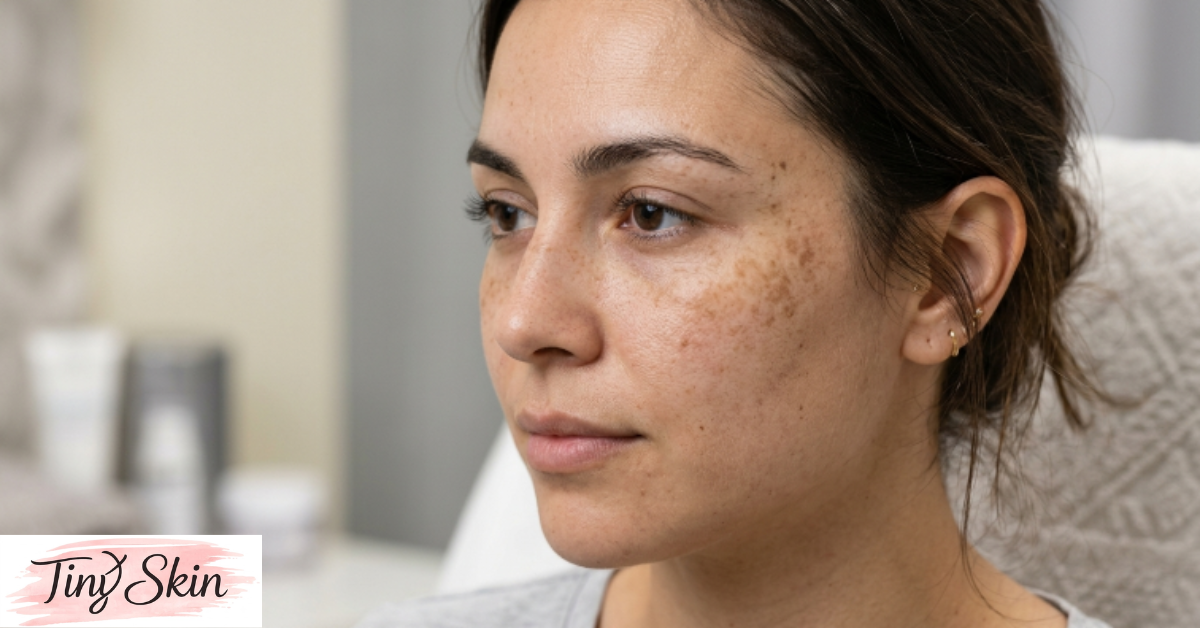

If you’ve been standing in front of your bathroom mirror lately, tilting your chin under the light, trying to figure out where that new dark spot on your cheek came from — you’re not alone. Dark spots on face skin are one of the most common concerns people bring up with dermatologists and estheticians, right up there with acne and fine lines. And honestly? It makes sense why they bother us so much. They show up in the most visible places, they don’t fade overnight, and half the time we can’t even pinpoint what caused them.
Here’s the thing — dark spots on face areas aren’t one single problem with one single fix. They can come from sun exposure, old acne scars, hormonal shifts, or just skin doing what skin does as we get older. That means the “one-size-fits-all” advice you see floating around Instagram often falls flat.
In this guide, we’re going to break down exactly what causes dark spots on face skin, how to tell them apart, which treatments actually have evidence behind them, and what daily habits will keep new ones from popping up. No fluff, no miracle-cream promises — just practical, dermatology-backed advice you can start using today.
What Are Dark Spots on Face Skin, Exactly?
Let’s start with the basics, because a lot of people lump every kind of discoloration into the same bucket. Dark spots on face skin — technically called hyperpigmentation — happen when certain areas produce more melanin than the surrounding skin. Melanin is the pigment responsible for your natural skin tone, and it’s also your skin’s built-in defense mechanism against UV damage.
When something irritates or stresses the skin (sun, inflammation, hormones), melanocytes — the cells that make melanin — can go into overdrive in that specific area. The result is a patch, freckle, or spot that’s noticeably darker than the rest of your complexion.
Now, not all dark spots are created equal. Dermatologists generally group them into a few categories:
- Sunspots (solar lentigines): Flat, tan-to-brown spots that usually appear on areas that get the most sun — cheeks, forehead, nose, and the backs of hands.
- Post-inflammatory hyperpigmentation (PIH): These are the marks left behind after a pimple, cut, or irritation heals. If you’ve ever picked at a breakout and regretted it weeks later, this is probably why.
- Melasma: Larger, symmetrical patches often triggered by hormonal changes — pregnancy, birth control, or thyroid issues are common culprits.
- Age spots: Similar to sunspots but tend to develop later in life due to cumulative UV exposure over decades.
Knowing which type you’re dealing with actually matters, because the treatment that clears up a sunspot might do very little for melasma, and vice versa. This is a mistake a lot of people make — they buy a brightening serum without ever figuring out which kind of pigmentation they actually have.
What Causes Dark Spots on Face Skin?
Sun Exposure Is the Biggest Culprit
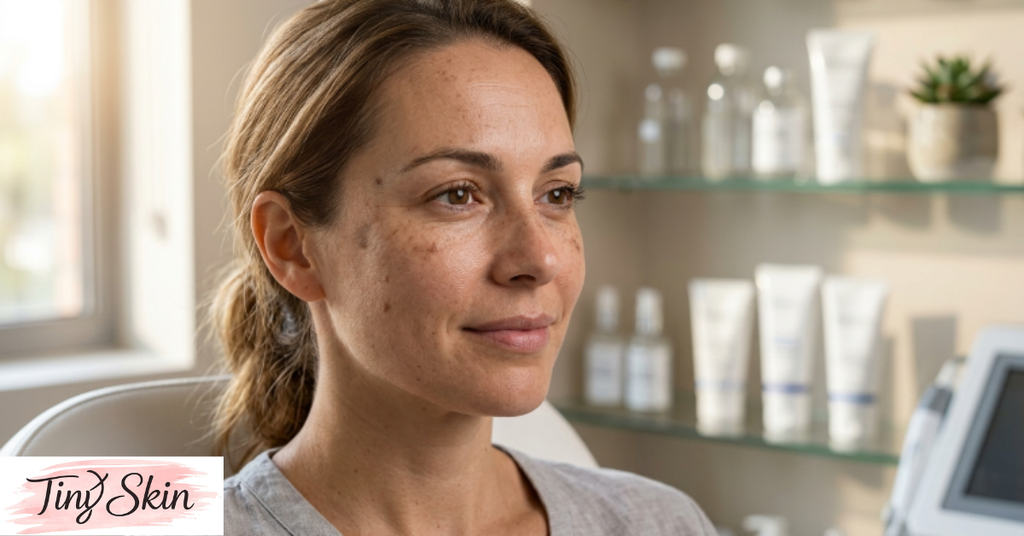
If there’s one factor dermatologists agree on more than anything else, it’s this: UV exposure is the number one driver of dark spots on face skin. Every time your skin is hit with sunlight — even on a cloudy day, even through a car window — it triggers melanin production as a protective response. Over years, this adds up, especially on areas that rarely get covered.
That’s why you’ll often notice these spots concentrated on the high points of your face: cheekbones, nose bridge, forehead. Sound familiar?
Hormones Play a Bigger Role Than You’d Think
Pregnancy, birth control pills, hormone replacement therapy — all of these can trigger melasma, sometimes called the “mask of pregnancy” because of how commonly it shows up during that time. Estrogen and progesterone appear to stimulate melanocytes, which is why melasma tends to be more stubborn and more likely to return even after treatment.
Acne, Breakouts, and Skin Trauma
Anytime the skin experiences inflammation — a pimple, an insect bite, a scrape, even an aggressive facial — it can leave behind a flat mark once it heals. This is post-inflammatory hyperpigmentation, and it’s incredibly common in people with acne-prone skin. In reality, the pimple itself often clears up faster than the mark it leaves behind.
Aging and Cumulative Skin Damage
As we age, our skin’s ability to repair and regulate melanin production isn’t quite as efficient. Combine that with decades of sun exposure, and it’s no surprise that dark spots on face skin become more noticeable after age 40 or 50.
Certain Medications and Skin Products
Some medications — including certain antibiotics, anti-seizure drugs, and even some chemotherapy treatments — can increase photosensitivity, making skin more prone to pigmentation when exposed to sun. Harsh or irritating skincare products can also cause inflammation that leads to dark spots, particularly if you have sensitive or reactive skin.
Common Symptoms and How to Tell Dark Spots Apart From Other Skin Issues
Dark spots are generally flat, not raised, and don’t typically itch or hurt. That’s actually an important distinction. If a spot is raised, changing shape, bleeding, or has irregular, jagged borders, that’s not something to self-diagnose — that warrants a visit to a dermatologist to rule out anything more serious, including skin cancer.
Typical, benign dark spots on face skin will usually:
- Be flat and smooth to the touch
- Range from light tan to dark brown
- Have relatively even coloring within the spot
- Stay roughly the same size over time (though they may darken with more sun exposure)
- Appear more in sun-exposed areas
If you notice a spot that’s evolving quickly, has multiple colors within it, or is larger than a pencil eraser with uneven borders, please don’t wait it out — get it checked. This isn’t meant to alarm you; it’s just responsible advice, because the vast majority of dark spots are harmless, but it’s always worth ruling out anything concerning.
Home Remedies for Dark Spots on Face: What Actually Works
Let’s talk about home remedies, because I know a lot of you are searching for options before jumping into prescription treatments or professional procedures — and that’s completely reasonable.
Ingredients With Real Evidence Behind Them
- Vitamin C: A well-studied antioxidant that can help brighten skin and interfere with excess melanin production over time. Look for stable formulations, usually in serum form.
- Niacinamide: Gentle, well-tolerated by most skin types, and shown in several studies to reduce the transfer of pigment within skin cells.
- Licorice root extract: Contains compounds that can help inhibit the enzyme responsible for melanin production.
- Azelaic acid: Originally used for acne, but it’s also effective for fading post-inflammatory marks and is generally safe during pregnancy (though always check with your doctor first).
DIY Remedies: Proceed With Caution
You’ll see a lot of advice online about lemon juice, baking soda, or apple cider vinegar for dark spots on face skin. Here’s the honest truth — these can do more harm than good. Lemon juice, in particular, is highly acidic and photosensitizing, meaning it can actually make pigmentation worse if you go out in the sun afterward. I’ve seen clients come in with chemical burns from DIY lemon treatments, and it’s genuinely heartbreaking because their skin was in better shape before they started.
If you want to go the natural route, stick to gentler options like aloe vera for soothing, or green tea extract, which has some antioxidant benefits. Just don’t expect dramatic results from kitchen ingredients alone.
Skincare Products and Ingredients That Target Dark Spots on Face
If home remedies aren’t cutting it, over-the-counter and prescription-strength products are where most people see real, measurable improvement.
Retinoids
Retinol and prescription-strength tretinoin speed up cell turnover, which helps fade existing pigmentation and prevents it from settling deeper into the skin. That said, retinoids can increase sun sensitivity, so pairing them with proper sunscreen isn’t optional — it’s essential.
Hydroquinone
This is considered one of the gold-standard ingredients for stubborn pigmentation, particularly melasma. It works by inhibiting melanin production directly. In most countries, higher concentrations require a prescription, and it’s typically recommended for short-term use under a dermatologist’s supervision due to potential side effects with long-term use.
Chemical Exfoliants (AHAs and BHAs)
Glycolic acid, lactic acid, and salicylic acid all help slough off pigmented surface cells, gradually revealing more even-toned skin underneath. These work well combined with brightening serums but can be irritating if overused, so start slow — two to three times a week is usually plenty when you’re just starting out.
Tranexamic Acid
Once used mainly in medical settings to control bleeding, tranexamic acid has become increasingly popular in skincare for treating melasma and stubborn dark spots on face skin. It’s often found in serums and can be used alongside vitamin C or niacinamide.
Professional Treatments Worth Considering
If topical products and patience aren’t giving you the results you want, professional treatments can speed things along considerably.
Chemical Peels
Performed by a dermatologist or licensed esthetician, chemical peels use stronger concentrations of acids to remove damaged, pigmented layers of skin. Results vary depending on the depth of the peel, and multiple sessions are often needed.
Laser and Light-Based Treatments
Options like IPL (intense pulsed light) and certain laser treatments target pigment directly, breaking it up so the body can naturally clear it away. These tend to be more effective for sunspots and age spots than for melasma, which can actually worsen with aggressive laser treatment in some cases — which is exactly why a proper consultation matters before booking any procedure.
Microneedling
Sometimes combined with brightening serums, microneedling creates controlled micro-injuries that stimulate collagen production and can help even out skin tone over several sessions.
A quick but important note here: not every treatment is right for every skin tone. Darker skin types are more prone to post-inflammatory hyperpigmentation from aggressive treatments, so it’s genuinely worth consulting a dermatologist who has experience working with a range of skin tones before committing to lasers or deep peels.
Dos and Don’ts for Managing Dark Spots on Face Skin
Do:
- Wear broad-spectrum SPF 30 or higher every single day, rain or shine
- Introduce new active ingredients one at a time so you can track what’s working
- Be patient — most pigmentation treatments take 8 to 12 weeks to show visible change
- Moisturize consistently, since a healthy skin barrier responds better to actives
- Reapply sunscreen every two hours if you’re outdoors for extended periods
Don’t:
- Pick, pop, or scratch at breakouts — this is one of the biggest preventable causes of new dark spots
- Mix too many strong actives at once (retinoids, acids, and hydroquinone together can cause serious irritation)
- Skip sunscreen just because it’s cloudy or you’re mostly indoors
- Expect overnight results from any product, no matter what the packaging claims
- Use DIY acidic treatments like straight lemon juice directly on your skin
Common Mistakes People Make When Treating Dark Spots
I want to spend a moment here because this is where I see people go wrong the most, even when they’re doing “everything right” on paper.
First, inconsistent sunscreen use. You can spend a small fortune on brightening serums, but if you’re not wearing SPF daily, you’re essentially working against yourself. UV exposure will continue triggering melanin production faster than any product can fade it.
Second, giving up too soon. Skin cell turnover takes weeks, and visible improvement in pigmentation often takes a couple of months. Switching products every two weeks because you don’t see instant results just resets the clock and irritates your skin in the process.
Third, over-exfoliating. More isn’t better here. I’ve worked with people who went from using an acid toner twice a week to using it daily, thinking they’d speed things up — and instead, they ended up with more irritation and, ironically, more pigmentation from the resulting inflammation.
And finally, ignoring the underlying cause. If your dark spots on face skin are hormonal, no amount of vitamin C is going to fully resolve them without addressing what’s driving the hormonal shift in the first place. That’s a conversation worth having with your doctor, not just your esthetician.
Prevention: Keeping New Dark Spots From Forming
Treating existing spots is only half the battle — preventing new ones is just as important, especially if you’re prone to pigmentation.
First things first: sunscreen really is non-negotiable. Choose a broad-spectrum formula and make it as automatic as brushing your teeth. Mineral sunscreens with zinc oxide are a solid option if you have sensitive or acne-prone skin, since they tend to be less irritating than some chemical formulas.
Beyond sunscreen, consider these habits:
- Wear a wide-brimmed hat during peak sun hours (10 a.m. to 4 p.m.)
- Seek shade when possible, especially during outdoor activities
- Avoid picking at blemishes, no matter how tempting it is
- Introduce antioxidants like vitamin C into your morning routine to help neutralize environmental damage
- Be gentle with your skin barrier — over-exfoliating or using harsh products creates inflammation that can trigger new spots
If you’re someone who’s dealt with recurring dark spots on face skin for years, it might also be worth looking at your overall routine holistically. Diet, stress, sleep, and even certain medications can all play a supporting role in how your skin behaves.
Expert Tips for Faster, Safer Results
A few things I always tell clients who are frustrated with slow progress:
Layer your actives strategically. Vitamin C in the morning under sunscreen, retinoids or exfoliating acids at night — not all at once. Your skin barrier will thank you, and you’ll actually see better results because you’re not constantly in a state of irritation.
Track your progress with photos, not memory. Take a photo in the same lighting every two weeks. Pigmentation fades gradually, and it’s genuinely hard to notice slow change day to day. A lot of people quit right before they would have seen results, simply because they couldn’t visually track the improvement.
Don’t underestimate patch testing. Before applying any new brightening product to your whole face, test it on a small area first, especially if you have sensitive skin. It saves you from a much bigger headache later.
Lastly, if you’ve tried the OTC route for three to six months without meaningful change, it’s a good sign to book a dermatologist consultation. Prescription-strength options exist for a reason, and there’s no prize for suffering through stubborn pigmentation longer than necessary.
Frequently Asked Questions
Can dark spots on face skin go away on their own?
Sometimes, especially post-inflammatory marks from acne, spots can fade gradually over several months without treatment. Sun-related spots and melasma, however, typically need consistent sunscreen use and active treatment to visibly improve, since sun exposure will keep reinforcing them.
How long does it take to fade dark spots on face skin?
Most treatments take anywhere from 8 to 16 weeks to show noticeable results, depending on the type of spot, its depth, and the treatment used. Deeper pigmentation, like melasma, often takes longer and may require ongoing maintenance.
What is the fastest way to get rid of dark spots on face skin?
Professional treatments like chemical peels or laser therapy tend to work faster than at-home products, but they come with more risk and cost, and aren’t suitable for everyone. A consistent routine with proven ingredients like vitamin C, niacinamide, and daily SPF remains the safest long-term approach.
Does vitamin C really help with dark spots?
Yes, vitamin C has reasonably strong research support for helping brighten skin and reduce the appearance of pigmentation over time, though it works gradually and works best alongside consistent sun protection.
Are dark spots on face skin a sign of something serious?
Most are harmless and related to sun exposure, hormones, or healed inflammation. That said, any spot that’s rapidly changing, has irregular borders, multiple colors, or is growing should be evaluated by a dermatologist to rule out anything more serious.
Can diet affect dark spots on face skin?
While diet alone won’t cause or cure pigmentation, a diet rich in antioxidants may support overall skin health, and some research suggests high sugar intake and inflammation can indirectly worsen skin conditions, including pigmentation issues.
Final Thoughts
Dealing with dark spots on face skin can feel discouraging, especially when you’re doing your best and still not seeing the glow-up you were hoping for. But here’s the encouraging part — this is one of the most treatable skin concerns out there, as long as you’re consistent and realistic about the timeline.
Start with the basics: daily sunscreen, gentle but effective active ingredients, and patience. If things aren’t improving after a few months, don’t hesitate to bring in a dermatologist who can tailor a plan to your specific skin type and pigmentation cause. Your skin didn’t get here overnight, and it won’t clear up overnight either — but with the right approach, real, visible progress is absolutely within reach.

