

Introduction
That raw, stinging feeling between your thighs after a long walk or a sweaty workout is more common than most women realize. Learning how to treat chafing in groin area female skin quickly can save you days of discomfort and prevent the irritation from getting worse. Chafing happens when skin repeatedly rubs against skin or fabric, causing friction, redness, and sometimes small cracks.
The good news? Most cases heal within a few days with the right care. However, ignoring it or using the wrong products can turn a mild irritation into a painful rash. In this guide, you’ll learn exactly what causes groin chafing, how to soothe it fast, and simple daily habits to stop it from coming back.
What Causes Chafing in the Groin Area?
Chafing in the groin area develops when skin rubs repeatedly against itself, clothing, or a damp surface. This friction damages the outer skin layer, leading to irritation and inflammation. Additionally, heat and moisture make the problem worse because they soften the skin’s natural barrier.
1.1 Friction from Movement
Walking, running, or cycling causes the inner thighs to rub together constantly. Over time, this friction wears down the skin’s protective barrier, especially in warm weather.
1.2 Sweat and Moisture Buildup
Sweat trapped in skin folds increases friction and softens skin. Moreover, damp conditions create an environment where bacteria and yeast thrive, raising the risk of infection.
1.3 Tight or Rough Clothing
Synthetic fabrics, seams, and tight underwear can rub against sensitive skin. As a result, even short activities can trigger irritation if clothing isn’t breathable.
Signs Your Chafing Needs Attention
Recognizing chafing early helps you treat it before it worsens. Most women notice redness first, followed by a burning or stinging sensation.
2.1 Mild Irritation Symptoms
Early signs include pink or red patches, mild tenderness, and a warm feeling in the affected area. This stage usually responds well to home care.
2.2 Moderate to Severe Symptoms
If skin becomes cracked, swollen, or oozes fluid, the chafing has progressed. Consequently, this stage carries a higher risk of infection and needs closer attention.
2.3 Signs of Infection
Watch for increased pain, pus, foul odor, or fever. These symptoms suggest bacterial or fungal infection and typically require medical treatment.
Immediate Relief: How to Treat Chafing in Groin Area Female Skin
When chafing strikes, fast action reduces discomfort and speeds healing. Dermatologists recommend a gentle, step-by-step approach rather than harsh scrubbing.
3.1 Clean the Area Gently
Rinse the skin with lukewarm water and a mild, fragrance-free cleanser. Avoid hot water, since it can strip moisture and worsen irritation.
3.2 Pat Dry, Never Rub
Use a soft towel to pat the skin dry completely. Rubbing at this stage can reopen microscopic breaks in the skin.
3.3 Apply a Soothing Barrier
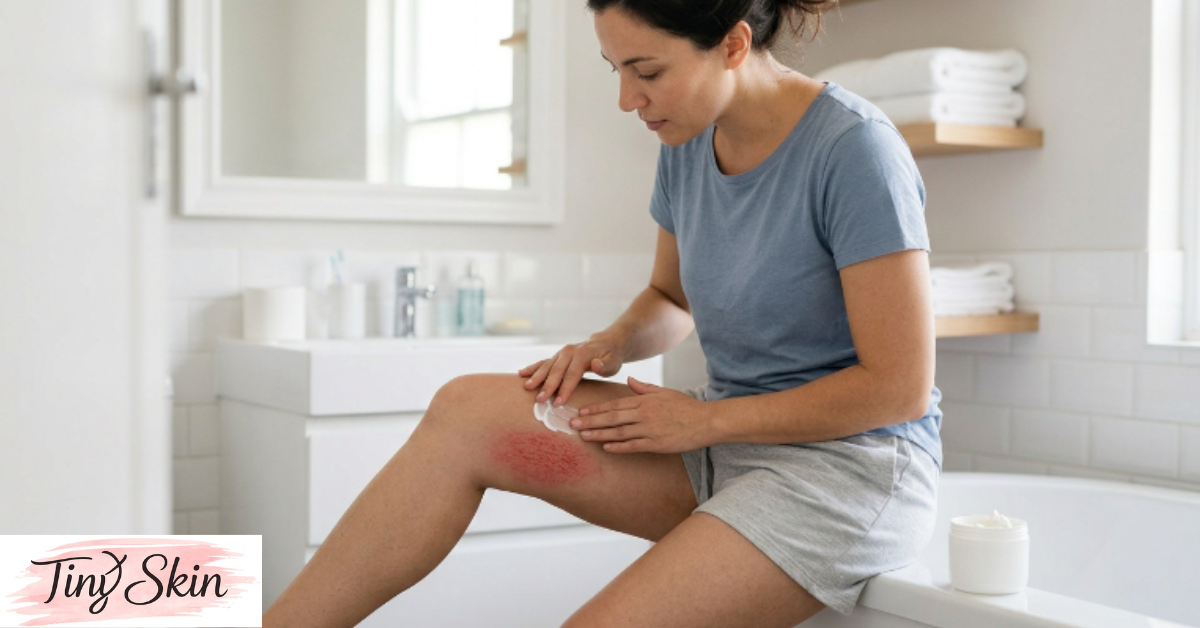
A thin layer of fragrance-free healing balm or zinc oxide cream protects the area while it heals. This barrier also reduces further friction during movement.
Quick Relief Checklist:
- Clean gently with mild, fragrance-free soap
- Dry completely before dressing
- Apply a protective barrier cream
- Wear loose, breathable clothing until healed
- Avoid tight underwear or leggings for 24-48 hours
Best Ingredients and Products for Healing
Choosing the right products speeds up recovery and prevents further irritation. However, not every “skin-soothing” product is suitable for chafed, sensitive skin.
4.1 Ingredients That Help
Look for zinc oxide, colloidal oatmeal, panthenol, and ceramides. These ingredients calm inflammation and rebuild the skin barrier.
4.2 Ingredients to Avoid
Alcohol, synthetic fragrance, and menthol can sting and dry out already irritated skin. Additionally, harsh exfoliating acids should be avoided until the area fully heals.
4.3 Product Comparison Table
| Product Type | Key Ingredient | Best For | Avoid If |
|---|---|---|---|
| Barrier Balm | Zinc oxide | Active friction protection | Open wounds without cleaning first |
| Soothing Cream | Colloidal oatmeal | Redness and itching | Known oat allergy |
| Healing Ointment | Panthenol (Vitamin B5) | Cracked or dry skin | Rarely unsuitable |
| Moisturizing Lotion | Ceramides | Restoring skin barrier | Very wet, unhealed area |
Skin Exfoliation and Uneven Skin Texture: What’s the Link?
Many women wonder whether skin exfoliation helps prevent chafing. The answer is nuanced, since exfoliation supports smooth skin tips long-term but must be timed carefully.
5.1 How Exfoliation Prevents Future Chafing
Gentle exfoliation removes dead skin cells that contribute to uneven skin texture. Smoother skin experiences less drag and friction during movement.
5.2 When to Avoid Exfoliating
Never exfoliate skin that is actively chafed, cracked, or inflamed. Doing so delays healing and increases pain significantly.
5.3 Choosing a Gentle Exfoliant
Once skin has healed, a mild chemical exfoliant used once or twice weekly can help. Physical scrubs are generally too harsh for this delicate area.
Chafing Causes vs. Solutions Table
| Problem | Likely Cause | Recommended Solution |
|---|---|---|
| Redness after exercise | Friction from movement | Anti-chafe balm before activity |
| Persistent itching | Sweat and moisture buildup | Breathable fabrics, dry thoroughly |
| Rough, uneven skin texture | Dead skin buildup | Gentle exfoliation (only when healed) |
| Recurring irritation in folds | Tight clothing or seams | Seamless, moisture-wicking underwear |
| Stinging with cracked skin | Untreated moderate chafing | Zinc oxide barrier + dermatologist check |
Daily Habits That Prevent Groin Chafing
Prevention is far easier than treatment. Small daily adjustments significantly reduce the chances of chafing returning.
6.1 Choose the Right Fabrics
Opt for moisture-wicking, seamless underwear made from breathable materials like cotton or technical blends. Avoid rough seams near the inner thighs.
6.2 Apply Anti-Chafe Products Before Activity
Applying a lubricating balm or powder before exercise reduces friction from the start. This is especially helpful during hot weather or long activity.
6.3 Maintain Good Hygiene and Dryness
Shower after sweating and dry skin folds thoroughly. Moreover, changing out of damp clothing quickly prevents bacteria and yeast growth.
When to See a Dermatologist
Most chafing resolves with home care within a few days. However, certain signs mean it’s time to consult a professional.
7.1 Symptoms That Require Medical Attention
See a dermatologist if you notice pus, severe swelling, spreading redness, or fever. These symptoms may indicate infection requiring prescription treatment.
7.2 Chafing That Won’t Heal
If irritation persists beyond a week despite proper care, an underlying skin condition may be involved. A dermatologist can identify the exact cause.
7.3 What to Expect at a Dermatology Visit
Dermatologists typically examine the area, ask about symptoms, and may prescribe an antifungal, antibiotic, or steroid cream depending on the diagnosis.
KEY TAKEAWAYS
- Groin chafing results from friction, sweat, and tight clothing rubbing against sensitive skin
- Gentle cleansing and a protective barrier cream offer the fastest relief
- Zinc oxide, colloidal oatmeal, and panthenol are top healing ingredients
- Avoid exfoliating or using harsh products on actively irritated skin
- Breathable, seamless underwear and anti-chafe balms prevent most future flare-ups
- Seek a dermatologist if you see pus, fever, or irritation lasting over a week
FAQs
How long does groin chafing take to heal?
Mild chafing usually heals within 2 to 4 days with proper care. Moderate cases with cracked skin may take up to a week. Keeping the area clean, dry, and protected speeds up recovery significantly.
Can I use Vaseline for groin chafing?
Yes, plain petroleum jelly can act as a protective barrier against friction. However, it doesn’t actively heal skin, so pairing it with a zinc oxide or panthenol cream works better for damaged skin.
Is it normal to chafe even if I’m not overweight?
Yes, chafing can affect women of all body types. Sweat, fabric friction, humidity, and activity level matter more than body size in most cases.
Should I wear underwear while chafing heals?
Loose, breathable cotton underwear is generally fine and can protect healing skin from further friction. Avoid tight, synthetic, or damp fabrics until the irritation fully clears.
Can chafing turn into a yeast infection?
Yes, broken, moist skin creates an environment where yeast can grow. If you notice itching, a rash with defined edges, or a strong odor, consult a dermatologist for proper treatment.
Does shaving make groin chafing worse?
Shaving can irritate already chafed skin and increase friction. It’s best to avoid shaving the area until it has fully healed to prevent further irritation or micro-cuts.
Conclusion
Knowing how to treat chafing in groin area female skin puts you back in control of your comfort quickly. Start with gentle cleansing, a soothing barrier cream, and breathable clothing to calm irritation fast. Moreover, simple daily habits like moisture-wicking underwear and anti-chafe balms can prevent it from returning.
If symptoms worsen, spread, or don’t improve within a week, don’t wait it out. Book a consultation with a dermatologist to get a proper diagnosis and treatment plan tailored to your skin.

