

Introduction
Few things unsettle new parents faster than a bright red, angry-looking rash on their baby’s bottom. If regular diaper cream isn’t helping, you may be dealing with yeast diaper rash, a common fungal skin infection caused by an overgrowth of Candida albicans. Unlike ordinary diaper rash, this type doesn’t clear up with a simple cream switch or extra air time.
The good news? Yeast diaper rash is highly treatable once you know what you’re looking at. In this guide, you’ll learn exactly how to identify it, what causes it, and which treatments pediatricians and dermatologists actually recommend, so your baby can feel comfortable again.
What Is Yeast Diaper Rash?
Understanding Candida and the Skin
Yeast diaper rash develops when Candida albicans, a fungus that naturally lives on skin and in the gut, multiplies out of control. Normally, healthy skin bacteria keep candida in check. However, the diaper area’s warm, moist environment creates ideal conditions for this fungus to thrive.
Why Babies Are Especially Prone
Infants are more susceptible than adults because their skin barrier is thinner and still developing. Additionally, diapers trap heat and moisture against the skin for hours at a time, weakening natural defenses further.
How It Differs From a Simple Irritation
A basic diaper rash results from friction, wetness, or contact with urine and stool. Yeast diaper rash, on the other hand, is an active infection. It typically appears after standard diaper rash treatments have already failed for a few days.
Yeast Diaper Rash vs. Regular Diaper Rash
Telling the two apart matters because they need different treatments. Below is a quick comparison to help you assess what you’re seeing.
| Feature | Regular Diaper Rash | Yeast Diaper Rash |
|---|---|---|
| Color | Mild pink or red | Deep, bright red |
| Border | Blurred, gradually fading edges | Sharp, well-defined edges |
| Location | Flat surfaces (thighs, buttocks) | Skin folds, groin creases |
| Satellite spots | Rarely present | Small red bumps around main rash |
| Response to standard cream | Improves within 2-3 days | Persists or worsens |
| Associated symptoms | Mild discomfort | Itching, burning, possible oral thrush |
Moreover, yeast diaper rash often appears alongside oral thrush, a related candida infection in the mouth. If your baby has white patches on their tongue or cheeks along with a stubborn rash, this connection is worth mentioning to your pediatrician.
Signs and Symptoms to Watch For
Visual Characteristics
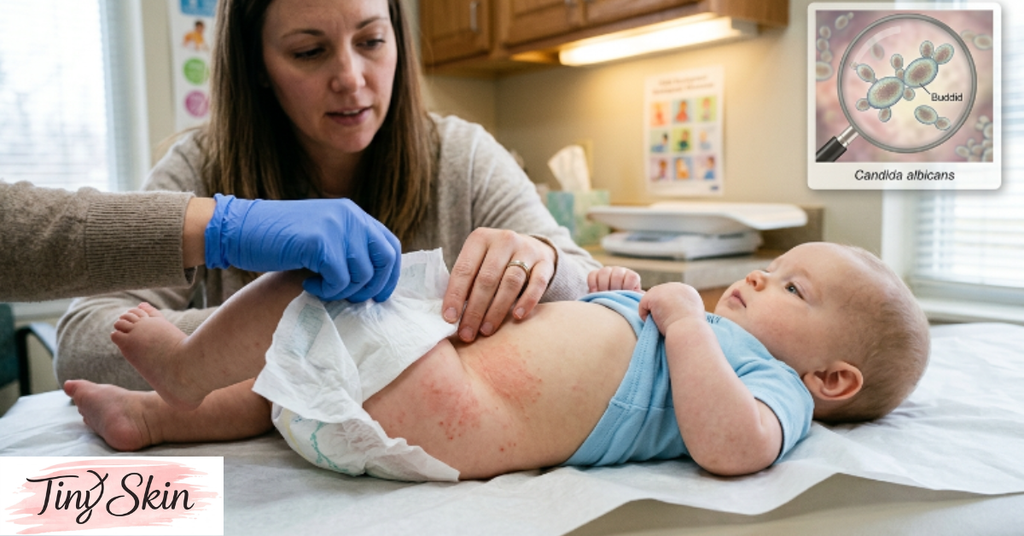
The rash usually looks bright red with a raised, shiny surface. Small red bumps, known as satellite lesions, often spread just beyond the main rash border. This pattern is one of the clearest indicators of a fungal cause.
Where It Typically Appears
Yeast diaper rash favors warm, moist skin folds rather than flat areas. Common sites include:
- The groin creases
- Skin folds around the thighs
- The area surrounding the anus
- Lower abdomen in severe cases
Behavioral Signs in Your Baby
Because the rash can itch and burn, babies often become fussier during diaper changes. Some infants cry when urine or stool touches the affected skin, and sleep may be disrupted by discomfort.
What Causes Candida Overgrowth in the Diaper Area
Prolonged Moisture Exposure
Wet or soiled diapers left on too long create the damp, warm environment candida needs to multiply. Consequently, infrequent diaper changes are one of the leading contributors.
Recent Antibiotic Use
Antibiotics treat bacterial infections, but they also reduce the healthy bacteria that normally keep yeast populations balanced. Pediatricians frequently observe yeast diaper rash developing within days of an antibiotic course, whether given to the baby directly or to a breastfeeding mother.
Other Contributing Factors
Several additional factors can raise the risk:
- Tight-fitting or non-breathable diapers
- Diarrhea or frequent loose stools
- A weakened immune system
- Existing skin irritation that breaks the skin barrier
Understanding these triggers helps parents address the root cause rather than just the surface symptoms.
How to Treat Yeast Diaper Rash at Home
Step 1: Keep the Area Clean and Dry
Change diapers frequently, ideally every two to three hours. Gently pat the skin dry rather than rubbing, and allow short periods of diaper-free time so air can reach the skin.
Step 2: Apply an Antifungal Cream
Dermatologists recommend an over-the-counter antifungal cream containing clotrimazole or miconazole for most mild to moderate cases. Apply a thin layer at each diaper change, following the product instructions or your pediatrician’s guidance.
Step 3: Compare Common Treatment Ingredients
The table below outlines commonly used ingredients so you can discuss options with your pharmacist or pediatrician.
| Ingredient | Type | Typical Use | Notes |
|---|---|---|---|
| Clotrimazole 1% | Antifungal | Mild to moderate yeast rash | Widely available OTC |
| Miconazole nitrate | Antifungal | Mild to moderate yeast rash | Often combined with zinc oxide |
| Nystatin | Prescription antifungal | Confirmed candida infections | Requires pediatrician prescription |
| Zinc oxide | Skin barrier protectant | Used alongside antifungals | Does not treat infection alone |
| Petroleum jelly | Moisture barrier | Prevention, mild irritation | Not effective against yeast |
Avoid using plain zinc oxide or petroleum jelly as a standalone treatment, since neither addresses the underlying fungal infection.
Key Takeaways
- Yeast diaper rash is caused by an overgrowth of Candida albicans, not simple friction or wetness.
- Look for bright red skin, sharp borders, and small satellite bumps as key identifiers.
- Recent antibiotic use is a common trigger for both babies and breastfeeding mothers.
- Antifungal creams containing clotrimazole or miconazole are the standard first-line treatment.
- Frequent diaper changes and dry skin are essential for both treatment and prevention.
- See a pediatrician if the rash doesn’t improve within 3 days of antifungal treatment.
When to See a Pediatrician
Red Flags That Need Medical Attention
Contact your pediatrician if you notice blistering, open sores, or pus-filled bumps. Similarly, a rash that spreads rapidly or covers a large area warrants prompt evaluation.
If Home Treatment Isn’t Working
Most cases improve within two to three days of consistent antifungal treatment. However, if there’s no improvement after this period, your pediatrician may prescribe a stronger antifungal or check for a secondary bacterial infection.
Signs of a Broader Infection
Fever, unusual fussiness, or a rash accompanied by white patches inside the mouth can signal a more widespread candida infection. These symptoms should never be managed with home remedies alone.
Preventing Yeast Diaper Rash
Diaper-Changing Habits That Help
Change diapers as soon as they’re wet or soiled, and avoid overly tight diapers that trap heat. Additionally, choose breathable, absorbent diapers designed to wick moisture away from the skin.
Skin Care Between Changes
Use fragrance-free wipes or plain water for cleaning, since fragrances and harsh soaps can irritate already sensitive skin. Allow a few minutes of diaper-free time daily whenever possible.
Supporting Gut and Skin Balance
If your baby recently finished a course of antibiotics, ask your pediatrician about probiotic-friendly feeding options, as these may help restore natural microbial balance and reduce recurrence risk.
FAQs
What does yeast diaper rash look like compared to normal rash?
Yeast diaper rash appears bright red with sharply defined edges and small red bumps scattered around the main patch. It typically develops in skin folds and doesn’t improve with standard diaper creams within a few days.
Can yeast diaper rash go away on its own?
It’s unlikely to resolve without antifungal treatment, since the underlying fungal overgrowth needs to be addressed directly. Left untreated, it can worsen, spread, or lead to secondary skin infections.
How long does yeast diaper rash take to heal?
With consistent antifungal cream use and proper diaper hygiene, most cases improve within three to seven days. Severe or recurrent cases may take longer and require a pediatrician’s evaluation.
Is yeast diaper rash contagious?
Candida can spread between the diaper area and mouth in the same baby, and occasionally between a breastfeeding baby and mother. However, it doesn’t typically spread to other children through casual contact.
Can breastfeeding mothers get a related yeast infection?
Yes, mothers can develop candida on their nipples if their baby has oral thrush or yeast diaper rash. Both mother and baby often need treatment simultaneously to fully resolve the infection.
What household products make yeast diaper rash worse?
Scented wipes, harsh soaps, and non-breathable plastic-backed diapers can worsen irritation and trap moisture. Cornstarch-based powders should also be avoided, as candida can feed on cornstarch.
Conclusion
Yeast diaper rash can be distressing to see on your baby’s skin, but it responds well to the right treatment approach. Recognizing the bright red patches, sharp borders, and satellite bumps early allows you to start antifungal treatment sooner rather than later. Combine this with frequent diaper changes and proper drying, and most babies feel relief within days.
If the rash persists beyond three days of home treatment, or you notice fever, blistering, or spreading, don’t hesitate to consult a pediatrician. Early professional guidance ensures your baby’s skin heals safely and prevents the infection from recurring.

