


Introduction
Itchy, peeling skin between your toes is more than annoying. It can burn, crack, and smell. Many people in Russia notice it after a trip to a banya, a pool, or a long winter in warm, sweaty boots. The good news is that tinea pedis, also called athlete’s foot, is common and treatable. However, the right tinea pedis treatments depend on the infection type, its severity, and your health. Some cases clear in one to four weeks with a pharmacy cream. Others need a doctor’s prescription. In this guide, you will learn how to spot the infection, compare antifungal options, care for your feet at home, and stop the fungus from returning. Read on to build a safe plan and learn when to seek professional help.
What Is Tinea Pedis? Symptoms, Causes, and Risk Factors
Understanding the infection helps you choose the best tinea pedis treatments. Tinea pedis is a fungal skin infection of the feet. Fungi called dermatophytes cause it, and they feed on keratin in your outer skin.
Common Foot Fungus Symptoms
Symptoms vary, but most people notice:
- Itching or burning, often worse after you remove your socks
- Peeling, scaly, or cracked skin between the toes
- Dry, flaky skin on the soles and sides of the feet
- Small blisters that may ooze or crust
- An unpleasant foot odor
How the Fungus Spreads
Dermatophytes love warm, damp places. You can pick them up from wet floors in pools, saunas, and bath houses. Sharing towels, slippers, or shoes also spreads the infection. Additionally, sweaty feet in closed shoes give the fungus an ideal home. Infected skin flakes can move to your nails, groin, or hands, so early tinea pedis treatment matters.
Who Has a Higher Risk?
Anyone can get athlete’s foot. However, these groups face higher risk:
- People who sweat heavily or play sports
- People who wear tight, waterproof, or non-breathable shoes for long hours
- People with diabetes or a weakened immune system
- People who often walk barefoot in shared wet areas
Reports suggest men develop it more often than women, but women get it too.
Over-the-Counter Tinea Pedis Treatments: Creams, Sprays, and Powders
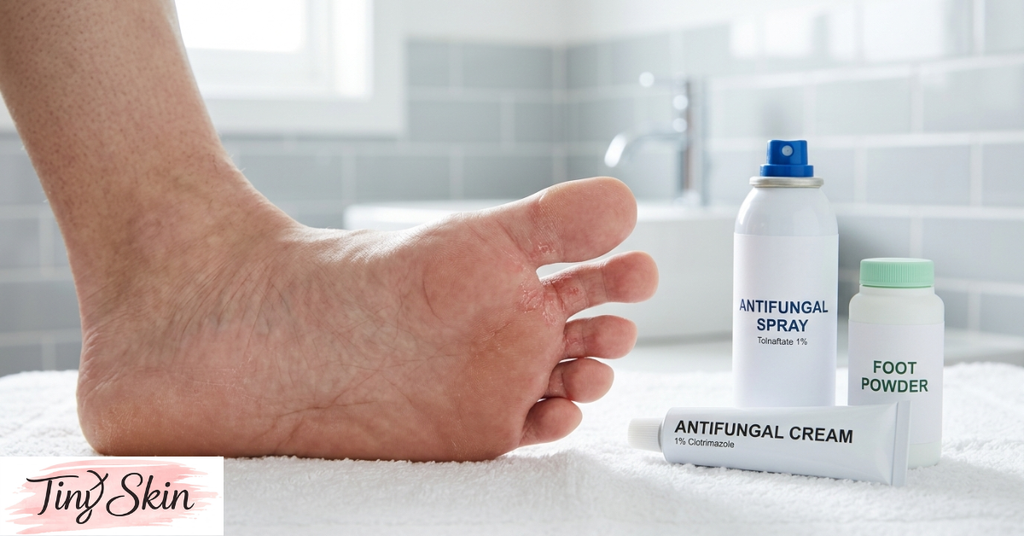
Most mild cases respond to a topical antifungal. Russian pharmacies sell several effective tinea pedis treatments without a prescription.
Main Antifungal Ingredients
Two ingredient groups dominate. Allylamines, such as terbinafine, kill the fungus. Azoles, such as clotrimazole, stop it from growing. Reviews of clinical trials suggest allylamines may cure slightly more people and sometimes need a shorter course. However, both groups work well when you use them correctly.
Comparing Popular Antifungal Creams
Table 1: Over-the-Counter Tinea Pedis Treatments Compared
| Active Ingredient | Example Brands in Russia | Group | Typical Course* | Key Point |
|---|---|---|---|---|
| Terbinafine 1% | Lamisil, Exifine | Allylamine | Often 1–2 weeks | Kills fungus; short course |
| Clotrimazole 1% | Kanesten, Clotrimazole | Azole | Often 2–4 weeks | Widely available; applied 2–3 times daily |
| Naftifine 1% | Exoderil | Allylamine | Follow leaflet (often 2–4 weeks) | Also reduces mild inflammation |
| Ciclopirox 1% | Batrafen | Hydroxypyridone | Follow leaflet (often 2–4 weeks) | Broad spectrum of activity |
*Courses vary by product and infection. Always follow the leaflet and ask your pharmacist.
How to Apply Antifungal Cream Correctly
Follow these steps with any of these tinea pedis treatments:
- Wash your feet and dry them well, especially between the toes.
- Apply a thin layer to the rash and about 2 cm of healthy skin around it.
- Use the cream as often as the leaflet says.
- Continue for the full course, even when symptoms fade.
- Wash your hands afterward to avoid spreading the fungus.
Prescription Tinea Pedis Treatments: When Creams Are Not Enough
Sometimes pharmacy products fail. In these cases, a doctor can offer stronger prescription tinea pedis treatments.
Oral Antifungal Tablets
Doctors may prescribe tablets, such as terbinafine or itraconazole, for widespread, severe, or repeated infections. These medicines reach the skin through your bloodstream. However, they can affect the liver and interact with other drugs. Therefore, your doctor may order blood tests first. Never start these tablets without a prescription.
Combination Creams for Inflamed Skin
Red, swollen, weeping skin sometimes needs a short course of a combination cream. These creams pair an antifungal with a mild corticosteroid. Doctors use them carefully. Steroids alone can hide symptoms and let the fungus grow. Therefore, use them only under medical supervision.
Signs You Need More Than Home Tinea Pedis Treatments
See a doctor if you notice any of these:
- No improvement after two weeks of correct pharmacy treatment
- Spreading redness, warmth, swelling, pus, or fever, which may signal a bacterial infection
- Diabetes, poor circulation, or a weak immune system
- Thick, yellow, or crumbling toenails
- Frequent recurrences
- Pregnancy or breastfeeding
Home Care That Supports Tinea Pedis Treatments
Good habits make every tinea pedis treatment work faster and last longer.
Daily Foot Hygiene
Wash your feet daily with mild soap and lukewarm water. Dry them thoroughly, including the spaces between your toes. Moreover, use a separate towel for your feet and wash it often. Avoid scratching, because broken skin invites bacteria.
Smart Choices for Socks and Shoes
Fungus thrives in moisture, so keep feet dry:
- Choose cotton or moisture-wicking socks
- Change socks daily, or twice daily if your feet sweat
- Rotate shoes so each pair dries for at least 24 hours
- Wear open shoes at home when possible
- Use antifungal powder in shoes if your pharmacist recommends it
Natural Remedies: What the Evidence Says
Many people try tea tree oil, vinegar soaks, or garlic. Some small studies suggest tea tree oil may help, but the evidence is limited. It can also cause allergic skin reactions. Vinegar, baking soda, and garlic lack solid proof and may burn damaged skin. Therefore, dermatologists recommend proven antifungal medicines first.
Choosing Tinea Pedis Treatments by Infection Type
Tinea pedis appears in three main forms. Matching tinea pedis treatments to your type improves results.
Table 2: Tinea Pedis Types vs. Symptoms vs. Typical Approach
| Type | What It Looks Like | Common Location | Typical Approach |
|---|---|---|---|
| Interdigital | Soggy, peeling, cracked skin; itching | Between the toes (often the 4th and 5th) | Topical antifungal; keep toes dry |
| Moccasin | Dry, scaly, thickened skin; mild redness | Soles, heels, and sides of the foot | Longer topical course; sometimes tablets |
| Vesicular | Fluid-filled blisters; strong itching | Arch of the foot | Topical antifungal; doctor review if severe |
Interdigital Type (Between the Toes)
This is the most common form. Keep the area dry and apply your antifungal cream as directed. Additionally, a lightweight powder can absorb moisture during the day.
Moccasin Type (Dry, Scaly Soles)
This type often needs more patience. Thick skin blocks medicine from reaching the fungus. Consequently, dermatologists sometimes suggest urea or salicylic acid creams to soften the skin. Doctors may also prescribe tablets for stubborn cases.
Vesicular Type (Blisters)
Do not pop the blisters. Keep the skin clean and see a doctor if pain, pus, or swelling develops. Blisters can become infected easily.
How to Prevent Athlete’s Foot and Stop Reinfection
Prevention protects the results of your tinea pedis treatments. Fungus can survive in shoes and towels for a long time.
Protect Your Feet in Public Places
- Wear waterproof sandals or shower shoes in banyas, saunas, pools, and gyms
- Dry between your toes after every shower or swim
- Never share towels, socks, slippers, or nail tools
Clean Your Shoes, Socks, and Towels
Wash socks and towels in hot water, following the fabric label. Moreover, let shoes dry completely between wears. Insulated winter boots need special care, so remove the insoles each night. Replace worn-out shoes that stay damp.
Treat the Whole Problem
Check your toenails, because nail fungus can reinfect your skin. In addition, check family members who share your bathroom. Everyone with symptoms should receive treatment at the same time. Consequently, the fungus has fewer places to hide.
Key Takeaways
- Tinea pedis is a common fungal infection, and most mild cases respond to pharmacy antifungal creams.
- The best tinea pedis treatments include terbinafine, clotrimazole, naftifine, and ciclopirox products.
- Use your cream for the full course, even when symptoms disappear.
- Severe, spreading, or recurring cases need a doctor and sometimes prescription tablets.
- Dry feet, breathable socks, and clean shoes strengthen every tinea pedis treatment.
- People with diabetes or weak immunity should see a doctor early.
FAQs
How long do tinea pedis treatments take to work?
Itching often improves within a few days. However, the skin usually needs one to four weeks to clear, depending on the product. Most tinea pedis treatments work only if you finish the full course, even after symptoms disappear.
Can athlete’s foot go away on its own?
Rarely. The fungus usually stays or spreads without treatment. It can also reach your nails and other body areas. Therefore, start an antifungal cream early and keep your feet dry to speed up healing.
What is the best antifungal cream for athlete’s foot?
Terbinafine, clotrimazole, naftifine, and ciclopirox creams all work. Reviews suggest terbinafine may cure slightly more people. However, the best cream is the one you apply correctly for the full course. Ask your pharmacist for advice.
Is tinea pedis contagious?
Yes. It spreads through direct skin contact and through wet floors, towels, socks, and shoes. Therefore, avoid sharing personal items. Wear sandals in public wet areas and wash your hands after touching the infected skin.
Can home remedies replace tinea pedis treatments?
No. Tea tree oil has limited evidence, and vinegar or garlic lacks proof and may irritate skin. Home remedies may support hygiene, but proven antifungal medicines remain the safest choice. Ask a doctor before trying alternatives.
When should I see a dermatologist?
See a dermatologist if symptoms persist after two weeks of treatment. Also seek help for pus, swelling, fever, or thick yellow nails. People with diabetes, weak immunity, or pregnancy should get medical advice early.
Conclusion
Tinea pedis is irritating, but it responds well to the right care. Most people improve with a terbinafine, clotrimazole, naftifine, or ciclopirox cream used for the full course. Meanwhile, dry feet, clean shoes, and smart habits in public spaces keep the fungus away. Prescription tinea pedis treatments help when creams fail. Do not ignore spreading redness, pus, or fever. If your symptoms last longer than two weeks, or you have diabetes, consult a dermatologist for a proper diagnosis and personalized plan. Your feet carry you every day, so give them the care they deserve.
Medical disclaimer: This article is for information only and does not replace professional medical advice.

