

Introduction
You glance in the mirror and notice a red patch across your cheeks. Is it sunburn, rosacea, or something more serious? Sometimes, it is a lupus rash. This skin sign worries many people because lupus is an autoimmune disease. However, a lupus rash does not always mean your organs are affected. Some people only have skin disease.
In this guide, you will learn how a lupus rash looks, why it appears, and how doctors diagnose it. You will also find treatment options and daily habits that protect your skin. Whether you live in Moscow, Novosibirsk, or a sunny southern city, these steps apply to you. Read on, then talk with a doctor about your symptoms.
What Is a Lupus Rash?
A lupus rash is a skin change caused by lupus, an autoimmune disease. Dermatology organizations, including the American Academy of Dermatology, note that skin problems are among the most common signs of lupus.
Lupus in Simple Terms
Your immune system normally fights germs. In lupus, it also attacks healthy tissue, including your skin. That attack causes inflammation. Inflammation then creates redness, scaling, or swelling. Lupus affects women more often than men, especially during the childbearing years. Nevertheless, anyone can develop it.
Cutaneous Lupus vs. Systemic Lupus
Doctors divide lupus into two main groups:
- Cutaneous lupus erythematosus: affects the skin only.
- Systemic lupus erythematosus (SLE): can affect joints, kidneys, blood, and the heart, as well as the skin.
A lupus rash can appear in both groups. Therefore, doctors never diagnose lupus from the skin alone. They look at your full health picture. Moreover, some people with skin-only lupus later develop systemic disease. Regular follow-up visits matter for this reason.
Types of Lupus Rash
Each type of lupus rash has its own look, location, and risk of scarring. The table below summarizes the three most common forms.
| Type | What It Looks Like | Common Location | Scarring? |
|---|---|---|---|
| Acute cutaneous lupus (butterfly rash) | Flat or slightly raised red rash across cheeks and nose | Face; sometimes chest and arms | Usually no |
| Subacute cutaneous lupus | Ring-shaped or scaly red patches | Shoulders, upper back, chest, arms | Usually no, but color changes may remain |
| Chronic discoid lupus | Round, thick, scaly, coin-shaped plaques | Face, scalp, ears | Yes, often |
Acute Cutaneous Lupus (Butterfly Rash)
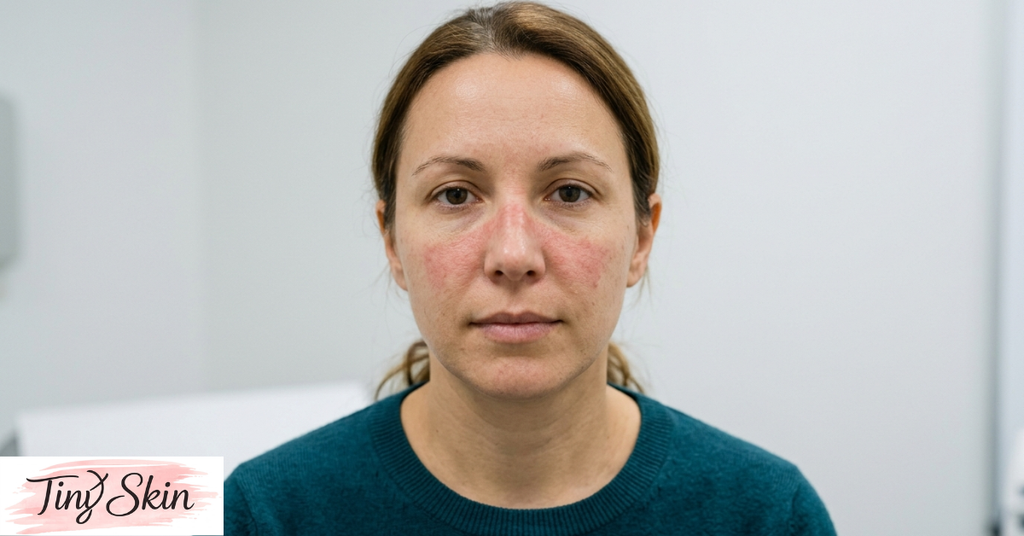
The butterfly rash is the best-known sign. It spreads over both cheeks and across the bridge of the nose. It often appears after sun exposure.
Subacute Cutaneous Lupus
These patches appear mostly on sun-exposed skin below the neck. They can form rings or look scaly, similar to psoriasis.
Discoid Lupus
Discoid lupus creates thick, well-defined plaques. Without treatment, these lesions may cause permanent scars, dark or light spots, and hair loss on the scalp.
Rarer forms exist, including lupus panniculitis (deep skin inflammation) and chilblain lupus (purple lesions on fingers and toes in cold weather).
Lupus Rash Symptoms: How to Recognize the Signs
Lupus skin symptoms vary from person to person. Still, several patterns help you spot a possible problem.
Classic Butterfly Rash Features
A lupus rash on the face often has these traits:
- It looks red or purplish.
- It covers the cheeks and nose bridge.
- It usually spares the folds between the nose and mouth.
- It may feel warm, mildly itchy, or tender.
- It worsens after sun exposure.
Other Lupus Skin Symptoms
Additionally, lupus can cause skin changes beyond the face:
- Painless sores inside the mouth or nose
- Hair thinning or patchy hair loss
- Fingers that turn white, then blue, in the cold (Raynaud’s phenomenon)
- Tiny red or purple spots around the nails
Warning Signs That Need Fast Attention
Book an appointment soon if your rash comes with any of these:
- Ongoing fever
- Joint pain or swelling
- Extreme tiredness
- Swelling in your legs or face
- Foamy urine
These symptoms may point to systemic lupus. Early care protects your organs.
What Causes a Lupus Rash? Common Triggers
Doctors do not know the exact cause of lupus. Researchers believe genes, hormones, and environment work together. Consequently, a lupus rash often appears after a specific trigger.
Sunlight and UV Exposure
Ultraviolet (UV) light is the best-known trigger. It damages skin cells and pushes the immune system to react. As a result, a lupus rash can start or worsen days after sun exposure. Snow reflects UV rays too, so winter sports can also raise your risk. Even a short beach holiday in a southern resort can cause a flare.
Hormones, Smoking, and Medicines
Other triggers include:
- Smoking: Studies suggest smoking worsens skin lupus and may reduce how well hydroxychloroquine works.
- Certain medicines: Drugs such as hydralazine can cause drug-induced lupus. Symptoms usually improve after a doctor stops the drug.
- Infections and stress: Some patients notice flares during illness or emotional strain.
Genetics and Immune System
Lupus sometimes runs in families. However, having a relative with lupus does not guarantee you will develop it. Genes raise your risk, while triggers set the disease in motion. Never stop a prescribed medicine on your own. Instead, discuss concerns with your doctor.
Lupus Rash vs. Other Skin Conditions
Many skin problems look similar to a lupus rash. Consequently, people often confuse them. The comparison below shows key differences.
| Condition | Typical Features | How It Differs from a Lupus Rash |
|---|---|---|
| Rosacea | Flushing, visible small vessels, pimple-like bumps | Bumps and pustules are common in rosacea but rare in lupus |
| Seborrheic dermatitis | Greasy yellow scales in nose folds, eyebrows, scalp | Lupus butterfly rash usually spares the nose folds |
| Sunburn | Painful redness, later peeling | Sunburn fades in days; a lupus rash lasts longer |
| Dermatomyositis | Violet rash on eyelids and knuckles, muscle weakness | Muscle weakness is the key clue |
| Contact dermatitis | Itchy rash where a product touched skin | Improves when you avoid the irritant |
Rosacea and Seborrheic Dermatitis
These two conditions appear most often on the face. Therefore, they cause the most confusion. Rosacea brings bumps and burning. Seborrheic dermatitis brings greasy scales.
When to Suspect Lupus
Suspect lupus if your rash lasts weeks, worsens in the sun, or comes with joint pain, mouth sores, or fatigue. Nevertheless, only a doctor can confirm the cause. Do not self-diagnose from photos online.
How Doctors Diagnose a Lupus Rash
Diagnosis takes several steps. No single test proves lupus by itself.
Skin Exam and Biopsy
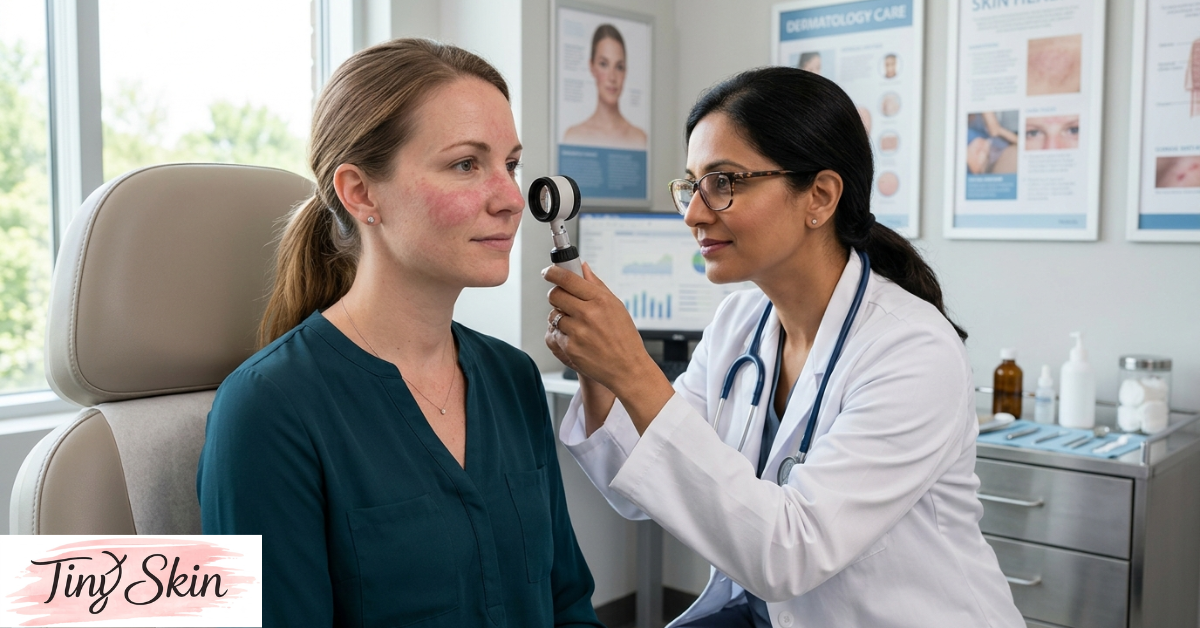
A dermatologist first examines your skin and asks about sun exposure, medicines, and family history. Next, the doctor may take a small skin sample (a biopsy) under local anesthesia. A pathologist studies it under a microscope. This test is often the most reliable way to confirm a lupus rash.
Blood and Urine Tests
Doctors also order tests that look for immune activity and organ involvement:
- Antinuclear antibody (ANA): Most people with SLE test positive. However, healthy people can test positive too.
- Anti-dsDNA and anti-Sm antibodies: These are more specific for SLE.
- Anti-Ro/SSA antibodies: These often appear in subacute cutaneous lupus.
- Complete blood count and complement levels: These reveal inflammation.
- Urinalysis: This checks for kidney involvement.
Which Specialist Should You See?
In Russia, start with a dermatologist (дерматолог) at your local polyclinic or a private clinic. If lupus seems likely, a rheumatologist (ревматолог) leads the care. Additionally, ask for referrals to a specialized rheumatology center for complex cases. Bring photos of your rash flares, because symptoms may fade before your appointment.
Lupus Rash Treatment and Daily Skin Care
Treatment cannot cure lupus, but it controls the rash and prevents scars. Your doctor will build a plan around your rash type and health.
Medical Treatments
Dermatologists commonly use these options:
- Topical corticosteroids: reduce redness and inflammation.
- Topical calcineurin inhibitors (tacrolimus, pimecrolimus): suit delicate facial skin.
- Hydroxychloroquine: an oral medicine that many doctors prescribe first.
- Stronger immune-calming drugs: methotrexate, mycophenolate, or biologics such as belimumab and anifrolumab for severe disease.
Sun Protection Every Day
Sun protection is the most powerful habit. Follow these steps:
- Apply broad-spectrum sunscreen (SPF 50 or higher) every morning.
- Reapply every two hours outdoors.
- Wear a wide-brimmed hat and UV-protective clothing.
- Seek shade between 10 a.m. and 4 p.m.
- Remember that window glass does not block all UV.
Gentle Skin Care Routine
Choose fragrance-free, gentle products. Use a mild cleanser and a rich moisturizer. Avoid harsh scrubs, strong peels, and hot water. Moreover, quit smoking, since it can weaken treatment results.
Key Takeaways
- A lupus rash is a skin sign of lupus, but it does not always mean organ disease.
- The three main types are acute (butterfly), subacute, and discoid.
- UV light is the strongest trigger, so daily SPF 50+ protection is essential.
- Only a doctor can confirm the cause, using skin biopsy and blood tests.
- Treatment includes topical creams, hydroxychloroquine, and other medicines for severe cases.
- Early care lowers the risk of scarring and long-term complications.
FAQs
What does a lupus rash look like?
A lupus rash usually looks red or purplish. The classic butterfly rash spreads across both cheeks and the nose bridge. Other types appear as scaly, ring-shaped patches or thick, coin-shaped plaques. The skin may feel warm, itchy, or tender. Appearance varies by type, so a doctor must confirm the diagnosis.
Can a lupus rash go away on its own?
Some lupus rashes fade for weeks or months, especially when you avoid the sun. However, they often return as flares. Discoid lesions can leave scars if untreated. Because of this, see a doctor early and follow the treatment plan rather than waiting for the rash to disappear.
Is a lupus rash itchy or painful?
Many lupus rashes cause little pain. Some feel itchy, warm, or tender, and discoid patches can burn or sting. Severe pain, blisters, or open sores are less typical and need prompt medical review. Notably, symptoms vary widely between people and between rash types.
Does the sun make a lupus rash worse?
Yes. Ultraviolet (UV) light is one of the best-known triggers. Sun exposure can start a new rash or worsen an existing one, sometimes days later. Therefore, dermatologists recommend broad-spectrum sunscreen, protective clothing, and shade. Some indoor lights and window glass can also expose you to UV.
Can you have a lupus rash without lupus in your organs?
Yes. Cutaneous lupus affects only the skin in many people. Nevertheless, a portion of patients later develop systemic lupus. Doctors therefore check blood and urine tests at diagnosis and monitor you over time. Report new joint pain, fever, or swelling promptly.
How do doctors treat a lupus rash?
Treatment starts with strict sun protection. Doctors often add topical steroids or tacrolimus cream. For widespread or stubborn disease, they may prescribe hydroxychloroquine or other immune-calming drugs. Your specialist chooses the plan based on rash type, severity, and any organ involvement.
Conclusion
A lupus rash can look alarming, but knowing the signs gives you power. Remember the main points: watch for red patches on the cheeks or scaly plaques, protect your skin from UV light, and avoid guessing based on internet photos. Additionally, early diagnosis helps prevent scarring and protects your organs.
If you notice a rash that lasts more than a few weeks, worsens in the sun, or comes with joint pain or fatigue, act now. Consult a dermatologist or rheumatologist for a proper exam. Take photos of your skin, list your symptoms, and book a visit this week. Your skin deserves expert care.
Disclaimer: This article is for education only. It does not replace professional medical advice, diagnosis, or treatment.

