


Stretch marks appear on the skin of millions of people, yet few talk about them openly. You may notice thin red or silver lines on your belly, thighs, or hips and wonder what went wrong. Nothing did. Stretch marks are a normal response to fast skin stretching, and they do not harm your health.
However, many women want to know why stretch marks form, whether they can fade, and what actually works. Marketing claims make the answer confusing. In this guide, we explain the science in plain language. You will learn the main causes, proven prevention steps, and realistic treatment options, from creams to laser. Additionally, we show you when to see a dermatologist. Let’s start with the basics.
What Are Stretch Marks and Why Do They Appear?
Stretch marks, known medically as striae distensae, are narrow bands of changed skin. They are a type of scar that forms in the dermis, the middle layer of your skin.
How Stretch Marks Form in the Skin
Your dermis contains collagen and elastin fibers. These fibers give skin strength and stretch. When your body grows quickly, the dermis stretches past its limit. The fibers thin or tear. Hormones such as cortisol can weaken them further. As the skin heals, it forms scar-like tissue. That tissue looks different from the surrounding skin.
Red and White Stretch Marks
New stretch marks look red, pink, or purple. On darker skin, they may look dark brown. They can feel slightly raised or itchy. Over months or years, they fade to white or silver and become flat or slightly sunken. This late stage is harder to treat. Therefore, early care gives the best results.
Are Stretch Marks Harmful?
No. They cause no pain and do not damage your health. Dermatologists consider them a cosmetic concern. However, sudden, widespread, or unusual marks can signal a hormonal problem. In that case, tell your doctor.
Main Causes of Stretch Marks
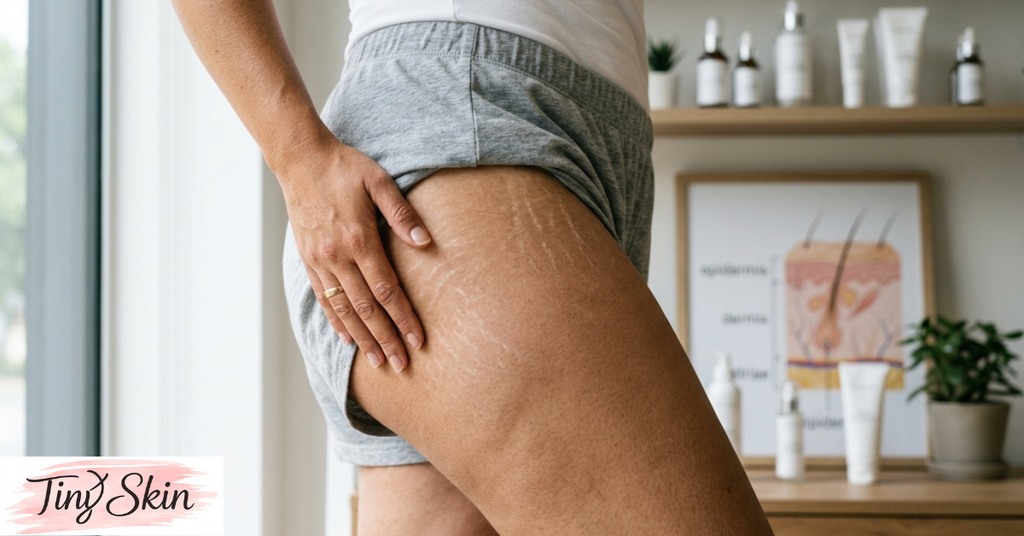
Any situation that stretches skin quickly can cause them. The most common triggers appear below.
Pregnancy and Puberty
Pregnancy is the best-known cause. Studies suggest that more than half of pregnant women develop stretch marks, usually in the third trimester on the belly, breasts, and thighs. Rising hormones and a growing baby both strain the skin. Puberty works similarly. Growth spurts trigger marks on the hips, thighs, and lower back in girls, and often on the shoulders and lower back in boys.
Weight Change and Muscle Growth
Fast weight gain stretches skin faster than it can adapt. Rapid muscle growth can cause marks on the shoulders, chest, and arms. Repeated cycles of gaining and losing weight also add stress to the skin. Steady changes are safer.
Medications, Illness, and Genetics
Long-term corticosteroids, whether creams or tablets, thin the skin and raise your risk. Conditions such as Cushing syndrome cause widespread marks. Genetics matter as well. If your mother had stretch marks, you are more likely to develop them too.
Table 1: Common Causes at a Glance
| Cause | Why It Happens | Common Areas |
|---|---|---|
| Pregnancy | Fast stretching plus hormone changes | Belly, breasts, thighs |
| Puberty | Growth spurts and hormone shifts | Hips, thighs, lower back, shoulders |
| Rapid weight gain | Skin cannot adapt quickly enough | Abdomen, arms, thighs |
| Muscle building | Fast muscle growth stretches skin | Shoulders, chest, arms |
| Steroid use | Thinner, weaker dermis | Armpits, groin, trunk |
| Genetics | Inherited skin tendency | Any area |
How to Prevent Stretch Marks
No product can guarantee you will avoid these lines. However, healthy habits lower your risk and help skin stay flexible.
Aim for Gradual Weight Changes
Slow change gives your skin time to adapt. During pregnancy, follow your doctor’s advice on healthy weight gain. If you lose weight, avoid crash diets. Similarly, build muscle gradually rather than in short, extreme bursts.
Feed Your Skin From the Inside
Collagen production needs vitamin C, zinc, and protein. Fortunately, common Russian foods supply them: cabbage, sauerkraut, blackcurrants, sea buckthorn, citrus fruit, eggs, fish, and buckwheat. Drink enough water as well. A balanced diet supports skin repair, although it cannot stop marks alone.
Moisturize and Massage Daily
Well-moisturized skin feels more supple. Apply a fragrance-free cream twice a day to your belly, hips, thighs, and breasts. Massage gently for a few minutes. Research on massage and creams for prevention shows mixed results. Nevertheless, this routine is safe, cheap, and eases itching. Russian winters and central heating dry the skin, so choose a richer cream from October to March.
Stretch Marks Treatments You Can Use at Home
Home products work best on new, red marks. They rarely erase old, white ones.
Retinoids
Tretinoin, a vitamin A derivative, has the strongest evidence among topical products for early marks. It boosts collagen production. However, it can irritate skin, and doctors advise against it during pregnancy and breastfeeding. Strong retinoids are prescription medicines in many countries, so ask a dermatologist or pharmacist about local rules.
Hyaluronic Acid and Centella Asiatica
Small studies suggest hyaluronic acid may improve early marks and add moisture. Centella asiatica extract appears in many stretch mark creams, but the evidence is mixed. Both ingredients are generally gentle. Still, always patch-test a new product on your inner arm first.
Oils and Butters
Cocoa butter, shea butter, and almond or olive oil feel nourishing. However, studies have not shown that they prevent or remove stretch marks. They still soften skin and reduce itching. Avoid almond oil if you have a nut allergy.
Table 2: Ingredient Comparison
| Ingredient | Evidence | Best Stage | Pregnancy Note |
|---|---|---|---|
| Tretinoin (prescription) | Strongest among topicals | New, red marks | Avoid |
| Hyaluronic acid | Limited but promising | Early marks | Ask your doctor |
| Centella asiatica | Mixed | Early marks, prevention | Ask your doctor |
| Cocoa or shea butter | Weak for marks; good for dryness | Itching and dryness | Generally used; patch-test |
| Almond or olive oil | Limited | Massage and softening | Avoid almond oil with nut allergy |
Professional Stretch Marks Treatments
When creams fall short, clinics offer stronger options. Dermatologists often combine methods for better results.
Laser Therapy
Pulsed dye laser targets the blood vessels in red marks. Fractional lasers, including non-ablative and CO2 types, stimulate collagen in white marks. Most people need several sessions. Redness and swelling are common afterward. On darker skin, choose an experienced clinician because lasers can change pigmentation.
Microneedling and Radiofrequency
Microneedling uses fine needles to create tiny injuries. The skin responds by building new collagen. Radiofrequency devices heat the deeper skin to add a similar effect. Studies show modest improvement in texture and appearance. Downtime is usually short.
Chemical Peels and Microdermabrasion
Superficial peels and microdermabrasion remove the top skin layer. They may improve texture on mild marks, but they work less deeply than lasers or needling. Professionals should perform them, and daily sunscreen is essential afterward.
Table 3: Professional Treatment Comparison
| Treatment | Best For | Sessions | Typical Downtime |
|---|---|---|---|
| Pulsed dye laser | New, red marks | Several | Redness for a few days |
| Fractional laser | Older, white marks | Several | Redness and swelling for days |
| Microneedling | Red or white marks | Several | Short redness |
| Radiofrequency | Mild texture changes | Several | Minimal |
| Superficial peel | Surface texture | Repeated | Peeling for several days |
Key Takeaways
- Stretch marks are harmless scars caused by fast skin stretching.
- Early, red stretch marks respond best to treatment.
- No cream guarantees prevention, but healthy habits still help.
- Tretinoin has the strongest topical evidence, but you must avoid it in pregnancy.
- Old white stretch marks usually need professional treatment.
- See a dermatologist if marks appear suddenly, widely, or with other symptoms.
Stretch Marks in Pregnancy: Safe Care Tips
A Simple Daily Routine
- Apply fragrance-free moisturizer twice daily.
- Massage your belly gently for five minutes.
- Drink water regularly.
- Gain weight at the pace your doctor recommends.
- Use sunscreen on exposed areas to prevent dark marks.
Ingredients to Avoid
Avoid retinoids, including retinol, during pregnancy and breastfeeding. Ask your doctor before using essential oils, strong peels, or acids. Additionally, skip any product that promises to “remove” marks fast. Such claims are unrealistic.
After Birth
Postpartum stretch marks often fade from red to pale within months. Wait until your skin settles before considering clinic treatment. Then discuss options with a dermatologist, especially if you are still breastfeeding.
When to See a Dermatologist About Stretch Marks
Warning Signs
Book an appointment if you notice:
- Marks that appear suddenly across the body
- Wide, deep purple stripes
- Easy bruising, weight gain around the face and trunk, or muscle weakness
- Marks after long steroid use
- Severe itching or pain
These signs may point to a hormonal condition such as Cushing syndrome. A doctor can test for it.
What Happens at the Appointment
A dermatologist examines your skin and asks about pregnancy, weight change, and medications. Then they explain realistic goals. Finally, they suggest a plan that matches your skin type and budget.
How to Choose a Clinic
Look for a qualified, licensed dermatologist. Ask how often they treat your skin tone. Be cautious about clinics that promise complete removal. Request a clear explanation of risks, costs, and the number of sessions.
FAQs
What causes stretch marks?
Stretch marks form when skin stretches faster than it can adapt. The dermis, the middle skin layer, develops small tears. Pregnancy, puberty, fast weight change, muscle growth, steroid use, and family history all raise the risk. Hormones such as cortisol also weaken the skin’s collagen and elastin.
Can stretch marks go away completely?
Stretch marks rarely disappear completely. Red marks often fade to pale, flat lines over months or years. Treatment can improve their color and texture, especially when you start early. However, dermatologists cannot promise total removal, so aim for smoother, less visible skin instead.
Do stretch mark creams work?
Some creams help a little, mainly on new red marks. Prescription tretinoin has the strongest evidence, and hyaluronic acid shows promise. However, most cocoa butter and oil products lack proof for preventing or removing marks. They still moisturize and reduce itching. Always ask your doctor first if you are pregnant.
Are stretch marks more common in women than men?
Yes, women develop stretch marks more often, largely because of pregnancy and hormonal changes. However, men get them too, especially during puberty growth spurts, muscle building, or weight change. Age, genetics, and steroid use affect risk for everyone, regardless of gender.
What is the best treatment for old white stretch marks?
Old white marks respond best to professional treatments. Fractional lasers, microneedling, and radiofrequency stimulate new collagen and can improve texture. Results are usually partial and need several sessions. A dermatologist can match the method to your skin type and lower the risk of pigment changes.
When do stretch marks appear during pregnancy?
Stretch marks usually appear in the second half of pregnancy, often in the third trimester, as the belly grows fastest. Some women notice them earlier, and others never develop any. Genetics, weight gain, and baby size all play a role. Early moisturizing and gentle care may ease itching.
Conclusion
Stretch marks are common, harmless, and nothing to be ashamed of. They form when skin stretches faster than it can adapt, and pregnancy, growth, and weight change are the usual triggers. Although no product can guarantee prevention, steady habits, daily moisturizing, and early treatment give you the best chance of fading them. Remember that new red marks respond best, while older white ones often need professional care.
If your stretch marks worry you, do not wait. Book a consultation with a qualified dermatologist, who can check for underlying causes and build a safe plan for you. Ready to start? Explore our related guides below, then schedule your visit today.

