

Introduction
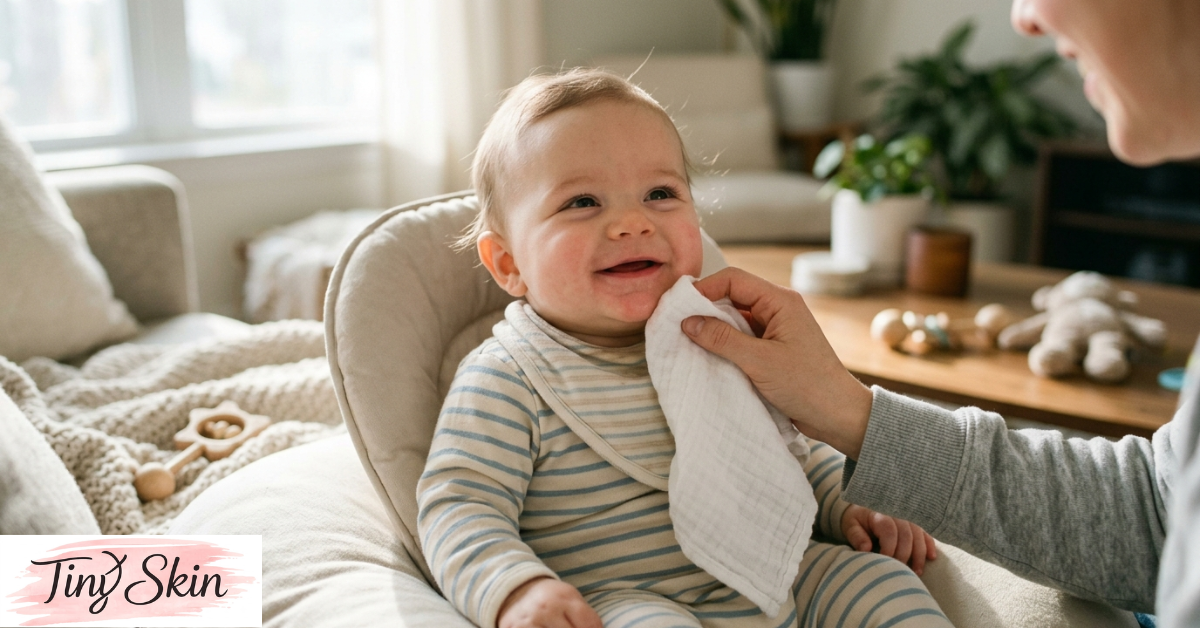
Your baby wakes up smiling, but the chin looks red and rough. Sound familiar? A baby drool rash is one of the most common skin problems in infants, and it often shows up around the time teething begins. The good news is that this rash is usually mild and treatable at home. However, constant wetness can leave tender skin sore, so you need a clear plan.
In this guide, you will learn what causes a baby drool rash, how to tell it from other rashes, and which gentle products help. Additionally, you will get winter-specific tips for families in Russia, where cold air and dry heating make baby skin more sensitive. Finally, we explain when to call your pediatrician. Let’s start with the basics.
What Is a Baby Drool Rash?
A baby drool rash is a mild form of irritant contact dermatitis. Saliva and constant moisture irritate the skin. Pediatricians and dermatologists see it often during the first year of life.
Why Saliva Irritates Baby Skin
Saliva contains digestive enzymes that help break down food. On delicate baby skin, however, those enzymes can be harsh. Babies also have a thinner skin barrier than adults, so water and irritants pass through more easily. When drool stays on the skin for hours, the surface softens, breaks down, and turns red. A baby drool rash develops from this repeated wet-dry cycle. Additionally, repeated wiping strips natural oils and makes the damage worse.
What a Drool Rash Looks Like
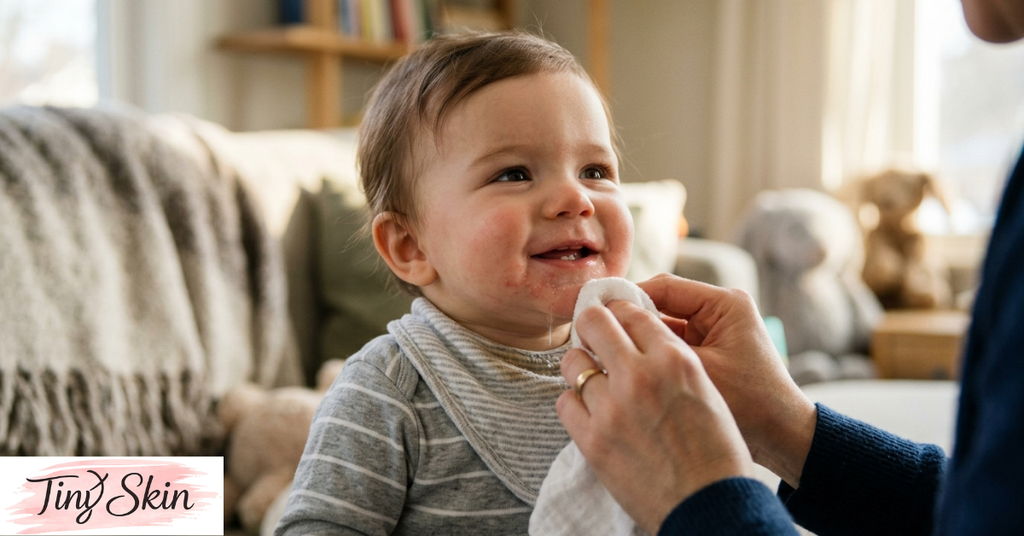
Look for flat or slightly bumpy red patches. They usually appear where drool lands most often:
- Chin and lower lip area
- Cheeks and around the mouth
- Neck folds
- Upper chest under the bib line
The skin may look chapped, shiny, or slightly rough. Your baby may fuss when you wipe the area. Fever is not typical.
When Drool Rash Usually Starts
Babies often start drooling heavily at around three to four months. Teeth usually appear between four and twelve months, with wide variation. Many babies produce extra saliva weeks before the first tooth breaks through. As a result, a baby drool rash can appear before you see any teeth. Most babies drool less as they learn to swallow saliva more efficiently.
Main Causes of Baby Drool Rash
Several factors work together to trigger a baby drool rash. Understanding them helps you prevent flare-ups and choose the right fix. Often, two or three triggers overlap.
Teething and Extra Saliva
Teething is the classic trigger. Swollen gums increase saliva flow, and your baby chews hands and toys, which spreads drool across the cheeks and chin. Teething can make babies fussy. However, pediatric guidance says it does not cause a true fever, so a high temperature needs a doctor’s attention. Therefore, treat teething and skin care as two separate jobs.
Friction and Wet Fabric
Rubbing makes the problem worse. Rough bibs, damp collars, and frequent wiping all add friction. Pacifiers can trap moisture around the mouth. Additionally, food residue, such as acidic fruit purée, can sting already irritated skin. Wet clothing on the neck and chest keeps the rash going.
Sensitive Skin and Other Triggers
Babies with dry or eczema-prone skin react faster. Studies suggest that a weaker skin barrier makes babies more prone to irritant reactions. Fragranced wipes, harsh soaps, and strong laundry detergents add more irritation. Moreover, a rash that keeps returning often has more than one cause. Therefore, review your baby’s daily products and swap out anything with perfume.
Baby Drool Rash vs. Other Common Baby Rashes
Not every red chin is a baby drool rash. Comparing the signs helps you choose the right next step.
Rash Comparison Table
Use this table as a quick guide, not a diagnosis.
| Condition | What It Looks Like | Where It Appears | Key Clue |
|---|---|---|---|
| Drool rash | Flat, red, chapped patches | Chin, cheeks, neck, upper chest | Matches drooling; no fever |
| Eczema (atopic dermatitis) | Dry, scaly, itchy patches | Cheeks, scalp, skin creases, limbs | Itchy; flares and fades; family allergy history |
| Heat rash | Tiny red bumps | Neck folds, chest, back | Follows sweating or overdressing |
| Yeast (candida) rash | Bright red with small satellite spots | Skin folds, mouth corners | Ignores barrier cream |
| Impetigo | Blisters, honey-colored crusts | Around nose and mouth | Contagious; needs a doctor |
| Food irritation | Red patch where food touched | Around mouth, cheeks | Appears after meals |
Signs It Is Not Just Drool
Call your doctor if you see blisters, honey-colored crusts, or spreading redness. Likewise, a rash that also covers the scalp, limbs, or diaper area points to another cause. Finally, intense itching suggests eczema rather than a simple baby drool rash. Take a photo each day, because it helps your doctor track changes.
How to Treat Baby Drool Rash at Home
Most cases of baby drool rash clear within a few days with gentle care. The goal is simple: keep the skin clean, dry, and protected.
Daily Gentle Care Routine
Follow these steps:
- Pat drool away often with a soft cotton cloth. Never rub.
- Rinse the area with lukewarm water once or twice a day.
- Pat the skin completely dry.
- Apply a thin layer of fragrance-free ointment.
- Reapply before naps, bedtime, and after meals.
Skip wipes when possible, because many contain fragrance. Continue the routine for two or three days after the redness fades. This gives the skin barrier time to rebuild.
Barrier Ingredients Compared
Dermatologists commonly recommend simple barrier products. They suggest a thick ointment over a thin lotion, because ointments hold up better against moisture.
| Ingredient | How It Helps | Best For | Note |
|---|---|---|---|
| Petroleum jelly | Seals skin and blocks moisture | Daily protection, mild redness | Greasy; use a thin layer |
| Zinc oxide ointment | Forms a protective, soothing layer | Red, sore skin | Leaves white residue; remove gently |
| Dexpanthenol (provitamin B5) | Supports skin repair and hydration | Dry, chapped patches | Found in products such as Bepanthen |
| Plain fragrance-free emollient | Replaces lost moisture | Mild dryness | Less water-resistant than ointment |
What to Avoid
Some well-meant remedies make things worse:
- Steroid creams, unless your pediatrician prescribes them
- Fragranced wipes, lotions, and powders
- Essential oils and baking soda pastes
- Scrubbing, or wiping the area dry with force
Additionally, tell your pediatrician about every product you use.
How to Prevent Baby Drool Rash
Preventing a baby drool rash is easier than treating one. A few small habits keep saliva off the skin and protect the barrier.
Smart Bib Habits
Choose soft, absorbent cotton bibs without stiff plastic backing. Change a bib as soon as it feels damp. Keep three or four on hand so a dry one is always ready. Additionally, avoid rough seams and tight snaps that rub the neck. Wash bibs after each use with a gentle, fragrance-free detergent and rinse them well.
Protect the Skin Before Drool Hits
Apply a thin layer of petroleum jelly or zinc oxide ointment to the chin and cheeks before naps and bedtime. Overnight, this barrier reduces direct contact with saliva. Meanwhile, wipe the mouth area gently during the day. Use a clean cloth and pat, never rub. Finally, keep fingernails short and hands clean, because babies often rub the chin and spread irritants.
Soothe Teething Safely
Offer a clean, solid rubber teether chilled in the fridge, not the freezer. You can also rub your baby’s gums with a clean finger. However, avoid benzocaine gels and teething tablets. The U.S. Food and Drug Administration warns against them for babies. It also warns against amber teething necklaces because of choking and strangulation risks. Ask your pediatrician about safe pain relief.
Baby Drool Rash in Cold Russian Winters
Russian winters add another challenge. Outdoor air is freezing, while heated apartments are often very dry. This sharp swing stresses the skin barrier and can worsen a baby drool rash.
Protect Cheeks and Chin Outdoors
Water-based creams can freeze on the skin in cold air. Therefore, choose a fat-based ointment instead. Apply it about 20 to 30 minutes before you go outside, so it can settle into the skin. Additionally, tuck a soft cotton neck warmer under your baby’s chin, and swap it if it becomes wet. Skip thick wool scarves that rub the chin.
Balance Indoor Air
Central heating dries the air and the skin. Aim for indoor humidity of roughly 40 to 60 percent, and a room temperature near 20 to 22°C. A simple hygrometer shows the level. If the air stays dry, use a clean humidifier and wipe it regularly to prevent mold. Moreover, air the room briefly several times a day.
Pack a Winter Skin Kit
Keep a small bag in the stroller with spare cotton bibs, soft dry cloths, and a small tube of fat-based ointment. Because drool cools quickly on chilly walks, a wet chin can chap within minutes. Shorter walks help while the rash heals.
When to See a Pediatrician About Baby Drool Rash
Most cases of baby drool rash are harmless. However, some signs need a professional opinion, and acting early prevents bigger problems.
Red Flags to Watch
Contact your doctor if you notice:
- Fever of 38°C or higher
- Blisters, pus, or honey-colored crusts
- Redness spreading beyond the mouth area
- Cracked or bleeding skin
- No improvement after about a week
- Rash with poor feeding, unusual sleepiness, or vomiting
Seek urgent care for any fever in a baby under three months.
What Your Doctor May Do
Your pediatrician will examine the skin and ask about drooling, feeding, and the products you use. If needed, the doctor may take a swab to check for bacteria or yeast. Additionally, they may prescribe an antifungal, an antibiotic, or a short course of mild steroid, and they will explain exactly how to apply it. Doctors may also check for eczema or food allergy if the rash keeps returning.
How to Prepare for the Visit
Bring a list of the products you use, photos of how the rash looked on earlier days, and notes on when it started. This saves time and improves the diagnosis.
Key Takeaways
Key Takeaways
- A baby drool rash is irritant contact dermatitis caused by saliva and constant moisture, not an infection.
- It usually appears on the chin, cheeks, neck, and upper chest, often during teething.
- Gentle patting, lukewarm water, and a thin layer of fragrance-free barrier ointment heal most cases within days.
- Prevent a baby drool rash with dry bibs, nighttime barrier ointment, and safe teething toys.
- In Russian winters, use fat-based ointments outdoors and keep indoor humidity near 40-60%.
- See a pediatrician for fever, blisters, honey-colored crusts, or no improvement after a week.
FAQs
Is a baby drool rash contagious?
No. A baby drool rash comes from irritation, not infection, so it does not spread between children. However, broken skin can pick up bacteria or yeast, and those infections can spread. Wash your hands before and after you touch the rash, and see a pediatrician if the area crusts or blisters.
How long does a baby drool rash last?
Most mild cases improve within three to five days of gentle care and regular barrier ointment. However, the rash may return while your baby is actively teething. If you see no improvement after a week, or the skin looks worse, ask your pediatrician to examine it.
What is the best cream for a baby drool rash?
Thick, fragrance-free barrier products work best. Petroleum jelly and zinc oxide ointment protect skin from moisture. Dexpanthenol cream helps dry, chapped patches. Apply a thin layer after cleaning and drying the skin. Avoid steroid creams unless your doctor prescribes them, because baby skin absorbs medication more readily than adult skin.
Does drool rash always mean teething?
No. Teething is a common cause, yet some babies drool heavily simply because they have not learned to swallow saliva efficiently. Either way, the rash forms from moisture exposure. Additionally, other triggers such as food, pacifiers, or cold weather can cause or worsen a baby drool rash.
Can a baby drool rash cause a fever?
No. A simple baby drool rash does not cause fever. If your baby has a temperature of 38°C or higher, another illness or infection may be present. Call your doctor promptly. For babies younger than three months, any fever needs urgent medical care.
Can I keep using a pacifier with a baby drool rash?
Yes, but manage the moisture. Wipe saliva from around the mouth before and after pacifier use, and apply barrier ointment first. Clean the pacifier regularly. If the rash is limited to the area where the pacifier touches, try a different shape or material and ask your pediatrician for advice.
Conclusion
A baby drool rash looks alarming, but it is usually mild and temporary. Keep your baby’s skin dry, protect it with a thin layer of fragrance-free ointment, and change damp bibs quickly. In addition, adjust your routine for Russian winters with fat-based barrier creams and humid indoor air. Most babies improve within days.
However, trust your instincts. If the rash blisters, crusts, spreads, or comes with a fever, see your pediatrician right away. Ready to protect your baby’s skin? Bookmark this guide, share it with other parents, and consult your local pediatrician or a pediatric dermatologist for a personalized plan. Gentle, consistent care is the best medicine.

