
Introduction
Have you noticed scaly, crusty patches on your face, scalp, or chest that keep coming back? Many people blame dry skin or dermatitis and wait months before seeing a doctor. Sometimes, however, these patches point to pemphigus foliaceus, a rare autoimmune skin disease. In this condition, your immune system attacks proteins that hold the top layer of your skin together. The skin then forms fragile blisters that break easily and leave crusted sores. The good news: doctors can diagnose and control pemphigus foliaceus with modern treatment. In this guide, you will learn the symptoms, causes, diagnosis steps, and treatment options. You will also find practical skin care tips for daily life. Read on to understand what is happening in your skin and when to see a dermatologist.
What Is Pemphigus Foliaceus?
An Autoimmune Blistering Disease
Pemphigus foliaceus is a chronic autoimmune blistering disease. Your immune system makes antibodies that attack a protein called desmoglein 1. This protein works like glue between cells in the top layer of your skin, the epidermis. When the glue fails, the cells separate and a very thin blister forms.
The word “foliaceus” comes from the Latin word for leaf. Doctors use it because the skin sheds in thin, leaf-like scales.
How Common Is It?
This condition is rare. It usually starts in adults, often in middle age, but it can appear at other ages. Men and women can both develop it. Exact rates differ by region, so no single number fits every country. In Russia, a dermatovenerologist (skin specialist) is usually the first doctor to evaluate it.
The Endemic Form: Fogo Selvagem
One form of pemphigus foliaceus, called fogo selvagem, occurs in rural parts of Brazil and some neighboring areas. Researchers suspect environmental triggers, such as insect bites. Most people in other countries, including Russia, have the sporadic form, which has no clear local trigger.
Pemphigus Foliaceus Symptoms: What to Look For
Early Warning Signs
The blisters in this disease are so fragile that you may never see one intact. Instead, you notice the aftermath. Common early signs include:
- Scaly, crusted patches that look like stuck-on flakes
- Shallow, raw spots (erosions) where blisters burst
- Red patches that itch or burn
- Patches that do not improve with moisturizers or antifungal creams
Moreover, new patches often appear in waves over weeks or months. Because the rash resembles common skin problems, people often miss it at first.
Where It Appears
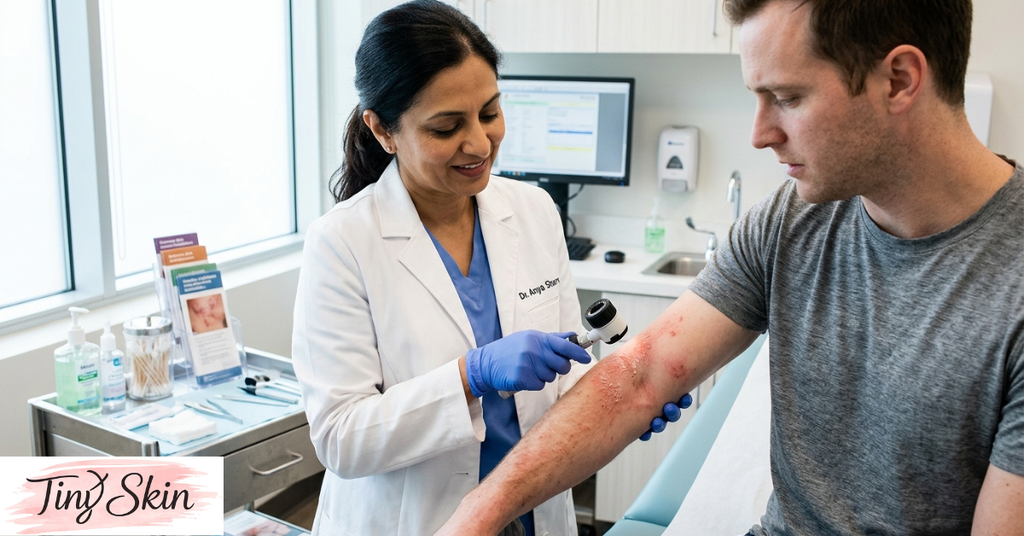
Pemphigus foliaceus usually starts on the face, scalp, upper chest, and upper back. Doctors call these the seborrheic areas. Over time, the rash can spread. In severe cases, it covers most of the body, and the skin turns red and scaly. Doctors call this exfoliative erythroderma.
Does It Affect the Mouth?
Usually not. Mouth sores are typical of pemphigus vulgaris, not of pemphigus foliaceus. The mucous membranes in the mouth and eyes are normally spared. However, if you have painful mouth sores along with skin lesions, tell your doctor right away.
What Causes Pemphigus Foliaceus?
An Immune System Mistake
Pemphigus foliaceus develops when the immune system turns against the body. Immune cells called B cells produce harmful autoantibodies against desmoglein 1. Genes also play a role. Certain HLA gene types make people more likely to develop pemphigus. However, having these genes does not guarantee the disease. The condition is not contagious, so you cannot catch it from another person.
Drug-Induced Pemphigus Foliaceus
Some medicines can trigger the disease. Penicillamine and captopril are the best-known examples. Both contain a sulfur group, called a thiol, that may disturb the glue between skin cells. Doctors have linked other drugs to pemphigus too, but less often.
In some people, the skin improves after the doctor changes the medicine. Never stop a prescribed drug on your own. Talk to your doctor first.
Other Possible Triggers
Researchers and doctors have reported flares linked to:
- Strong sun exposure (UV light) in some patients
- Radiation therapy
- Other autoimmune conditions
- Emotional stress, although evidence is limited
In many people, however, no clear trigger appears.
Pemphigus Foliaceus vs. Pemphigus Vulgaris
Pemphigus foliaceus and pemphigus vulgaris are the two main types of pemphigus. Both are autoimmune, but they attack different proteins and different skin depths. The table below shows the main differences.
Key Differences
| Feature | Pemphigus Foliaceus | Pemphigus Vulgaris |
|---|---|---|
| Main target protein | Desmoglein 1 | Desmoglein 3 (often desmoglein 1 too) |
| Blister depth | Very superficial, in the upper epidermis | Deeper, just above the basal layer |
| Mouth involvement | Rare | Common, often the first sign |
| Typical lesions | Scaly, crusted erosions | Flaccid blisters and painful erosions |
| Common sites | Face, scalp, chest, upper back | Mouth, skin folds, trunk, other mucous membranes |
| Pain level | Mild itching or burning | Often painful |
| General severity | Often milder | Often more severe |
Why the Difference Matters
Knowing your type guides treatment and follow-up. Pemphigus foliaceus is often milder and rarely involves the mouth. Pemphigus vulgaris can cause painful mouth sores and needs close monitoring. In rare cases, one type can shift into the other over time. Therefore, regular check-ups matter even when your skin looks clear.
How Doctors Diagnose Pemphigus Foliaceus
Exam, Biopsy, and Blood Tests
A visual check is not enough, because the rash looks like many other conditions. Doctors usually follow these steps:
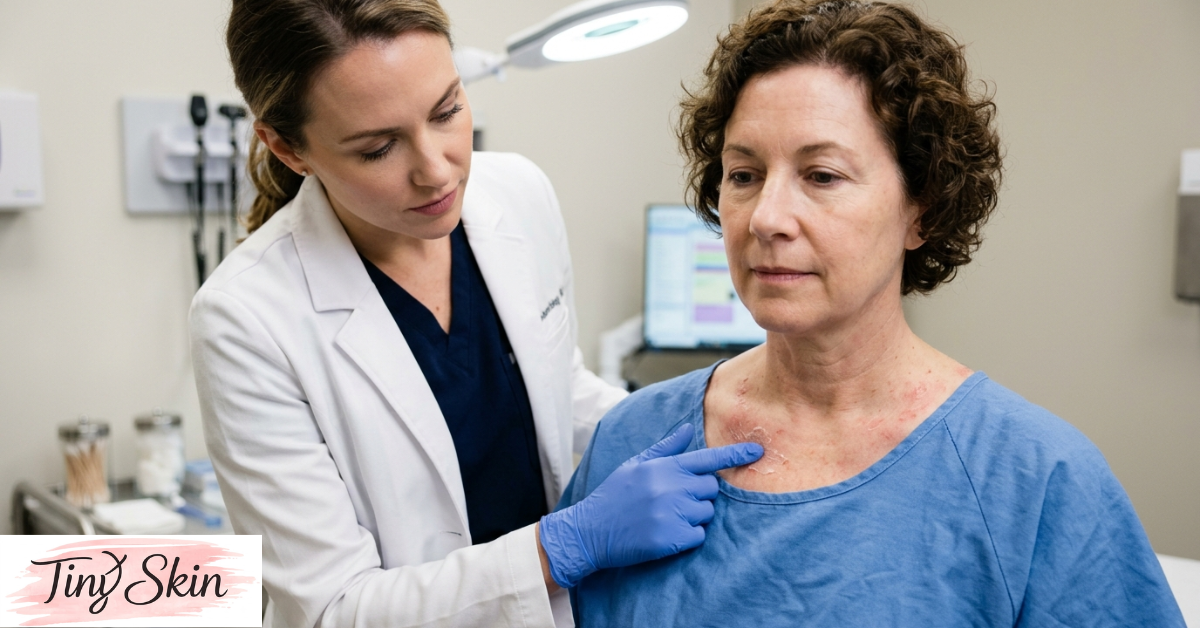
- Skin exam. The doctor studies the pattern of crusts and erosions. They may gently rub healthy-looking skin near a lesion. If the top layer slides off, this is a positive Nikolsky sign.
- Skin biopsy. A small skin sample goes to a lab. Under the microscope, the pathologist looks for a split high in the epidermis.
- Direct immunofluorescence. A second sample from skin beside a lesion shows antibodies stuck between skin cells. Many experts consider this test the gold standard for confirming pemphigus foliaceus.
- Blood tests. An ELISA test measures anti-desmoglein 1 antibodies. These levels often rise and fall with disease activity.
Conditions That Look Similar
Doctors must rule out several look-alikes before they confirm the diagnosis.
| Condition | Similar Features | Key Difference |
|---|---|---|
| Seborrheic dermatitis | Scaly patches on the face and scalp | No blisters or autoantibodies; responds to standard anti-inflammatory and antifungal care |
| Bullous impetigo | Thin blisters and honey-colored crusts | Bacterial infection; more common in children; responds to antibiotics |
| Cutaneous lupus | Red, scaly patches on the face | Different biopsy findings and lupus-related blood markers |
| Bullous pemphigoid | Autoimmune skin blisters | Deeper, tense blisters; mainly affects older adults; different target proteins |
Pemphigus Foliaceus Treatment Options
Pemphigus foliaceus is a long-term condition, but doctors can control it. Many people reach remission, meaning the skin stays clear with little or no medicine. Treatment depends on how much skin is affected. The goals are to stop new lesions, heal existing ones, and limit side effects.
Treatment for Mild Disease
When only a few areas are involved, doctors often prescribe a strong topical corticosteroid cream or ointment, such as clobetasol. You apply it to affected patches for a limited time. Doctors also treat skin infections with antibiotics when needed.
Treatment for Widespread or Severe Disease
If the disease is widespread, doctors usually start with oral corticosteroids such as prednisolone. They often add a steroid-sparing medicine, which lets you use a lower steroid dose. Options include:
- Azathioprine
- Mycophenolate mofetil
- Dapsone, in selected cases
- Rituximab, an antibody medicine that targets B cells
Studies suggest rituximab helps many people with pemphigus, and doctors also use it in pemphigus foliaceus.
Protecting Your Health During Treatment
Long-term steroids can affect bone strength, blood sugar, blood pressure, and infection risk. Therefore, your doctor will schedule regular blood tests and check-ups. Never stop steroids suddenly. Doing so can be dangerous and may trigger a flare.
Living With Pemphigus Foliaceus: Daily Skin Care
Build a Gentle Skin Care Routine
Fragile skin needs gentle handling. Follow these steps:
- Wash with lukewarm water and a mild, fragrance-free cleanser.
- Pat your skin dry. Do not rub.
- Apply a bland emollient or moisturizer while your skin is still damp.
- Use prescribed creams exactly as your doctor directs.
- Skip scrubs, peels, and harsh exfoliants, because they can tear fragile skin.
Protect Your Skin From Sun and Infection
Sunlight can worsen lesions in some people. Wear a broad-spectrum sunscreen (SPF 30 or higher), a hat, and light clothing. Moreover, open erosions can become infected. Do not pick at crusts. Call your doctor if you notice pus, increasing warmth, spreading redness, or fever.
Keep Up With Follow-Up Care and Support
Regular visits help your doctor adjust treatment early. Take photos of your skin to track changes. Additionally, living with a chronic condition can feel stressful. Talk to your doctor about mental health support, and consider joining a patient community. Ask your doctor before any vaccination, because some vaccines are unsafe during immune-suppressing treatment.
Key Takeaways
- Pemphigus foliaceus is a rare autoimmune disease that causes fragile, superficial blisters and crusted sores.
- Typical sites are the face, scalp, chest, and upper back. Mouth sores are rare.
- Diagnosis needs a skin biopsy, direct immunofluorescence, and often a blood test for desmoglein 1 antibodies.
- The disease is not contagious. Some drugs, such as penicillamine and captopril, can trigger it.
- Treatment ranges from strong topical steroids to oral steroids, steroid-sparing drugs, and rituximab.
- Gentle skin care, sun protection, and regular follow-up help keep the disease under control.
FAQs
Is pemphigus foliaceus contagious?
No. Pemphigus foliaceus is an autoimmune disease, not an infection. You cannot catch it from touching, hugging, or sharing items with someone who has it. It develops when a person’s own immune system attacks skin proteins. However, open sores can get infected with bacteria, so keep them clean.
Can pemphigus foliaceus be cured?
Doctors cannot always cure it, but they can control it well. Many people reach remission, where the skin stays clear with little or no medicine. Some patients still need long-term treatment. Relapses can happen, so regular follow-up with your dermatologist remains important even when your skin looks healthy.
How serious is pemphigus foliaceus?
It is generally milder than pemphigus vulgaris, but it is still a serious chronic disease. Widespread skin loss can cause infection and fluid loss. Treatment side effects, especially from long-term steroids, also need monitoring. With early diagnosis and good care, many people live active lives.
What does pemphigus foliaceus look like?
It usually looks like scaly, crusted, red patches on the face, scalp, chest, or back. Small blisters form first but burst quickly, leaving shallow, raw spots. The rash may itch or burn. Because it resembles eczema or seborrheic dermatitis, some people may receive the wrong diagnosis at first.
Can sun or stress make pemphigus foliaceus worse?
Sunlight can worsen skin lesions in some people, so daily sun protection is wise. Stress is a commonly reported trigger, but research is limited. Certain drugs, such as penicillamine and captopril, can also cause the disease. Always discuss medicines with your doctor.
Which doctor treats pemphigus foliaceus?
A dermatologist leads the care. In Russia, this specialist is called a dermatovenerologist. Your dermatologist may work with an immunologist, a rheumatologist, and your family doctor to manage medicines and side effects. Ask for a referral to a center that treats autoimmune blistering diseases if possible.
Conclusion
Pemphigus foliaceus can look like a simple rash, but it is a serious autoimmune disease that needs proper care. Early diagnosis protects your skin and helps you avoid heavy treatment later. Remember the main points: look for scaly, crusted patches, ask for a biopsy when a rash does not heal, and follow your treatment plan closely. Most people can control the disease with modern medicines and gentle skin care. If you notice persistent crusts, blisters, or sores, book an appointment with a dermatologist today. Do not wait, and do not treat the rash with home remedies. Share this guide with someone who may need it, and explore our related articles on autoimmune skin conditions.
Medical disclaimer: This article is for education only and does not replace professional medical advice, diagnosis, or treatment.

