

Introduction
A painful, burning rash wraps around your ribs. Your doctor says “shingles.” Then a question pops into your head: can you get shingles if you never had chickenpox? It is a fair question, and the answer surprises many people.
Shingles (in Russian, опоясывающий лишай) comes from the same virus that causes chickenpox. This means you normally need a past infection to develop it. However, many adults carry the virus without remembering a single spot. Others received a vaccine that changes the picture.
In this guide, you will learn how the virus works, who faces the highest risk, and which symptoms need quick action. You will also see how vaccines help and when to call your doctor.
Can You Get Shingles If You Never Had Chickenpox? The Short Answer
In almost all cases, no. Shingles is not a separate infection. It is the reactivation of the varicella-zoster virus (VZV), the same virus that causes chickenpox. Without a past VZV infection, your body has no dormant virus that could wake up.
However, the full story has a twist. Many people believe they never had chickenpox when they actually did. Doctors call these cases mild or “silent” infections. Therefore, a person who thinks they skipped chickenpox can still develop shingles.
The Direct Answer
Your risk depends on your history:
- Never infected and never vaccinated: Shingles is essentially not possible.
- Had a mild chickenpox you forgot: Shingles is possible.
- Had the live chickenpox vaccine: Shingles is possible, but less common.
Can You Catch Shingles From Someone Else?
No, you cannot catch shingles itself. However, the fluid in shingles blisters contains active virus. If you have never had chickenpox or the vaccine, you can catch chickenpox from that fluid. Years later, that infection could reactivate as shingles.
Avoid contact with open blisters until they crust over. Pregnant women, newborns, and people with weak immune systems should take extra care.
How the Varicella-Zoster Virus Works
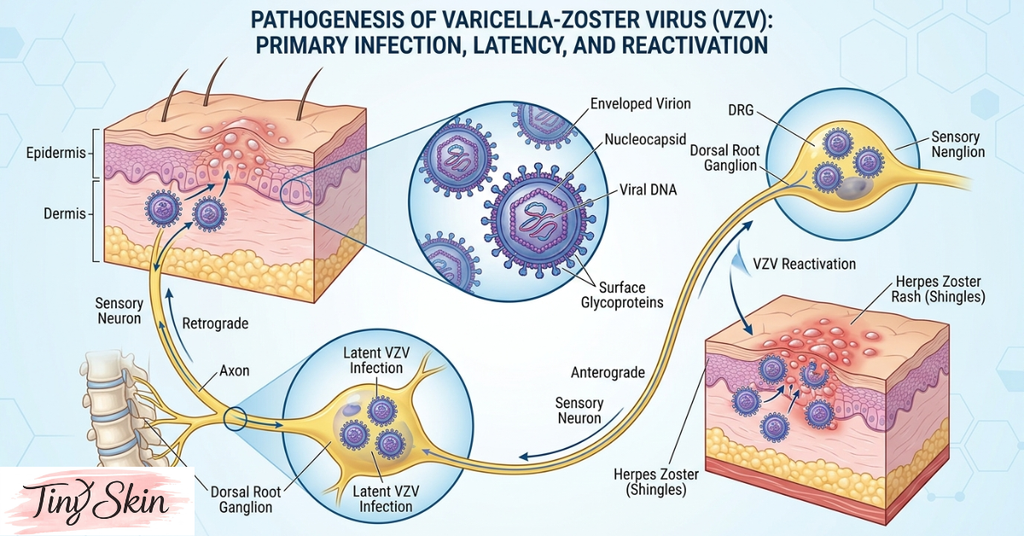
Understanding the virus explains the whole question. VZV is a member of the herpes virus family. It behaves like a guest who never fully leaves your house.
What Happens During Chickenpox
First, you catch the virus, usually as a child. It causes fever, itching, and blisters across the body. Your immune system then fights the infection and the rash heals.
However, the virus does not disappear. It travels along nerve fibers and hides in nerve clusters near your spine and brain. There, it stays dormant, often for decades.
What Wakes the Virus Up
Your immune system normally keeps VZV quiet. When that defense weakens, the virus can reactivate and travel back along a nerve to the skin. The result is the band-like shingles rash.
Common triggers include:
- Getting older, since immunity naturally declines
- Serious illness or major surgery
- Medicines that suppress the immune system
- Conditions such as cancer, HIV, or diabetes
Researchers also study the link between severe stress and shingles. The evidence remains mixed, so doctors do not call stress a proven cause.
Can You Get Shingles If You Never Had Chickenpox? Hidden Infections Explained
Many adults say, “I never had chickenpox.” Yet they later develop shingles. How is that possible? The answer lies in hidden infections.
Mild or Silent Chickenpox
Some children catch VZV and show only a few spots, or none at all. Parents may mistake the rash for insect bites or a minor allergy. Years later, the person has no memory of being sick.
Studies suggest that most adults carry VZV, even when they cannot recall the illness. Doctors often assume prior exposure in adults who grew up before vaccines existed.
Infection in the Womb or Infancy
Babies can meet VZV before birth or in their first year. Their immune systems are still immature, so the illness may look mild. Doctors note that children infected this early may develop shingles at a younger age.
How a Blood Test Can Settle the Question
Not sure about your history? A simple blood test checks for VZV antibodies. Positive results mean your body has met the virus. Negative results mean you may be unprotected.
| Your History | VZV in Your Body? | Can You Get Shingles? |
|---|---|---|
| Remember clear chickenpox | Yes | Yes |
| Think you never had it, antibody test positive | Yes | Yes |
| Never infected, never vaccinated, antibody test negative | No | Not from reactivation |
| Vaccinated with live vaccine | Weakened vaccine virus | Yes, but lower risk |
Chickenpox Vaccine and Shingles: What You Should Know
Vaccines add another layer to the story. A person who never had natural chickenpox may still carry a weakened virus from a shot.
Can the Live Vaccine Cause Shingles?
Yes, rarely. The chickenpox vaccine contains a weakened live virus. That virus can also hide in nerves and reactivate later. However, health agencies report that shingles occurs less often after vaccination than after natural infection.
Moreover, vaccine-related shingles usually causes a milder rash. Preventing chickenpox itself remains the main goal, since chickenpox can cause serious complications.
Chickenpox Vaccination in Russia
In Russia, chickenpox vaccination is not part of the routine national schedule for every child. Doctors typically offer it on request or to specific risk groups. Therefore, many Russian adults gained immunity through natural infection, not vaccination.
Check with your local therapist or pediatrician about the vaccines available at your clinic. Availability and recommendations can change.
Two Different Vaccines
Many people confuse these two shots:
- Chickenpox vaccine: Protects children and unprotected adults from chickenpox.
- Shingles vaccine: Protects adults who already carry VZV from reactivation.
Who Is Most at Risk of Shingles?
Anyone who has carried VZV can develop shingles. However, some groups face a much higher chance. Knowing your category helps you plan.
Age and Shingles
Risk rises sharply after age 50. Health authorities such as the CDC estimate that about one in three people will develop shingles at some point. Older adults also face more severe pain and more complications.
Weakened Immunity
People with weakened immune systems deserve special attention. This group includes:
- Cancer patients receiving chemotherapy
- People living with HIV
- Organ transplant recipients
- Patients on long-term steroid or immunosuppressant therapy
Additionally, people with diabetes or chronic illnesses may develop shingles more often. Doctors advise them to discuss prevention early.
Risk Overview
| Group | Risk Level | Why |
|---|---|---|
| Adults over 50 | Higher | Immunity declines with age |
| Immunosuppressed patients | Much higher | Body cannot keep the virus dormant |
| Healthy adults under 40 | Lower | Immune system stays strong |
| Never infected, never vaccinated | Very low | No dormant virus to reactivate |
Shingles Symptoms and How to Spot Them
Early recognition speeds up treatment. Shingles usually appears on one side of the body, often the torso or face.
Early Warning Signs
Symptoms often start before any rash appears. Watch for:
- Burning, tingling, or stabbing pain on one side
- Skin sensitivity to light touch
- Mild fever, headache, or tiredness
- Itching in a small, specific area
Pain may come first, so people sometimes mistake it for muscle strain or even a heart problem.
The Rash Stages
After one to five days, a red rash appears. Fluid-filled blisters then form in a band or strip. Over about two to four weeks, the blisters dry, crust, and heal.
Shingles vs Similar Conditions
Several skin problems look alike. A doctor should confirm the diagnosis.
| Condition | Key Features | How It Differs From Shingles |
|---|---|---|
| Shingles | One-sided, painful band of blisters | Follows a single nerve path |
| Contact dermatitis | Itchy red patches | Appears where skin touched an irritant |
| Herpes simplex | Clustered blisters, often on lips | Usually smaller, recurring area |
| Hives | Raised, moving welts | Appears and fades within hours |
Seek help at once if the rash touches your eye, nose tip, or forehead. Eye involvement can threaten vision.
Treatment and Prevention: Your Action Plan
Shingles responds best to early treatment. Prevention, however, works even better.
Treatment Options
Doctors prescribe antiviral medicines such as acyclovir, valacyclovir, or famciclovir. These work best when started within 72 hours of the first rash. Additionally, doctors may recommend pain relievers, cool compresses, and calamine lotion for comfort.
Do not scratch or pop the blisters. Keep the area clean and covered loosely to lower the risk of bacterial infection.
Preventing Complications
The most common complication is postherpetic neuralgia (PHN), nerve pain that lasts months after the rash heals. Early antiviral treatment may reduce this risk. Other complications include skin infection and vision problems.
The Shingles Vaccine
Doctors recommend the recombinant shingles vaccine for adults aged 50 and older in many countries. Studies show it offers more than 90% protection in healthy adults. It uses two doses spaced a few months apart.
Availability in Russia varies by clinic and by year. Therefore, ask your doctor which shingles vaccines are registered and available to you.
Key Takeaways
- Shingles comes from the varicella-zoster virus, the same virus that causes chickenpox.
- You normally need a past VZV infection to get shingles.
- Many people had silent chickenpox and forgot, so “I never had it” is often wrong.
- The live chickenpox vaccine carries a small shingles risk, lower than natural infection.
- You cannot catch shingles directly, but blister fluid can cause chickenpox in unprotected people.
- Early antivirals within 72 hours and vaccination offer the best protection.
FAQs
Can you get shingles if you never had chickenpox?
Rarely. Shingles requires dormant varicella-zoster virus in your nerves. Without natural infection or the live vaccine, you carry no virus. However, many people had mild chickenpox they never noticed, so they can still develop shingles. A blood test can confirm your status.
Can you get shingles from someone who has it?
No, you cannot catch shingles directly. However, active blisters can spread the virus to people who never had chickenpox or the vaccine. Those people develop chickenpox, not shingles. Avoid touching open blisters, and wash your hands often if you care for a patient.
Can children get shingles?
Yes, but it is uncommon. Children who had chickenpox in infancy or the womb face a higher chance. Vaccinated children can also develop it, usually with a mild rash. Parents should see a pediatrician when they notice a painful, one-sided blistering rash.
How long does shingles last?
Most shingles rashes heal within two to four weeks. Pain can linger longer in some people, especially older adults. Starting antiviral medicine early often shortens the illness. If nerve pain continues for months, ask your doctor about postherpetic neuralgia treatment.
Can you get shingles more than once?
Yes. Although uncommon, a second episode can occur, particularly in people with weak immunity. Doctors still recommend the shingles vaccine after an attack, once the rash has cleared. Discuss timing with your physician, since each person’s situation differs.
Is shingles dangerous?
For most healthy people, shingles is painful but not life-threatening. However, complications can be serious. Postherpetic neuralgia, eye damage, and skin infection are the main concerns. Older adults and immunocompromised patients face greater danger, so they should seek medical care immediately.
Conclusion
So, can you get shingles if you never had chickenpox? In nearly every case, you need a past varicella-zoster infection. However, silent childhood infections and live vaccines blur that line. Many people carry the virus without knowing it.
Therefore, do not rely on memory alone. Ask your doctor about an antibody test if you are unsure. Learn the early symptoms, and treat any painful one-sided rash as urgent. Antiviral medicine works best within 72 hours.
Take action today: Book an appointment with your therapist or dermatologist to review your shingles risk and vaccine options. Early advice protects your skin, your nerves, and your peace of mind.
Medical disclaimer: This article offers general education and does not replace professional diagnosis or treatment.

