

Introduction
Your baby is only a few days old, and suddenly red blotches with tiny yellow-white bumps appear on the face and body. It is easy to panic. However, in most cases this rash is erythema toxicum neonatorum (ETN), a harmless and very common newborn skin condition.
Despite its scary name, ETN is not toxic, not contagious, and not caused by anything you did. Pediatricians see it often, and it usually fades on its own within one to two weeks.
Still, some newborn rashes need urgent care. Therefore, knowing the difference matters. This guide explains what ETN looks like, why it happens, and how to care for your baby’s skin at home. You will also learn the warning signs that mean you should call a doctor right away.
What Is Erythema Toxicum Neonatorum?
Erythema toxicum neonatorum is a harmless, short-lived rash that appears in newborns. Doctors also call it toxic erythema of the newborn. In Russian medical sources, you may see it as toxic erythema of the newborn. The word “toxic” is misleading. Moreover, the rash is not an allergy and not an infection.
Definition and Other Names
ETN is a benign skin reaction. Under the microscope, doctors see small collections of white blood cells called eosinophils around hair follicles. The rash needs no treatment and leaves no scars.
Newborn skin is thinner and more sensitive than adult skin, so it reacts to many changes in the first weeks. Most rashes in this period are harmless, and ETN is among the most common.
How Common Is It?
Estimates vary between studies. Dermatology references suggest that roughly 30% to 70% of full-term newborns develop erythema toxicum neonatorum. Because it is so common, many pediatricians view it as a normal part of early newborn skin changes.
Who Is More Likely to Get It?
ETN mostly affects healthy, full-term babies. It is less common in premature babies and in babies with low birth weight. Boys and girls are equally likely to get it. On darker skin, the redness can be harder to see, so the bumps may stand out more.
Symptoms of Erythema Toxicum Neonatorum: What the Rash Looks Like
Typical Appearance
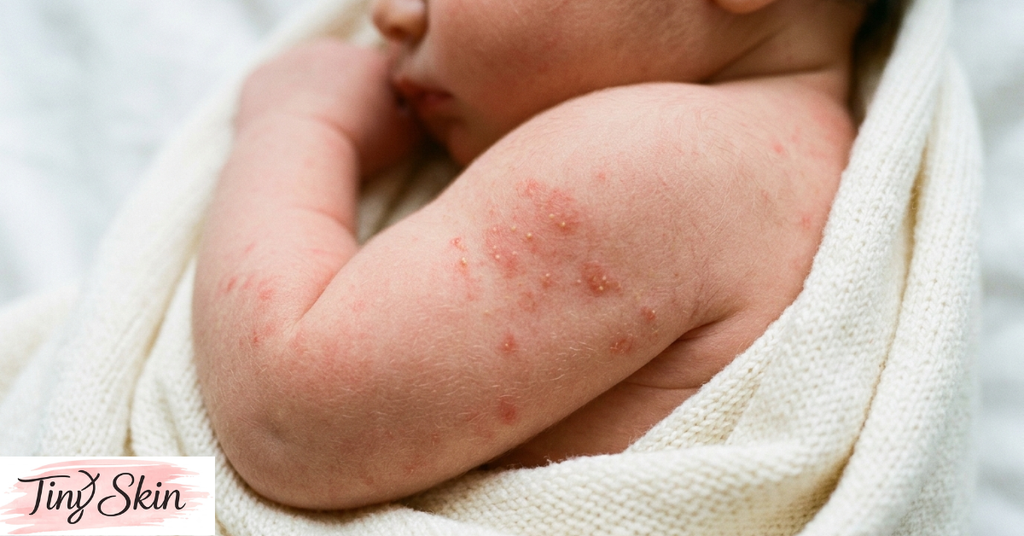
Erythema toxicum neonatorum looks like red blotches with a small yellow or white bump in the center. Parents often compare the spots to flea bites. Some spots are flat, while others are slightly raised. The baby usually feeds well, sleeps normally, and shows no sign of discomfort.
The bumps are tiny pustules filled with white blood cells, not bacteria. Take clear photos in daylight to show your doctor, because the rash can change before your appointment.
Where It Appears on the Body
The rash most often shows up on the face, chest, back, and limbs. However, the palms and soles stay clear because these areas have no hair follicles. Additionally, spots may move from one area to another within hours. This changing pattern is a helpful clue.
Timing and Duration
ETN usually starts 24 to 72 hours after birth. Occasionally, it appears later in the first two weeks. Each spot fades within a day or two, but new spots may keep appearing. The whole episode generally clears in one to two weeks.
Table 1: Erythema Toxicum Neonatorum at a Glance
| Feature | What to Expect With ETN |
|---|---|
| Appearance | Red blotches with tiny yellow-white bumps |
| Usual start | 1–3 days after birth |
| Common areas | Face, chest, back, arms, legs |
| Areas usually spared | Palms and soles |
| Baby’s behavior | Feeds well, no fever, acts normally |
| Duration | Typically 1–2 weeks |
| Scarring | None |
What Causes Erythema Toxicum Neonatorum?
Why the Exact Cause Is Unknown
Researchers have not found one clear cause of erythema toxicum neonatorum. However, doctors agree on an important point: it is a normal, short-term condition. It appears in babies who are otherwise healthy.
Leading Theories
Doctors consider several ideas, but none is proven:
- A mild immune response as the newborn’s skin meets the outside world
- A reaction to normal skin bacteria that enter hair follicles after birth
- Skin adjusting to air, fabric, and touch after months in amniotic fluid
What Does Not Cause It
Parents often blame themselves, so this point matters. ETN does not come from poor hygiene, laundry detergent, breastfeeding, or an infection passed from mother to baby. Additionally, you cannot prevent it, and your baby cannot spread it to other children.
Understanding this can lift a lot of guilt. A rash on a tiny baby feels frightening, especially after childbirth. Remember that doctors consider ETN a normal, self-limiting condition and not a failure of care.
How Doctors Diagnose ETN
The Physical Exam
In most cases, a pediatrician diagnoses the rash by looking at it. The doctor checks the timing, the pattern, and your baby’s overall health. In Russia, you may first notice the rash during a home visit by the patronage nurse (патронажная медсестра) after hospital discharge. Share your concerns with her, and book a visit with your pediatrician.
When Extra Tests Are Needed
Doctors rarely need tests to confirm erythema toxicum neonatorum. However, if the rash looks unusual, they may take a gentle swab or scraping from a pustule. These tests help rule out infections, such as bacterial skin infections or neonatal herpes.
What Lab Results Show
When a doctor stains a sample from a pustule and views it under a microscope, ETN shows many eosinophils. Infections show other cells or germs. Consequently, this simple test can separate harmless rashes from serious ones.
At the visit, expect questions such as:
- When did the rash start?
- Is your baby feeding well?
- Has your baby had a fever?
- Did you or your baby have any infection around delivery?
Erythema Toxicum Neonatorum vs Other Newborn Rashes
Common Look-Alikes
Several newborn rashes resemble ETN at first glance. Most are harmless. A few, however, need quick treatment.
Table 2: ETN vs Look-Alike Newborn Skin Conditions
| Condition | Typical Look | Usual Timing | Concern Level |
|---|---|---|---|
| ETN | Red blotches with yellow-white bumps; spares palms and soles | Day 1–3 (up to 2 weeks) | Harmless |
| Transient neonatal pustular melanosis | Fragile pustules that leave dark spots with a thin scale ring | Present at birth | Harmless |
| Milia | Tiny white, pearl-like bumps on nose and cheeks | At birth or soon after | Harmless |
| Neonatal acne | Red bumps on cheeks, nose, forehead | About 2–4 weeks | Usually harmless |
| Heat rash (miliaria) | Tiny clear or red bumps in warm, covered areas | Any time with overheating | Harmless; cool the baby |
| Neonatal herpes (HSV) | Clustered blisters; baby may have fever, sleepiness, poor feeding | First weeks of life | Emergency |
| Bacterial skin infection | Larger pus-filled blisters, yellow crusts, often in skin folds | Any time | Needs prompt care |
Three Clues Doctors Use
- Timing: ETN usually starts after the first day of life.
- Pattern: ETN spares the palms and soles.
- Behavior: Babies with ETN act well and feed normally.
Why Correct Identification Matters
Parents cannot always tell erythema toxicum neonatorum from other rashes by sight. Therefore, ask a doctor to examine any rash that looks blistered, crusted, or different from ETN. Early diagnosis protects your baby, especially with infections like neonatal herpes.
How to Care for Your Baby With ETN at Home
Because erythema toxicum neonatorum clears by itself, home care focuses on protecting the skin, not treating the rash.
Gentle Skin Care Basics
- Bathe your baby in lukewarm water for a few minutes, then pat the skin dry.
- Use a mild, fragrance-free cleanser only when needed.
- Dress your baby in loose, soft cotton clothing.
- Keep the room comfortably cool, around 20–22 °C (68–72 °F), to prevent overheating.
- Wash baby clothes with gentle, fragrance-free detergent and rinse them well.
What to Avoid
- Never squeeze or pick the bumps. This can irritate the skin and invite infection.
- Skip creams, oils, and powders unless your pediatrician advises them.
- Ask your doctor before using potassium permanganate or herbal baths. They can irritate or even burn delicate skin if prepared incorrectly.
- Avoid scented soaps and wipes.
Simple Daily Routine
- Check your baby’s skin at every diaper change.
- Note any new spots, blisters, or color changes.
- Take your baby’s temperature if they seem unwell.
- Continue regular feeding to keep your baby well hydrated.
- Mention the rash at your next pediatrician visit.
Many pediatricians say daily full baths are not essential. Ask your doctor what routine suits your baby.
When to See a Doctor About a Newborn Rash
Red Flag Symptoms
Erythema toxicum neonatorum should not make your baby sick. Contact a doctor promptly if you notice:
- Fever of 38 °C (100.4 °F) or higher
- Unusual sleepiness, floppiness, or irritability
- Poor feeding or fewer wet diapers
- Clusters of clear, fluid-filled blisters
- Yellow crusts, oozing, or spreading redness
- Spots on the palms and soles
- A rash lasting longer than two weeks, or one that starts later than the first weeks of life
Why Fever Matters Most
Doctors treat a fever in a baby under three months old as urgent. Even a mild temperature rise can signal a serious infection in a newborn. Do not give fever medicine before speaking with a doctor.
Emergency Help in Russia
If your baby has a fever, trouble breathing, or looks very unwell, call 103 or 112 immediately. Do not wait for the rash to improve. Also tell the doctor if you had a herpes infection or cold sores around delivery.
Key Takeaways
- Erythema toxicum neonatorum is a harmless, common rash in healthy newborns.
- It usually appears 1–3 days after birth and clears within 1–2 weeks.
- The rash spares the palms and soles and moves around the body.
- It is not contagious, not an allergy, and not caused by poor hygiene.
- No cream or medicine is needed. Gentle, fragrance-free care is enough.
- Fever, blisters, poor feeding, or unusual sleepiness need medical care right away.
FAQs
Is erythema toxicum neonatorum dangerous?
No. Erythema toxicum neonatorum is harmless and clears on its own without treatment. It does not cause pain, scarring, or long-term skin problems. However, fever, poor feeding, unusual sleepiness, or blisters mean something else may be happening. In that case, contact your pediatrician or emergency services immediately.
Is erythema toxicum neonatorum contagious?
No. This rash is not contagious. Your baby cannot pass it to siblings, parents, or other babies, and you cannot catch it. It is not an infection. It is a temporary skin reaction in the newborn. You do not need to isolate your baby or limit normal contact with family.
How long does erythema toxicum neonatorum last?
Most babies clear up within one to two weeks. Individual spots fade in one to two days, but new ones can appear during that time. This pattern is normal and not a sign of worsening. If the rash lasts longer than two weeks, ask your pediatrician to check your baby.
Should I treat erythema toxicum neonatorum with cream?
No. Erythema toxicum neonatorum needs no cream, ointment, or medicine. Creams can irritate delicate newborn skin and make the rash harder to judge. Keep the skin clean and dry, dress your baby in soft cotton, and use a product only if your pediatrician recommends it.
What is the difference between ETN and baby acne?
ETN usually appears in the first three days and spares the palms and soles. Baby acne, called neonatal acne, appears around two to four weeks and mostly affects the cheeks, nose, and forehead. ETN spots move around and fade quickly, while acne bumps can linger for weeks.
Can erythema toxicum neonatorum come back?
The rash often seems to come and go during the first one to two weeks, as old spots fade and new ones appear. After it fully clears, it rarely returns. A rash that appears again later, or one that itches or blisters, deserves a pediatrician’s visit.
Conclusion
Erythema toxicum neonatorum looks alarming, but it is one of the most harmless rashes in newborns. It appears in the first days of life, moves around the body, spares the palms and soles, and clears within one to two weeks. You do not need creams, special baths, or medicine. Simply keep your baby’s skin clean, comfortably cool, and gently handled.
However, trust your instincts. Fever, blisters, poor feeding, or unusual sleepiness need medical care right away. If you are unsure about any rash, consult your pediatrician or a pediatric dermatologist. Book a visit today for personalized advice, and explore our related newborn skin care guides for more support.
Medical disclaimer: This article is for education only. It does not replace advice from your baby’s doctor.

