
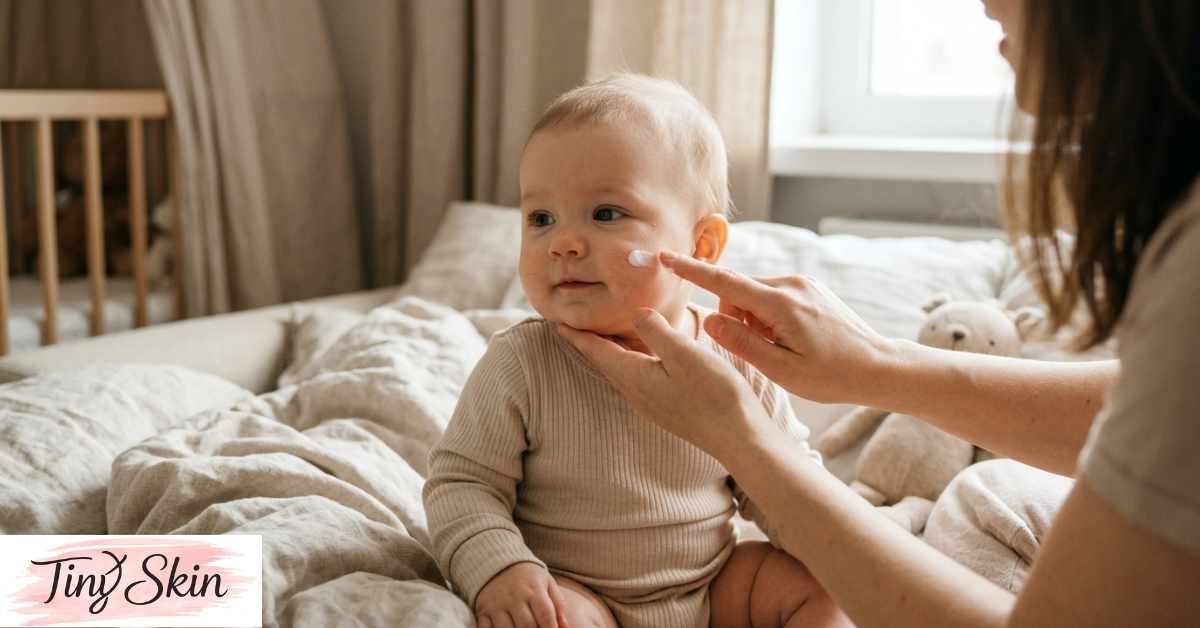

Introduction
Few things worry new parents more than rough, flaky patches on a baby’s cheeks. Baby dry skin on face is very common, and it often looks worse than it feels. However, you should not ignore it. The face stays exposed to cold air, drool, and milk all day long. In Russia, long winters and strong central heating make the problem even more frequent.
The good news is that most cases respond well to simple, gentle care. In this guide, you will learn why dryness appears and how to tell it apart from eczema. You will also find a daily routine that works. Additionally, you will see which ingredients are safe and which warning signs need a doctor’s visit. Let’s help your little one get comfortable, soft skin again.
Medical note: This article offers general education. It does not replace advice from your pediatrician.
What Is Baby Dry Skin on Face, and Is It Normal?
Baby dry skin on face means rough, flaky, or tight-feeling cheeks, chin, forehead, or eyelids. The skin lacks water and natural oils. Many babies develop it at some point during the first year.
Why Baby Skin Dries Out So Quickly
A baby’s skin is thinner than adult skin. Its outer layer, called the skin barrier, is still maturing. As a result, it loses water faster and lets irritants in more easily. Dermatologists also note that babies make less natural oil in the early months. Therefore, even a mild change in weather can leave the cheeks dry.
Normal Newborn Peeling vs. Ongoing Dryness
Newborn dry skin is very common in the first two to three weeks. Babies shed the outer skin layer they developed before birth. This peeling is usually harmless and needs only a gentle moisturizer. However, dryness that appears later, or comes with redness and itching, deserves closer attention.
Simple dryness usually shows these signs:
- Fine, white flakes
- Rough or tight-feeling skin
- Mild pinkness
- No obvious itching or sleep trouble
Main Causes of Baby Dry Skin on Face
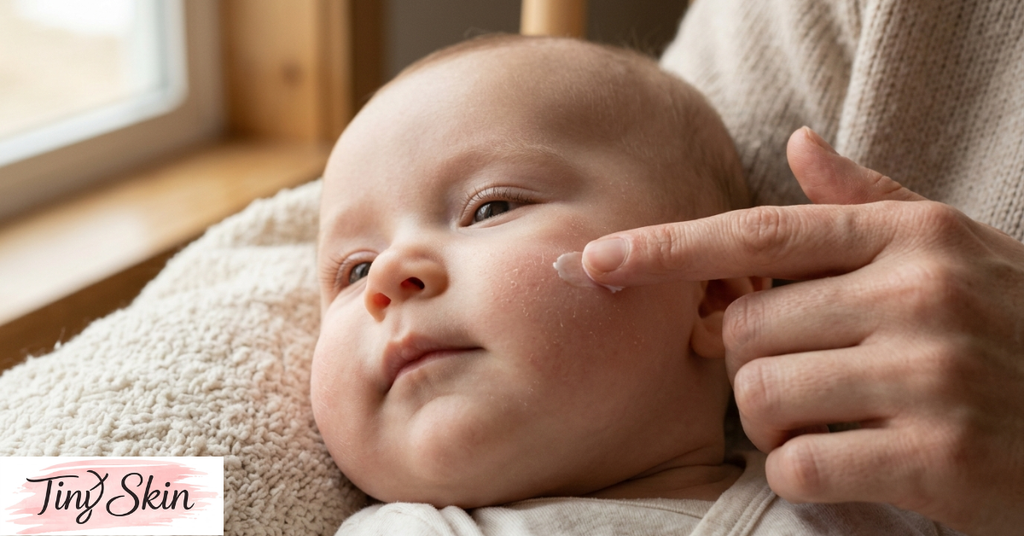
Several everyday factors can trigger baby dry skin on face. Usually, more than one cause works at the same time.
Cold Air, Heating, and Low Humidity
Russian winters bring freezing wind outdoors and very dry air indoors. Radiators can drop indoor humidity sharply. Dry air pulls moisture out of the skin. Meanwhile, frost and wind damage the barrier on exposed cheeks.
Drool, Milk, and Frequent Wiping
Teething babies drool constantly. Saliva and spit-up stay on the cheeks and irritate the skin. Additionally, rubbing with rough cloths or alcohol-based wipes strips away protective oils. Pat the area gently instead.
Baths, Soaps, and Laundry Products
Long, hot baths remove natural oils. Scented soaps and strong laundry powders leave residues on clothes and bedding. Hard tap water, which is common in some cities, may also bother sensitive skin.
Family History and Allergies
Babies with a parent who has eczema, asthma, or hay fever face a higher risk of dry, sensitive skin. Genes influence how well the skin barrier works. Consequently, these babies often need extra moisturizing from the start.
Baby Dry Skin on Face vs. Eczema and Other Rashes
Not every rough patch is simple dryness. Several skin conditions look similar at first glance. The table below shows the main differences.
Table 1: Common Baby Face Skin Problems Compared
| Condition | What It Looks Like | Itchy? | Typical Timing | What Usually Helps |
|---|---|---|---|---|
| Simple dry skin | Fine flakes, rough texture, mild pinkness | Mild or none | Any age, often in winter | Gentle cleansing and regular emollients |
| Eczema (atopic dermatitis) | Red, rough, or weepy patches, often on cheeks | Yes, often strongly | Often starts at 2-6 months | Emollients, trigger control, doctor-guided treatment |
| Cradle cap (seborrheic dermatitis) | Greasy, yellowish scales; may reach eyebrows | Usually not | First weeks to months | Gentle washing; ask your doctor if it spreads |
| Milia | Tiny white bumps, not flaky | No | Newborn period | Nothing; they clear on their own |
| Drool or contact rash | Red area around mouth and chin | Sometimes | During teething or after new products | Barrier ointment, wiping gently, removing triggers |
Why Eczema Often Starts on the Cheeks
In infants, eczema commonly appears on the cheeks and scalp. The diaper area is usually spared. Baby face eczema tends to flare up and calm down in cycles. Triggers include dry air, sweat, harsh products, and sometimes allergens.
Quick Parent Checklist
Ask yourself these questions:
- Does my baby scratch or rub the face against the sheets?
- Do patches look red, raised, or wet rather than just flaky?
- Does the problem keep returning after moisturizing?
If you answer “yes” to any of these, schedule a check-up. A doctor can confirm the diagnosis.
A Gentle Daily Routine for Baby Dry Skin on Face
Consistency matters most when you treat baby dry skin on face. A simple baby skin care routine often works better than many different products.
Bath Time Rules
Keep baths short, about five to ten minutes. Use lukewarm water, not hot. Choose a mild, fragrance-free cleanser, and use it only where needed. Plain water often cleans the face well enough.
The Moisturizing Method
Follow these steps once or twice a day:
- Wash your hands first.
- Pat your baby’s face dry gently. Do not rub.
- Apply a thin layer of fragrance-free emollient within a few minutes of bathing.
- Use soft, downward strokes. Avoid the eyes.
- Reapply after feeds if the cheeks look dry.
Feeding and Wiping Care
Use a soft, damp cotton cloth to clean milk and drool. Then pat dry and add a little barrier ointment around the mouth and chin. Additionally, wash bibs and bedding with a mild, fragrance-free detergent and rinse them well.
Best Ingredients for Baby Face Moisturizers
Choosing the best moisturizer for baby face starts with reading the label. Thicker products, such as creams and ointments, generally protect better than thin lotions. The table below compares common ingredients.
Table 2: Ingredient Comparison for Baby Face Care
| Ingredient | How It Works | Notes for Parents |
|---|---|---|
| Petrolatum | Seals in moisture with a protective layer | Very effective and rarely irritating; feels greasy |
| Glycerin | Draws water into the skin | Common in creams; works best with a sealing ingredient |
| Ceramides | Support the skin’s natural barrier | Often recommended for eczema-prone skin |
| Colloidal oatmeal | Soothes and softens dry skin | Choose fragrance-free formulas |
| Dimethicone | Forms a light protective film | Gentle and non-greasy |
| Dexpanthenol (panthenol) | Helps skin hold moisture and heal | Popular in baby care; usually well tolerated |
| Fragrance and essential oils | Add scent only | Common irritants; avoid on baby faces |
| Menthol, camphor, alcohol | Cool or dry the skin | Can sting and dry the skin; avoid |
Ingredients and Habits to Avoid
Skip these on your baby’s face:
- Perfumed or “natural” products with essential oils
- Adult creams and anti-aging products
- Nut-based oils, which may raise allergy concerns
- Hydrocortisone or other steroid creams, unless a doctor prescribes them
Pediatric allergists also advise caution with kitchen oils on irritated skin. Some may weaken the barrier in babies. Ask your doctor before trying them.
How to Patch Test a New Product
Apply a small amount to your baby’s inner forearm for two days. Watch for redness, bumps, or fussiness. If the skin stays calm, try the product on the face. Introduce only one new product at a time.
Protecting Baby Dry Skin on Face in Cold Weather
Winter care deserves its own plan. Cold weather is one of the strongest triggers for dry cheeks in Russian families.
Before You Go Outside
Apply a thick, fat-based ointment or cream about 20-30 minutes before a walk. Creams with high water content may chill the skin in frost. Furthermore, pediatricians often advise shortening walks in severe cold. Cover the cheeks with a soft scarf, but keep the baby’s nose and mouth free to breathe.
Fixing Dry Indoor Air
Aim for indoor humidity around 40-60% and a room temperature near 20°C. A clean humidifier helps, but wash it often to prevent mold. Moreover, ventilate the room briefly each day. Avoid placing the crib directly next to a radiator.
Sun and Wind in Warmer Months
Dry skin on your baby’s face can also appear in summer. Keep babies in the shade and use a wide-brimmed hat. For infants under six months, most experts advise avoiding sunscreen unless a doctor recommends it. After six months, ask your pediatrician about a mineral sunscreen made for babies.
When to See a Doctor About Baby Dry Skin on Face
Most dryness improves with home care. However, persistent baby dry skin on face sometimes signals a condition that needs treatment.
Red Flags That Need Prompt Attention
Contact your doctor if you notice any of these:
- Oozing, weeping, or honey-colored crusts
- Fever or unusual sleepiness
- Rapid spread of redness or blisters
- Constant scratching or poor sleep
- No improvement after one to two weeks of gentle care
Call urgently if a baby younger than three months has a fever alongside skin changes.
What the Doctor May Do
A pediatrician or pediatric dermatologist (детский дерматолог) examines the skin and asks about family history. Doctors may prescribe a short course of a mild topical medicine for eczema. They may also discuss triggers, including allergies. Importantly, do not remove foods from your own or your baby’s diet without medical advice.
Mistakes Parents Should Avoid
Parents often over-bathe, switch products too often, or use leftover prescription creams. Additionally, many try several home remedies at once. This approach makes it harder to find the real trigger. Keep your plan simple and change one thing at a time.
Key Takeaways
- Baby dry skin on face is usually mild and responds to gentle, consistent care.
- A baby’s skin barrier is thin and immature, so it loses water quickly.
- Moisturize within minutes after a short, lukewarm bath.
- Choose fragrance-free creams or ointments with ingredients like petrolatum, glycerin, or ceramides.
- Protect cheeks from frost, drool, and dry indoor air.
- See a doctor for oozing, crusts, fever, strong itching, or no improvement after one to two weeks.
FAQs
What causes baby dry skin on face?
Thin, immature skin plus cold air, dry indoor heating, drool, hot baths, and harsh products cause most cases. A family history of eczema or allergies raises the risk. Therefore, gentle cleansing and regular moisturizing usually improve the problem within one to two weeks.
Can I use coconut oil or olive oil on my baby’s face?
Plain oils may feel soothing, but they do not replace a proper moisturizer. Some oils can irritate sensitive skin or worsen eczema, and nut-based oils may raise allergy concerns. Ask your pediatrician first. Choose a fragrance-free cream or ointment instead.
Is baby dry skin on face a sign of eczema?
Not always. Dryness alone is common and harmless. However, eczema often starts on the cheeks with red, itchy, rough patches that keep returning. If your baby scratches, sleeps badly, or develops oozing patches, see a pediatrician for an accurate diagnosis.
How often should I moisturize my baby’s face?
Moisturize at least twice daily. Apply the product within a few minutes after bathing and pat drying. Add extra layers after feeds, when you wipe the cheeks, or before outdoor walks. Babies with eczema-prone skin often need more frequent applications, as their doctor advises.
Can I use hydrocortisone cream on my baby’s face?
Use it only if your doctor prescribes it. Facial skin is thin and absorbs steroids more strongly than skin on other body areas. A doctor chooses the right strength, amount, and duration. Never use adult steroid creams on a baby’s face.
How long does baby dry skin on face last?
Mild dryness often improves within one to two weeks of gentle care. However, it may return in winter. Eczema is a longer-term condition that comes and goes, and many children improve with age. Contact your doctor if you see no improvement after two weeks.
Conclusion
Baby dry skin on face can look alarming, yet most cases are mild and manageable. Bathe your baby briefly in lukewarm water, pat the skin dry, and apply a fragrance-free emollient often. Additionally, protect those cheeks from frost, drool, and dry indoor air. Remember that every baby is different. If you see oozing, crusts, fever, or constant itching, do not wait. Book a visit with your pediatrician or a pediatric dermatologist, who can build a plan that fits your child. Start tonight with one small change, such as a shorter, cooler bath. Your baby’s comfortable skin is worth the patience.

