

Introduction
Imagine a child who gets a severe sunburn after just ten minutes outside. Now imagine this happens again and again, even on cloudy days. For families living with xeroderma pigmentosum, this is daily life.
Xeroderma pigmentosum (XP) is a rare inherited condition. It makes the skin extremely sensitive to ultraviolet (UV) light. In Russia, people sometimes call affected children “children of the moon,” because sunlight can harm them.
However, early diagnosis and strict protection can change the outlook. In this guide, you will learn what causes xeroderma pigmentosum, which symptoms to watch for, and how doctors diagnose it. Additionally, you will find practical tips for Russian conditions, from sunny southern summers to bright winter snow.
What Is Xeroderma Pigmentosum?
A Rare Inherited Skin Condition
Xeroderma pigmentosum is a rare genetic disorder. People with XP cannot repair DNA damage from ultraviolet (UV) light. Therefore, normal sunlight harms their skin and eyes far more than it harms other people’s.
The name has Greek and Latin roots. “Xeroderma” means dry skin. “Pigmentosum” describes the dark, freckle-like spots that appear after sun exposure.
How Common Is It?
Xeroderma pigmentosum affects roughly one in a million people in Europe and the United States. It appears more often in Japan and parts of North Africa and the Middle East. In some of these communities, marriages between relatives are more common. This raises the chance of inheriting two faulty gene copies.
Because the disease is so rare, many doctors never meet a patient with it. As a result, diagnosis can take years.
Why People Say “Children of the Moon”
Patients must avoid sunlight, so many spend their active hours after sunset. Russian media often use the phrase “дети луны,” or “children of the moon.” However, this is not a medical term. Doctors use the name xeroderma pigmentosum, or XP.
Importantly, modern protection tools allow many children to attend school, make friends, and enjoy hobbies safely.
Causes of Xeroderma Pigmentosum: A DNA Repair Problem
How UV Light Damages DNA
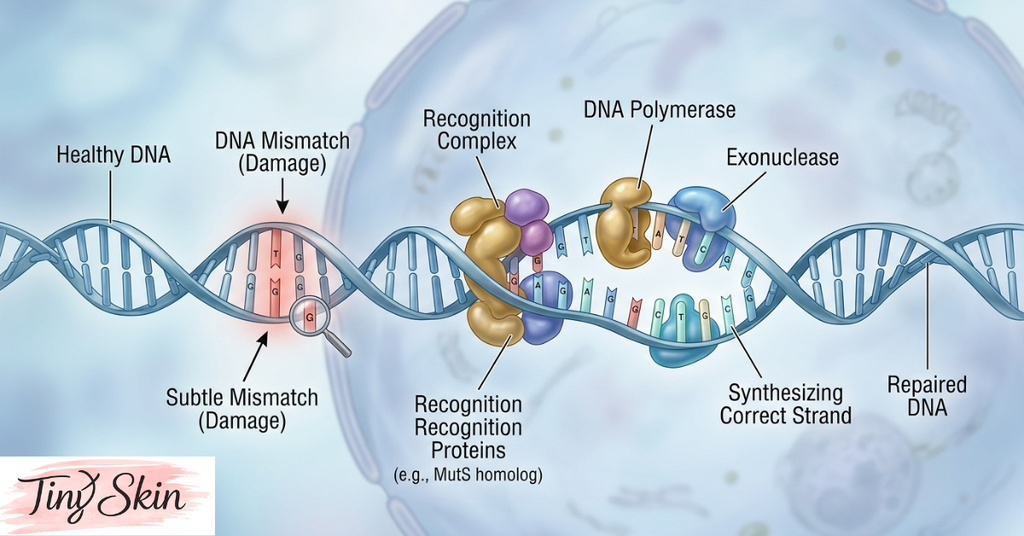
Sunlight contains UV rays. These rays damage the DNA inside skin cells. Healthy cells fix this damage using a process called nucleotide excision repair. Think of it as a spell-checker for your genetic code.
In xeroderma pigmentosum, a gene in this repair system does not work properly. Damage then builds up, and cells may start to grow out of control. Over time, this process leads to skin cancer.
Inheritance Pattern
XP is an autosomal recessive condition. A child needs two faulty gene copies, one from each parent. Parents who carry one copy usually have no symptoms.
However, each child of two carriers has a 25% chance of having XP. Genetic counseling helps families understand these odds.
Genetic Groups of XP
Researchers have identified eight groups, XP-A through XP-G, plus a “variant” type called XP-V. Each group involves a different gene. The group influences symptoms, especially nervous-system problems.
| XP Group | Typical Features | Nervous System Involvement |
|---|---|---|
| XP-A | Early, severe sun sensitivity; more common in Japan | Common and often significant |
| XP-C | Most frequent in Europe, North Africa, and the US; high skin cancer risk | Usually absent |
| XP-D | Wide range from mild to severe | Present in some patients |
| XP-V | Later onset; sometimes diagnosed in young adults | Usually absent |
| XP-B, E, F, G | Rare; features vary; some overlap with other DNA repair syndromes | Varies by group |
Xeroderma Pigmentosum Symptoms: Skin, Eyes, and Nerves
Skin Signs
XP symptoms usually start in early childhood. Typical skin signs include:
- Severe sunburn with blisters after very short sun exposure
- Freckles on the face, arms, and neck before age 2
- Dry, rough, thin skin
- Uneven pigmentation, with dark spots and visible tiny blood vessels
- Rough, scaly patches called actinic keratoses
Notably, not every patient burns easily. Some only develop freckles. Consequently, doctors should not rule out XP just because sunburns are absent.
Eye Signs
The eyes suffer too, because they absorb UV light. Common problems include light sensitivity, red or watery eyes, dry eyes, and clouding of the cornea. Moreover, tumors can grow on the eyelids and the eye surface.
Nervous System Signs
A minority of patients develop nervous-system symptoms. These may include hearing loss, poor balance, muscle stiffness, and learning difficulties. They may worsen over time, so regular neurological checks matter.
| Warning Sign | Why It Matters | Next Step |
|---|---|---|
| Blistering burn after short sun exposure | May signal abnormal UV sensitivity | Book a dermatologist visit; avoid sun |
| Many freckles before age 2 | Suggests early sun damage | Ask for an XP evaluation |
| New sore that does not heal | Possible skin cancer | Seek an urgent skin exam |
| Eye pain, redness, light sensitivity | Possible eye surface damage | See an ophthalmologist |
| Hearing loss or balance problems | Possible nervous-system involvement | See a neurologist and geneticist |
How Doctors Diagnose Xeroderma Pigmentosum
Clinical History and Skin Exam
Doctors suspect xeroderma pigmentosum when a young child shows extreme sun sensitivity or early freckling. They ask about family history, sunburn reactions, and development. Then a dermatologist examines the skin, and an ophthalmologist checks the eyes.
Laboratory and Genetic Tests
Specialists confirm the diagnosis with lab tests. They may grow skin cells and test how well the cells repair UV damage. Additionally, genetic testing can find the exact gene change.
In high-risk families, doctors can also test during pregnancy, using amniotic fluid or placental tissue.
Conditions That Look Similar
Several conditions can mimic XP. Examples include porphyrias, Cockayne syndrome, lupus, and severe polymorphic light eruption. Therefore, a specialist should guide testing instead of guessing.
Early confirmation lets families start protection immediately. This lowers future damage.
Skin Cancer Risk and Medical Treatment
Why the Skin Cancer Risk Is So High
Without working DNA repair, UV damage accumulates quickly. Studies suggest that people with XP develop skin cancers far earlier than the general population, often in childhood. They also develop them in greater numbers.
The main types are basal cell carcinoma, squamous cell carcinoma, and melanoma. This high skin cancer risk makes prevention the top priority.
Regular Skin Checks and Surgery
Dermatologists recommend full-body skin exams every few months, with sooner visits for any new spot. Doctors remove suspicious growths early, using surgery (including Mohs surgery) or other local methods. Early removal keeps scars smaller and improves outcomes.
Parents should also learn to check the skin monthly at home.
Medicines and Research
No cure for xeroderma pigmentosum exists yet, but some medicines help. Oral retinoids, such as isotretinoin or acitretin, can reduce new skin cancers in some patients. However, they cause side effects and need close specialist monitoring.
Creams such as fluorouracil treat precancerous patches. Meanwhile, researchers study new options, including enzyme-based lotions and gene-based approaches.
Daily Sun Protection for Xeroderma Pigmentosum
Clothing and Protective Gear
Cover every inch of skin outdoors. Dermatologists recommend:
- Tightly woven, long-sleeved clothing and long trousers
- A wide-brimmed hat plus a UV-blocking face shield
- Wraparound sunglasses that block UV rays
- Gloves for hands
- Broad-spectrum SPF 50+ sunscreen on any exposed skin, as a backup only
Home, School, and Car
UV light also enters through windows. Follow these steps:
- Apply UV-blocking film to windows at home, school, and in the car.
- Use a UV meter to check rooms and outdoor areas.
- Ask your doctor about bulbs, because some fluorescent and halogen lights emit small amounts of UV.
- Talk with teachers and request a school plan with indoor activities.
- Schedule trips and play for evening or night hours.
Staying Safe Outdoors in Russia
Russia’s climate creates unique challenges. Southern regions have intense summer sun. Meanwhile, winter brings a hidden risk, because fresh snow reflects UV light back toward the skin.
Moreover, UV passes through clouds. Therefore, protect your child in every season, not only in July.
Living With Xeroderma Pigmentosum: Eye Care, Nutrition, and Support
Eye Care
Regular eye exams catch problems early. Ophthalmologists often prescribe lubricating drops and advise UV-blocking lenses. Report eye pain, redness, or vision changes immediately.
Vitamin D and Nutrition
Strict sun avoidance can lower vitamin D levels. Therefore, doctors often check blood levels and recommend supplements when needed. Never guess the dose; ask your doctor.
A balanced diet with fruits, vegetables, and protein also supports skin healing.
Emotional and Genetic Support
A rare diagnosis can feel isolating. Genetic counseling helps relatives understand risks and plan future pregnancies.
In Russia, rare-disease charities and online parent communities offer practical advice and emotional support. Additionally, a psychologist can help children and parents cope with stress and social limits. Living with xeroderma pigmentosum is challenging, but families do not have to face it alone.
Key Takeaways
- Xeroderma pigmentosum is a rare inherited disorder that blocks DNA repair after UV damage.
- Early signs include severe sunburn, freckling before age 2, and eye sensitivity.
- Doctors confirm XP through specialist exams, cell tests, and genetic testing.
- No cure exists, but strict UV avoidance and regular skin checks greatly reduce harm.
- Protect skin and eyes year-round, including in snowy Russian winters.
- Genetic counseling and family support improve long-term care.
FAQs
What is xeroderma pigmentosum in simple words?
Xeroderma pigmentosum is a rare inherited disorder. The body cannot repair DNA damage from ultraviolet light. As a result, sun exposure causes severe burns, early freckling, eye problems, and a very high risk of skin cancer. Strict sun protection and regular medical checks form the core of care.
Is xeroderma pigmentosum curable?
No cure exists today. However, doctors can manage the condition well. Strict UV avoidance, regular skin exams, early removal of tumors, and sometimes retinoid medicines reduce harm. Researchers continue to study gene-based and other new treatments, but families should rely on proven care from specialists.
How long do people with xeroderma pigmentosum live?
Life expectancy varies widely. Without UV protection, skin cancers and neurological problems can shorten life significantly. With early diagnosis, strict protection, and regular cancer screening, many people live into adulthood. Outcomes also depend on the genetic group, so ask your specialist for individual guidance.
Can adults develop xeroderma pigmentosum?
People are born with XP, so adults do not catch it. However, some forms, especially XP-V, cause milder early signs. Doctors may diagnose these patients in their teens or adulthood, after skin cancers appear. Anyone with unusual sun sensitivity and many early skin cancers should ask about genetic testing.
Is xeroderma pigmentosum contagious?
No. Xeroderma pigmentosum is genetic, not infectious. You cannot catch it through touch, sharing food, or living together. Only a child who inherits two faulty gene copies develops the condition. Therefore, friends, classmates, and relatives can safely spend time with affected people.
Can children with xeroderma pigmentosum go outside?
Yes, but only with careful planning. Many families choose evening or night activities. During the day, children need full UV-blocking clothing, a face shield, and sunglasses with side protection. A UV meter helps parents check conditions. Always follow the plan your dermatologist provides.
Conclusion
Xeroderma pigmentosum is rare, but families can manage it with knowledge and discipline. Remember the key points: the condition comes from faulty DNA repair, sunlight is the main trigger, and early diagnosis protects the skin and eyes. Strict UV avoidance, regular skin checks, and eye care make a real difference.
Moreover, support from doctors, geneticists, and other families eases the burden. If your child burns quickly, freckles early, or you notice a changing skin spot, do not wait. Book an appointment with a dermatologist today and ask about xeroderma pigmentosum testing. Share this guide with relatives and teachers, so everyone understands how to keep your loved one safe.

