
Introduction
Your child has a round, red, scaly patch that itches day and night. A week later, a second patch appears. Many parents panic and think of ringworm. However, these coin-shaped spots may point to nummular eczema in children, a common but often misunderstood skin condition.
Nummular eczema in children can look alarming. It also tends to return in the same places. The good news is that doctors can treat it safely, and most kids improve with the right routine.
In this guide, you will learn how to spot the signs, what triggers them, and which treatments work. Additionally, you will see when to call a pediatric dermatologist. Read on to protect your child’s comfort and sleep.
What Is Nummular Eczema in Children?
Nummular eczema (also called discoid eczema) is a type of dermatitis. The word “nummular” comes from the Latin word for coin. The name fits well, because the patches are round or oval and clearly outlined.
Why the Patches Look Like Coins
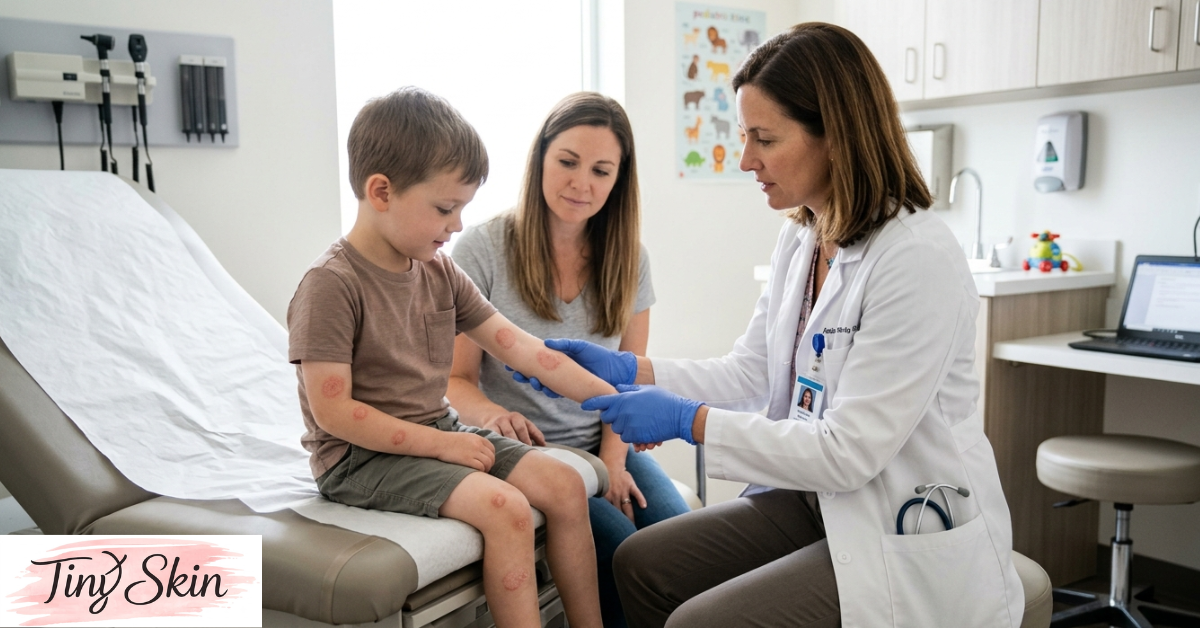
The skin barrier breaks down in these spots. As a result, the area becomes inflamed, itchy, and dry. Patches usually measure from about one to several centimeters across. Several patches can appear at once, and sometimes they join together.
How Common Is It in Kids?
Nummular eczema is more common in adults than in children. However, it does occur in kids. Doctors often see it in children who already have atopic dermatitis (the most common type of eczema) or very dry skin. Exact numbers vary between studies, so ask your pediatrician about your child’s individual risk.
Is It Contagious?
No. Nummular eczema in children does not spread from person to person. Your child can safely attend school, play with friends, and share toys. Nevertheless, the patches can resemble ringworm, which is contagious. Therefore, a proper diagnosis matters.
Symptoms of Nummular Eczema in Children
Recognizing the signs early helps you start care sooner. Symptoms often develop over several days and can come and go.
Typical Signs to Watch For
- Round or oval patches with clear edges
- Red or pink skin on lighter skin tones, or brown, purple, or gray patches on deeper skin tones
- Intense itching, often worse at night
- Dry, scaly, or cracked skin
- Tiny bumps or blisters that ooze and form crusts
- Burning or stinging when the child scratches
Where the Patches Appear
Nummular eczema in children most often appears on the legs, arms, and torso. Patches can also show up on the hands and feet. The face and scalp are affected less often. Additionally, patches frequently appear on both sides of the body.
How the Patches Change Over Time
Early patches are often wet and crusty. Later, they turn dry and scaly. Without treatment, they may last for weeks or months. Moreover, healed skin can look lighter or darker for a while. This color change is normal and usually fades.
Because scratching damages the skin, infection becomes a real risk. Watch for yellow crusts, pus, or fever.
What Causes Nummular Eczema in Children?

Doctors do not know the exact cause. However, they understand the main pieces of the puzzle.
A Weak Skin Barrier
Healthy skin holds water and blocks irritants. In nummular eczema, this barrier fails. The skin loses moisture quickly, and irritants get in. Consequently, the immune system overreacts and causes inflammation.
Common Triggers
Several triggers can start or worsen nummular eczema in children. The table below lists the most common ones.
| Trigger | Why It Matters | What Parents Can Do |
|---|---|---|
| Dry, cold air | Pulls moisture out of the skin | Use a humidifier and moisturize more often in winter |
| Hot, long baths | Strip natural skin oils | Use lukewarm water for 5–10 minutes |
| Harsh soaps and fragrances | Irritate the skin barrier | Choose gentle, fragrance-free cleansers |
| Wool and rough fabrics | Cause friction and itch | Dress your child in soft cotton |
| Skin injury (bites, scrapes, burns) | Patches often start at injury sites | Clean small wounds and moisturize healing skin |
| Skin infection | Can inflame the skin further | See a doctor if you notice crusts or pus |
| Stress and poor sleep | May worsen flares | Keep calm routines and regular bedtimes |
Family History and Allergies
Children with atopic dermatitis, asthma, or hay fever face a higher risk. Therefore, tell your doctor about allergies in your family. Additionally, mention every medicine your child takes, because some medicines may affect the skin.
How Doctors Diagnose Nummular Eczema in Children
No single blood test confirms nummular eczema in children. Instead, a doctor reviews the skin and your child’s history.
The Visual Exam and History
The pediatrician or dermatologist checks the shape, color, and location of the patches. They ask about itching, sleep, allergies, and skin care products. They also ask about recent injuries or infections.
Tests That Rule Out Other Conditions
Sometimes the doctor takes a gentle skin scraping to check for fungus. They may also swab oozing skin to look for bacteria. Occasionally, patch testing helps find an allergy that triggers the rash.
Nummular Eczema vs. Look-Alike Conditions
Several skin problems resemble coin-shaped eczema. This comparison shows the key differences.
| Condition | Typical Look | Key Clue |
|---|---|---|
| Nummular eczema | Coin-shaped, itchy, scaly or crusted patches | Often follows dry skin; not contagious |
| Ringworm (tinea corporis) | Ring with a clearer center and raised, scaly edge | Contagious; fungal test is positive |
| Plaque psoriasis | Thick, well-defined plaques with silvery scale | Often on elbows, knees, and scalp |
| Impetigo | Honey-colored crusts and sores | Contagious bacterial infection |
| Contact dermatitis | Rash matches the area that touched an irritant | Improves when you remove the trigger |
Important: Never put steroid cream on a ring-shaped rash before a doctor confirms the cause. Steroids can make fungal infections worse.
Treatment Options for Nummular Eczema in Children
Treatment of nummular eczema in children aims to calm inflammation, relieve itch, and repair the skin barrier. Always follow your doctor’s advice on products and doses. Children’s skin absorbs medicine more easily than adult skin.
Moisturizers: The Foundation
Thick, fragrance-free creams and ointments form the base of treatment. Dermatologists recommend applying them at least twice daily, and right after bathing. Ointments hold more moisture than lotions, so they often work better on dry patches.
Medicated Treatments
Doctors often prescribe topical corticosteroids for flares. The strength depends on your child’s age and the body area. Alternatively, they may suggest calcineurin inhibitors, such as tacrolimus or pimecrolimus. These creams do not contain steroids, and doctors usually reserve them for children aged two and older.
Infection, Severe Cases, and Itch Relief
If bacteria infect the patches, the doctor may add antibiotics. For stubborn disease, a specialist may suggest wet wraps or light therapy. Some doctors recommend an antihistamine at bedtime. However, evidence for itch relief in eczema is limited, so ask your doctor first.
| Treatment | What It Does | Notes |
|---|---|---|
| Emollients (moisturizers) | Restore moisture and protect the barrier | Use daily; choose fragrance-free products |
| Topical corticosteroids | Reduce inflammation and itch | Short courses; doctor chooses the strength |
| Calcineurin inhibitors | Calm inflammation without steroids | Often used on the face and skin folds; usually age 2+ |
| Antibiotics | Treat bacterial infection | Only when a doctor confirms infection |
| Wet wraps | Cool the skin and help creams work better | Use under medical guidance |
| Phototherapy (UV light) | Reduces inflammation in severe cases | Specialist care only; rarely needed in kids |
Daily Home Care for Nummular Eczema in Children
Home care for nummular eczema in children makes the biggest difference between flares. Consistency matters more than any single product.
A Gentle Bathing Routine
Follow these steps once a day:
- Fill the tub with lukewarm water, not hot.
- Keep the bath to 5–10 minutes.
- Use a fragrance-free, soap-free cleanser only where needed.
- Pat the skin dry with a soft towel. Do not rub.
- Apply any prescribed medicine to the patches.
- Seal in moisture with a thick cream or ointment within three minutes.
Smart Clothing and Laundry Choices
Soft cotton clothes let the skin breathe. Avoid wool and scratchy tags. Additionally, wash new clothes before your child wears them. Use a fragrance-free detergent and rinse well.
Breaking the Itch-Scratch Cycle
Scratching worsens inflammation and raises infection risk. Therefore, try these tips:
- Keep your child’s nails short and smooth.
- Place a cool, damp cloth on itchy patches.
- Dress your child in soft cotton pajamas at night. Cotton gloves can also help.
- Offer distractions, such as games or stories.
- Praise your child instead of scolding.
When to See a Doctor and How to Prevent Flare-Ups
Mild cases need only routine care. However, some signs need prompt medical attention.
Warning Signs That Need a Doctor
Book an appointment if you notice any of these:
- Patches that do not improve after one to two weeks of good skin care
- Yellow crusts, pus, or painful, swollen skin
- Fever along with a spreading rash
- Poor sleep or distress from itching
- A rash you cannot identify
Seek urgent care if the rash spreads quickly and your child seems very unwell.
Preventing Flare-Ups of Nummular Eczema in Children
Prevention rests on a few habits. Moisturize daily, even when the skin looks clear. Moreover, treat small cuts and bites quickly, and avoid known triggers. Keep a short diary of flares to spot patterns.
Coping With Cold Winters and Dry Indoor Heating
Many homes in Russia use strong central heating, and winter air outdoors is cold and dry. Together, these conditions dry out children’s skin. Use a humidifier and keep the room comfortably warm, around 20–22 °C. Additionally, apply a rich barrier ointment before outdoor walks and moisturize again afterward. Dress your child in breathable layers, because sweating irritates the skin.
Key Takeaways
- Nummular eczema in children causes round, itchy, coin-shaped patches and is not contagious.
- A weak skin barrier, dry air, hot baths, and skin injuries commonly trigger flares.
- A doctor should confirm the diagnosis, because ringworm and psoriasis can look similar.
- Daily thick, fragrance-free moisturizer is the foundation of treatment.
- Doctors may prescribe short courses of steroid or non-steroid creams for flares.
- See a doctor for yellow crusts, fever, poor sleep, or patches that do not improve.
FAQs
Is nummular eczema in children serious?
Nummular eczema in children is not dangerous, but it can be uncomfortable and stubborn. Intense itching may disturb sleep and school. Scratching can also lead to infection. Most children improve with moisturizers and doctor-guided medicine, although flares can return. Early treatment keeps the condition easier to manage.
What triggers nummular eczema in children?
Dry skin, cold air, hot baths, harsh soaps, and rough fabrics commonly trigger nummular eczema in children. Skin injuries such as insect bites or scrapes can start patches too. Additionally, infections and stress may cause flares. Triggers differ between children, so keeping a simple diary helps you spot patterns.
Does nummular eczema go away on its own?
Mild patches may fade without treatment, but this often takes weeks or months. Patches also tend to return in the same spots. Treatment shortens flares and relieves itch. Therefore, do not wait it out. Ask your pediatrician for a plan that fits your child’s age and skin.
Can I use hydrocortisone cream on my child’s coin-shaped rash?
Do not start steroid cream before a doctor confirms the diagnosis. A coin-shaped rash may be ringworm, and steroids can worsen fungal infections. Children’s skin also absorbs medicine quickly, so strength and duration matter. Ask your doctor or pharmacist which product, how much, and how long to use it.
Is nummular eczema the same as ringworm?
No. Both cause round patches, but ringworm is a contagious fungal infection, while nummular eczema is not. Ringworm often clears in the center and has a raised, scaly rim. Nummular eczema usually looks uniformly scaly or crusted. A doctor can confirm the difference with a quick skin scraping test.
Can diet cause nummular eczema in children?
Diet rarely causes nummular eczema. However, some children with atopic dermatitis have true food allergies that worsen skin. Avoid cutting foods without medical advice, because restrictive diets can harm growth. If you suspect a food trigger, ask your pediatrician or allergist about proper testing first.
Conclusion
Nummular eczema in children looks dramatic, yet it is manageable. Coin-shaped, itchy patches signal a weakened skin barrier, and daily moisturizing remains your strongest tool. Additionally, gentle bathing, soft clothing, and trigger control reduce flares. Doctors can prescribe safe medicines when needed, so you never have to fight this alone.
Do not guess when a rash looks like a ring. Because ringworm and eczema need different treatments, get a proper diagnosis first. If you notice patches that itch, ooze, or keep returning, book an appointment with a pediatric dermatologist this week. Early care protects your child’s skin, sleep, and confidence.

