
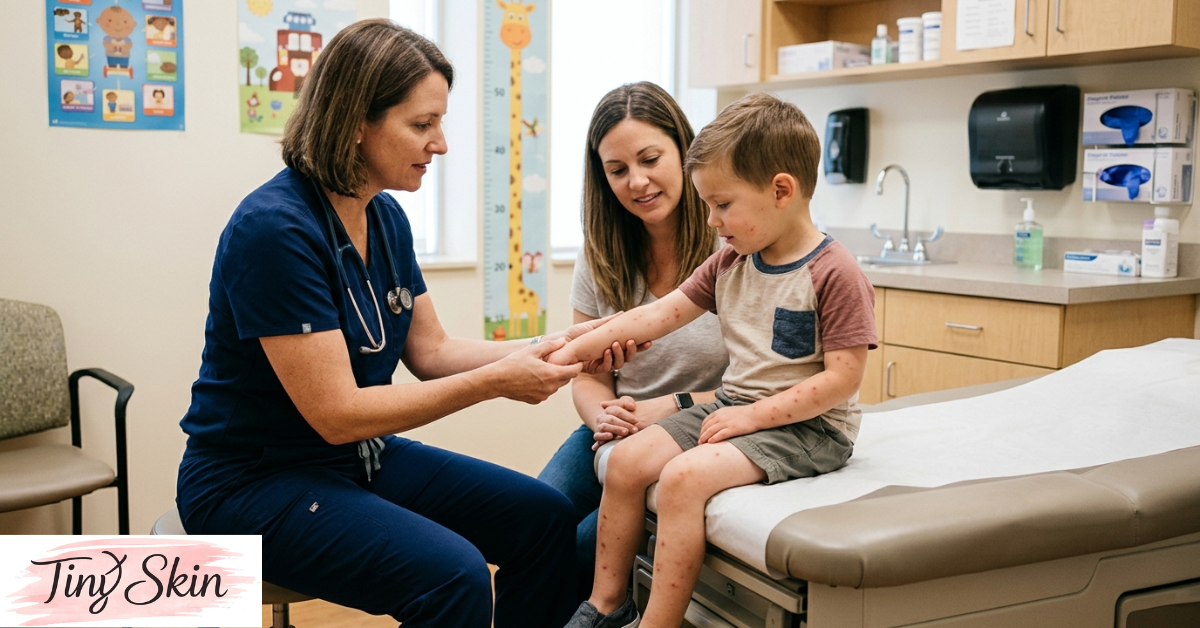

Medical review note for publishing: have a licensed dermatologist or pediatrician review this article, and display their name and credentials in a byline. This supports E-E-A-T on a YMYL topic.
Introduction
Your child wakes up with red, itchy bumps on their arms and legs. By evening, new ones appear. If this sounds familiar, you may be dealing with papular urticaria. This common skin condition is an allergic reaction to insect bites. It worries many parents across Russia, especially after summer trips to the dacha or during heating season in city apartments. Papular urticaria is not contagious, and it is usually not dangerous. However, constant itching can ruin sleep and lead to infected scratches. In this guide, you will learn what papular urticaria looks like, why it happens, and how doctors treat it. You will also find practical tips to prevent new bumps at home. Read on to feel calmer and more prepared before you visit your pediatrician or dermatologist.
What Is Papular Urticaria?
Papular urticaria is a long-lasting skin reaction to insect bites. The immune system overreacts to proteins in insect saliva. As a result, itchy bumps called papules appear and may return for weeks or months.
A Simple Definition
Doctors also call this condition insect bite hypersensitivity. Older Russian medical texts may use the term “strophulus.” The name sounds complex, but the idea is simple. “Urticaria” refers to an itchy, hive-like reaction. “Papular” means the bumps are raised and solid. In simple terms, the skin reacts strongly to a bite that most people barely notice. The reaction can appear even when you never saw the insect.
Who Gets It Most Often
Papular urticaria mostly affects children between about 2 and 10 years old. Young children often react strongly because their immune systems are still learning to tolerate insect proteins. Many children improve as they grow older. Parents often notice the first episodes in spring and summer, when insects become active. Adults can develop the condition too, although this happens less often.
Is Papular Urticaria Contagious?
No, papular urticaria does not spread from person to person. You also cannot catch it by touching, hugging, or sharing towels. However, several family members may show bites if insects live in your home. Therefore, similar rashes in more than one person point to a shared insect source, not an infection.
Papular Urticaria Symptoms: What to Look For
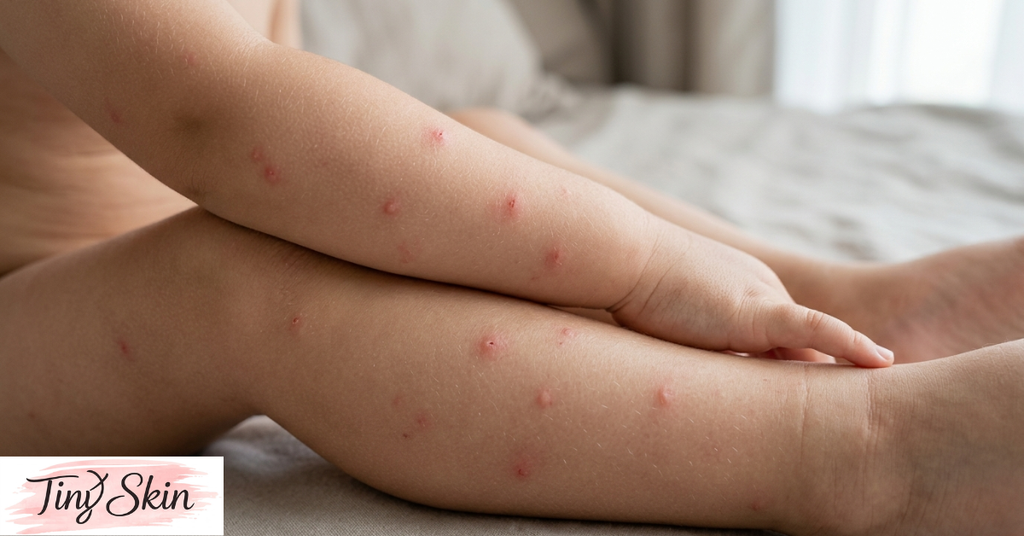
Symptoms of papular urticaria usually appear within a day or two after a bite. Moreover, new bumps can keep appearing as long as the insects stay nearby. Parents often describe the rash as “mosquito bites that never go away.” Each person reacts differently, so the rash can look mild or severe.
Typical Skin Signs
- Small red or pink raised bumps, about 3–10 mm wide
- Strong itching, often worse at night
- A tiny central dot where the insect bit
- Small fluid-filled blisters on top of some bumps
- Bumps in groups, clusters, or short lines
Bites from different insects can look alike, so the pattern matters more than a single bump. Scratching often adds crusts, scabs, and dark marks that fade slowly.
Common Body Areas
Bumps usually appear on exposed skin. Check the arms, legs, face, and neck. Flea bites often cluster around the ankles and lower legs. Bedbug bites often appear in lines or groups on skin that touches the bed. Bites on covered areas may suggest insects living in clothing or bedding.
When the Rash Looks Different
Some children develop larger blisters, especially on the hands and feet. Others have bumps that last several weeks. Children with sensitive skin may also develop mild swelling around each bite. Dark spots may remain after healing. However, scarring is uncommon unless scratching breaks the skin deeply.
What Causes Papular Urticaria?
Papular urticaria develops when the skin reacts to bites from certain insects. The bite itself is often painless. The allergic reaction causes the trouble.
Insects Behind the Bites
Fleas, bedbugs, and mosquitoes are among the most commonly reported triggers. Other possible sources include:
- Midges and biting flies
- Bird or rodent mites
Each insect leaves a slightly different pattern. Fleas often bite the lower legs, while bedbugs favor skin exposed during sleep.
Why the Skin Overreacts
Insect saliva contains proteins that the body sees as foreign. After repeated bites, the immune system becomes sensitized. Then each new bite triggers itching and swelling. Sometimes old bite sites flare up again too. Because the reaction can appear hours or a day later, parents rarely link a bump to a specific bite. Over time, many people become less sensitive, and the reaction fades.
Everyday Risk Factors in Russia
Several local factors raise the risk. Summer at the dacha or near lakes brings mosquitoes and midges. Pets can carry fleas into apartments, and damp basements or building entrances may host flea populations. Used furniture, hotels, and travel can introduce bedbugs. Crowded housing and older buildings with cracks can help bedbugs move between apartments. Additionally, heated apartments keep indoor insects active in winter, so rashes may continue year-round.
How Doctors Diagnose Papular Urticaria
Diagnosis of papular urticaria is mostly based on examination. A pediatrician or dermatologist looks at the rash and asks about your home and habits. Doctors rarely need special tests.
Questions Your Doctor May Ask
- When did the bumps start, and where do they appear?
- Do you have cats, dogs, or other pets?
- Did your child visit a dacha, forest, or new place?
- Does anyone else at home have a similar rash?
- Have you noticed small dark spots or insects on bedding?
Photos of the rash help, because bumps can fade before the appointment.
Papular Urticaria vs. Similar Conditions
Several skin problems look alike at first glance. This table shows the key differences.
| Condition | Typical Signs | Key Difference |
|---|---|---|
| Papular urticaria | Scattered itchy bumps, central dot, exposed skin | Linked to insect exposure; not contagious |
| Scabies | Intense night itch, thin burrows between fingers and on wrists | Caused by mites; contagious; needs specific treatment |
| Chickenpox | Fever, blisters at different stages, spreads to scalp and trunk | Viral; contagious; child often feels unwell |
| Atopic dermatitis | Dry, patchy rash in skin folds, long history | Chronic dry skin; no central bite mark |
| Impetigo | Honey-colored crusts near the nose and mouth | Bacterial infection; contagious |
Why an Accurate Diagnosis Matters
Scabies, for example, needs targeted treatment, and insect-bite creams will not clear it. Likewise, treating an infection as an allergy delays healing. Therefore, see a doctor instead of guessing, especially if the rash spreads quickly. Rarely, doctors order tests when the rash does not match a typical pattern.
Papular Urticaria Treatment Options
Papular urticaria treatment has two goals: calm the itch and stop new bites. Doctors adjust the plan to the person’s age and the severity of the rash. Never use leftover medicine from another illness on a young child.
Medicines Doctors May Suggest
The table below summarizes common options. Your doctor decides which ones fit your child.
| Option | How It Helps | Important Notes |
|---|---|---|
| Mild topical corticosteroid cream | Reduces inflammation and itch | Short courses only, under medical guidance; strength depends on age and body area |
| Oral antihistamines | May ease itching and help sleep | Some cause drowsiness; the doctor chooses the type and dose by age |
| Moisturizers (emollients) | Repair the skin barrier and reduce dryness | Safe for daily use; choose fragrance-free products |
| Topical antiseptics | Clean scratched or broken skin | Use on lesions at risk of infection |
| Antibiotics | Treat a confirmed bacterial infection | Only when a doctor prescribes them |
Treating the Source
No cream works long term if bites continue. Therefore, find and remove the insects. Treat pets with veterinarian-approved flea products. For bedbugs, consider professional pest control, since home methods rarely clear an infestation. Wash bedding and clothing at high temperature when fabric labels allow. Moreover, tell your doctor about the likely insect source so they can tailor their advice.
What to Avoid
- Strong steroid creams without medical advice
- Alcohol-based products on broken skin
- Undiluted essential oils or irritating folk remedies
- Scratching or popping blisters
Home Care and Itch Relief for Papular Urticaria
Home care cannot cure papular urticaria, but it can ease discomfort between doctor visits. Short, regular care works better than occasional intense efforts. Use gentle steps and stay consistent.
Soothing the Itch Safely
- Wash the skin with lukewarm water and a fragrance-free cleanser.
- Pat the skin dry. Do not rub.
- Apply a cool, clean compress for about 10 minutes.
- Apply a plain moisturizer twice a day.
- Use any prescribed medicine exactly as your doctor advises.
Protecting Broken Skin
Keep nails short and clean. At night, soft cotton mittens can reduce scratching in small children. Clean scratched areas gently with an antiseptic that your doctor or pharmacist recommends. Watch for pus, spreading redness, warmth, or fever. These signs suggest infection and need medical attention.
Helping Your Child Sleep
Poor sleep makes itching feel worse, so a steady routine helps. Dress your child in loose cotton pajamas. Keep the bedroom cool and well ventilated. Moreover, a calming bedtime story can distract from the itch. Ask your doctor about night-time antihistamines instead of choosing one yourself.
How to Prevent Papular Urticaria and When to See a Doctor
Prevention is the best way to control papular urticaria. Fewer bites mean fewer reactions. Small habits at home and outdoors make a real difference.
Protect Your Home and Pets
- Check pets regularly and use vet-recommended flea control
- Wash bedding weekly, ideally at 60 °C when the fabric allows
- Vacuum floors, sofas, and mattress edges often
- Seal cracks and install window screens
- Call pest control if you suspect bedbugs
Protect Skin Outdoors
Use insect repellents that are approved for your child’s age, and read the label carefully. Dress children in light long sleeves and trousers at dusk. In addition, avoid standing water and tall, damp grass near the dacha.
When to See a Doctor
Book a visit if:
- The rash does not improve within one to two weeks
- You see signs of infection, such as pus, warmth, or fever
- Itching disrupts sleep or school
- You are unsure whether the rash is an insect reaction
Seek emergency help immediately if your child has facial swelling, trouble breathing, or widespread hives.
Key Takeaways
- Papular urticaria is an allergic reaction to insect bites, not an infection.
- It mostly affects children aged 2–10 and often improves with age.
- Fleas, bedbugs, and mosquitoes are common triggers.
- Effective treatment combines itch control with removing the insect source.
- Avoid strong steroid creams unless a doctor prescribes them.
- See a doctor for signs of infection, severe swelling, or a rash that does not improve.
FAQs
What does papular urticaria look like?
Papular urticaria looks like small, red, raised bumps that itch intensely. Many bumps have a tiny central dot from the bite, and some form small blisters. They often appear in groups on the arms, legs, face, and neck. Scratching can add crusts and dark marks.
How long does papular urticaria last?
Individual bumps usually fade within a few days to a few weeks, although dark marks can last longer. However, new bumps keep appearing while insect exposure continues. Papular urticaria may come and go for months, then often improves as the immune system becomes less sensitive.
Is papular urticaria contagious?
No. Papular urticaria is an allergic reaction, not an infection, so it cannot pass from person to person. However, several family members may get bites from the same fleas or bedbugs. Find and treat the insect source, and see a doctor if the rash looks unusual.
What is the best treatment for papular urticaria?
Doctors usually combine itch control with insect removal. They may suggest a mild topical corticosteroid, an oral antihistamine, and a moisturizer. Moreover, you must remove the insect source, or the rash returns. Always follow your doctor’s advice on strength and dosage, especially for young children.
Can papular urticaria be mistaken for scabies?
Yes. Both cause intense itching and small bumps. However, scabies often affects the finger webs and wrists, spreads within families, and worsens at night. Scabies burrows may appear as thin, wavy lines. Because scabies needs different treatment, ask a dermatologist to confirm the diagnosis.
Do children outgrow papular urticaria?
Most children improve with age. Repeated exposure to the same insects often makes the immune system less reactive. Many outgrow the problem by later childhood, though timing varies. Meanwhile, prevention and gentle skin care reduce discomfort. Ask your pediatrician if bumps continue past school age.
Conclusion
Papular urticaria can feel stressful, especially when your child itches all night. The good news is that this condition is common, treatable, and usually harmless. Remember three key steps: protect against bites, soothe the skin gently, and remove the insect source at home. Moreover, an accurate diagnosis keeps you from treating the wrong problem. If your child’s rash keeps returning, schedule a visit with a pediatrician or dermatologist. They can confirm papular urticaria, recommend safe treatment, and rule out other skin conditions. Take the first step today: book an appointment and bring photos of the rash to help your doctor. With the right plan, calm, comfortable skin is within reach.

