

You got out of the pool feeling great, and now — a few hours later — your skin is on fire. Red patches, tiny bumps, maybe some itching so bad you can’t focus on anything else. You’re lying in bed googling chlorine rash treatment at home at 11 PM, half-panicked, wondering if you need to go to urgent care or if this is something you can just… fix.
You’re not alone. Chlorine rash is one of the most common skin complaints after swimming, and most cases are mild enough to treat at home with things you probably already have in your bathroom. This guide walks you through exactly what’s happening to your skin, the most effective chlorine rash treatment at home, and — just as important — how to know if it’s something more serious.
Quick Answer: The best chlorine rash treatment at home is to rinse off with cool water immediately, apply a fragrance-free moisturizer or 1% hydrocortisone cream, and take an oral antihistamine if itching is severe. Avoid hot showers and scratching. Most mild cases improve within 24-48 hours.
Understanding Chlorine Rash: Why This Happens

Chlorine rash isn’t really an allergic reaction in most cases — it’s your skin’s barrier getting stripped and irritated. Pool chlorine is designed to kill bacteria, but it doesn’t discriminate. It also breaks down the natural oils and proteins on your skin’s surface that normally keep moisture in and irritants out.
The Science, Simplified
Think of your skin’s outer layer like a brick wall, with skin cells as the bricks and natural oils as the mortar holding everything together. Chlorine dissolves that mortar. Once the wall is weakened, water evaporates faster, irritants sneak in more easily, and your nerve endings become more reactive. That’s why you end up with redness, dryness, and that maddening itch.
Two Different Reactions
There’s a difference worth knowing:
- Irritant contact dermatitis — the most common type, caused by chlorine directly damaging skin cells. It usually shows up within hours.
- Allergic contact dermatitis — less common, where your immune system overreacts to chlorine byproducts called chloramines. This can take longer to appear and tends to be itchier.
Either way, the home treatment approach is largely the same, which is good news for you tonight.
Recognizing the Signs: Is This Really Chlorine Rash?
Chlorine rash has a fairly recognizable pattern, especially if you can connect it to recent pool time.
Common signs include:
- Redness on skin that was submerged (chest, arms, legs, sometimes the face)
- Small, itchy bumps or patches that feel rough to the touch
- Tightness or dryness, especially right after towel-drying
- Mild swelling around irritated areas
- Itching that gets worse in a warm shower or under blankets
- Symptoms appearing within a few hours of swimming, sometimes up to a day later
Sarah, a 29-year-old who swims laps three times a week, noticed her forearms and neck turning blotchy and itchy every time she used a particular public pool. It wasn’t until she compared notes with a friend that she realized her “sensitive skin days” lined up exactly with heavily chlorinated water. That pattern — timing tied to pool exposure — is usually the biggest clue.
Step-by-Step Chlorine Rash Treatment at Home
This is where most articles get vague. Here’s exactly what an effective chlorine rash treatment at home looks like, step by step, starting the moment you notice irritation.
Step 1: Rinse With Cool (Not Hot) Water Immediately
As soon as you’re out of the pool, rinse off with cool or lukewarm water for at least five minutes. Why this works: it physically washes away residual chlorine and chloramines sitting on your skin before they cause more damage. Hot water feels tempting but actually opens pores and strips more oil, making irritation worse.
Practical tip: Keep a small bottle of plain water in your gym bag if you swim somewhere without easy shower access, so you can do a quick rinse before you even get in the car.
Step 2: Pat Dry — Don’t Rub
Use a soft towel and pat your skin dry instead of rubbing. Why this works: rubbing creates friction on already-compromised skin, which can worsen redness and micro-tears you might not even see.
Step 3: Apply a Fragrance-Free Moisturizer Within Minutes
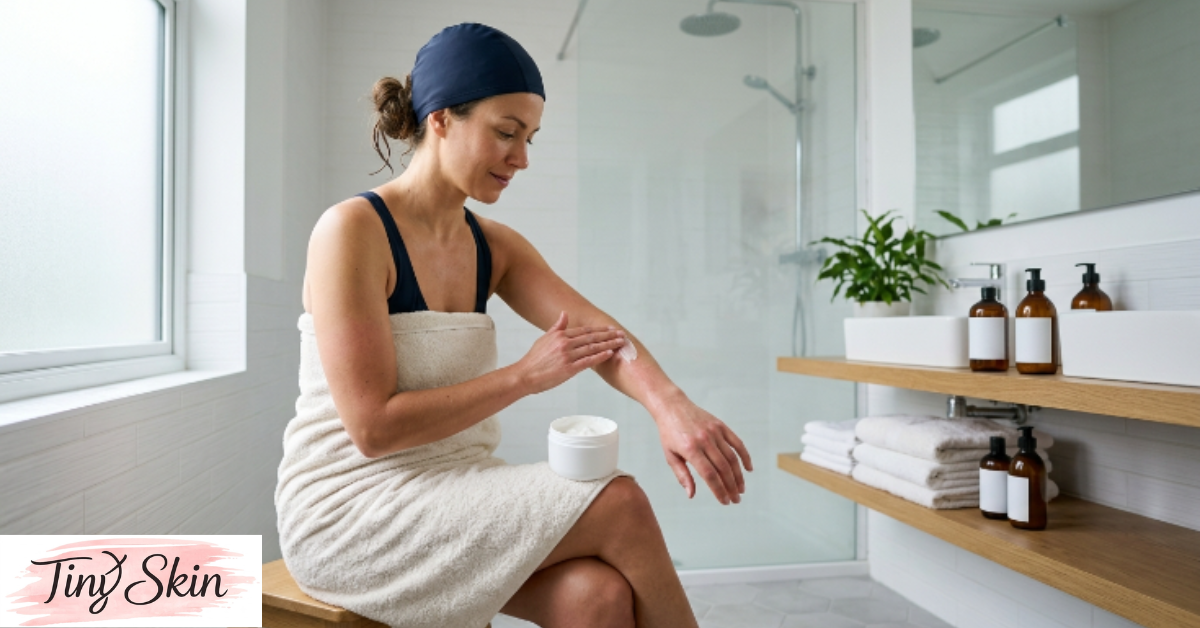
Lock in moisture while your skin is still slightly damp, using a thick, fragrance-free cream or ointment. Why this works: it rebuilds that “brick wall” barrier before too much water evaporates, which cuts down on itching significantly.
Practical tip: Products with ceramides are especially good here — they literally replace the lipids chlorine strips away.
Step 4: Use a Cool Compress for Active Itching
If a spot is especially itchy or inflamed, hold a clean, cool (not icy) washcloth against it for 10-15 minutes. Why this works: cold reduces blood flow to the area and calms overactive nerve signals that cause the itch-scratch cycle.
Step 5: Take an Oral Antihistamine If Needed
For itching that’s disrupting your sleep or focus, a non-drowsy antihistamine can help, or a nighttime one if you need help resting. Why this works: antihistamines block the histamine response responsible for much of the itch and swelling.
Step 6: Apply Over-the-Counter Hydrocortisone Sparingly
A thin layer of 1% hydrocortisone cream on inflamed patches, used for no more than a few days, can bring down redness and swelling fast. Why this works: it’s a mild anti-inflammatory that calms the immune response in the skin without needing a prescription.
Practical tip: Only apply hydrocortisone to affected patches, not your whole body — overusing it can thin the skin over time.
Step 7: Give It Time and Keep Skin Protected
Most irritant reactions calm down within 24 to 48 hours if you stop reintroducing chlorine and keep moisturizing consistently. Why this works: your skin barrier repairs itself naturally once you remove the irritant and support it with hydration.
Practical tip: Skip the pool for a day or two if you can. Re-exposing irritated skin to chlorine before it heals tends to restart the whole cycle.
How to Choose the Right Ingredients
Not every lotion in your cabinet is going to help — some can actually make things worse.
Ingredients to Look For
- Ceramides — rebuild the skin’s natural barrier
- Colloidal oatmeal — calms itching and inflammation
- Glycerin or hyaluronic acid — draw in and hold moisture
- Aloe vera — soothing and cooling for irritated patches
- Petrolatum or shea butter — seal in hydration, especially overnight
Ingredients to Avoid
- Fragrance or added dyes — common irritants for already-sensitive skin
- Alcohol-based products — dry skin out further
- Harsh exfoliants (AHAs/BHAs) — too aggressive while skin is compromised
- Essential oils — can trigger extra sensitivity, even “natural” ones
Dermatologists often recommend keeping your post-swim routine as simple and bland as possible while skin is healing. This isn’t the moment for a five-step routine with active ingredients.
Common Mistakes People (Unknowingly) Make
Taking a long, hot shower right after swimming. It feels relaxing, but heat strips more natural oil and can intensify itching within the hour.
Scratching to “get it over with.” Scratching breaks the skin, which raises infection risk and often makes the itch worse, not better, thanks to the itch-scratch cycle.
Skipping moisturizer because skin “doesn’t feel dry yet.” By the time skin visibly feels tight or flaky, the barrier damage has already started — moisturizing early prevents that.
Using scented body wash or lotion during a flare-up. Fragrance is one of the top irritants for reactive skin, even in products marketed as “gentle.”
Going straight back to the pool the next day. Re-exposing healing skin to chlorine before the barrier recovers can turn a one-day irritation into a week-long problem.
When to See a Doctor: Red Flags
Most chlorine rash is mild and manageable at home, but certain symptoms mean it’s time to stop self-treating and get checked out.
Seek medical care if you notice:
- Blistering, oozing, or open sores
- Rash spreading rapidly or covering large areas of your body
- Signs of infection: increasing warmth, pus, worsening pain, or red streaking
- Swelling of the face, lips, or throat, or any trouble breathing
- Fever alongside the rash
- No improvement after 3-4 days of consistent home care
- A rash that keeps recurring badly enough to affect your daily life
If you experience swelling of the face or difficulty breathing, treat this as an emergency and seek immediate medical attention — this could signal a more serious allergic reaction.
This article is for informational purposes only; always consult a dermatologist or doctor for personalized advice.
Frequently Asked Questions
How long does chlorine rash usually last?
Mild chlorine rash typically clears up within 24 to 48 hours with proper home care. If it’s still bothering you after 3-4 days, it’s worth checking in with a doctor.
Can I still shower normally if I have a chlorine rash?
Yes, but keep water lukewarm rather than hot, keep showers short, and use a gentle, fragrance-free cleanser instead of regular soap on affected areas.
Is chlorine rash contagious?
No. Chlorine rash is an irritation or reaction, not an infection, so it can’t spread to other people through contact.
Can babies and kids get chlorine rash too?
Yes, and their skin is often more sensitive than adult skin, so reactions can appear faster. The same gentle rinse-and-moisturize approach works, but check with a pediatrician before using antihistamines or hydrocortisone on young children.
Will wearing a rash guard prevent chlorine rash?
It can help by reducing the amount of skin directly exposed to chlorinated water, though it won’t eliminate the risk entirely since chlorine can still irritate uncovered or thinly covered skin.
Is it chlorine rash or a chlorine allergy?
True chlorine allergy is rare. Most reactions are irritant-based, meaning chlorine is damaging your skin barrier rather than triggering a true immune allergy — though both can look similar and are treated similarly at home.
The Bottom Line
Chlorine rash feels alarming in the moment, but for most people, a simple chlorine rash treatment at home — a cool rinse, gentle moisturizer, and a little patience — is all it takes. Your skin is more resilient than it feels right now, and this will pass.
If home care doesn’t bring relief within a few days, or you notice any of the red-flag symptoms above, don’t hesitate to reach out to a dermatologist. Got a tip that’s worked for your own chlorine rash flare-ups? Drop it in the comments — someone else scrolling this at midnight will probably thank you for it.

