
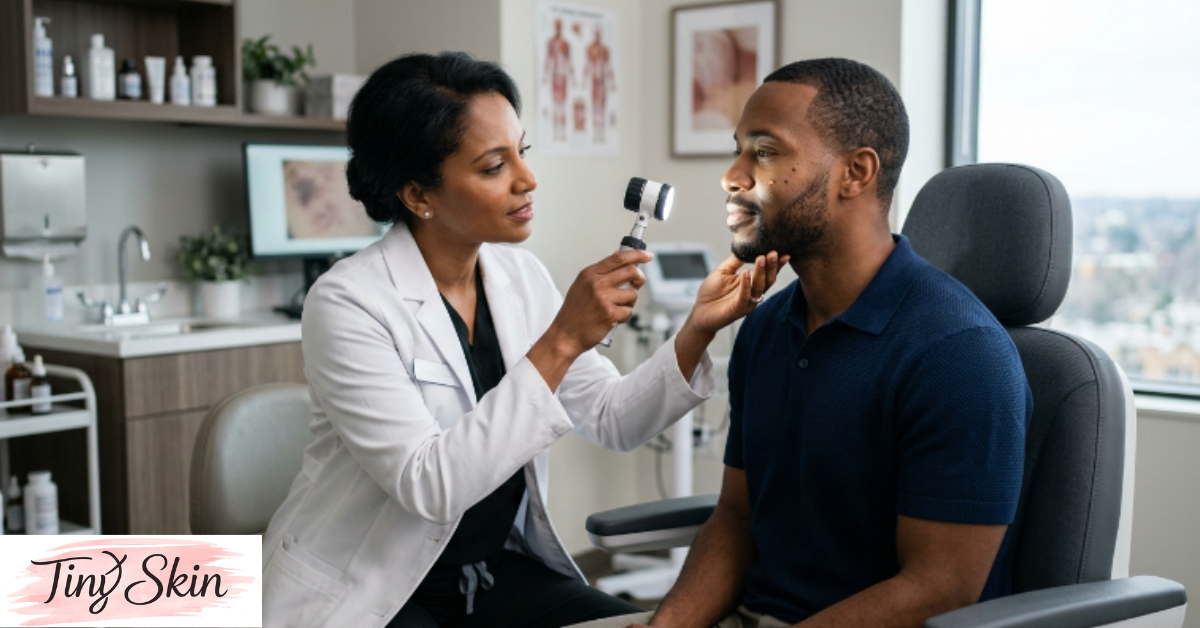

If you’ve noticed small, dark, raised spots scattered across your cheeks, temples, or neck, you’re probably here because you want answers — not a medical textbook full of jargon. Here’s the thing: those little bumps have a name, Dermatosis Papulosa Nigra (DPN), and they’re incredibly common, especially in people with deeper skin tones. DPN removal is one of the most searched skincare topics for a reason — these bumps can feel frustrating, even embarrassing, particularly when they show up on the face where everyone can see them.
You’re not imagining it, and you’re definitely not alone. In fact, DPN affects a large percentage of Black and Asian adults, and it tends to run in families. The good news? DPN removal is genuinely achievable with the right approach, and in most cases, it’s a straightforward in-office procedure rather than some complicated ordeal.
In this guide, we’ll walk through exactly what DPN is, why it happens, which removal methods actually work, what you can (and can’t) do at home, and how to avoid the mistakes that make things worse. Sound like what you need? Let’s get into it.
What Exactly Is Dermatosis Papulosa Nigra?
Dermatosis Papulosa Nigra is a benign skin condition that shows up as small, smooth, dome-shaped papules — typically brown or black in color. They usually appear on the face, particularly around the cheekbones, temples, forehead, and sometimes the neck and upper chest.
Here’s something that surprises a lot of people: DPN is technically considered a variant of seborrheic keratosis. It’s not a wart, it’s not a mole in the traditional sense, and it’s absolutely not contagious. You didn’t “catch” it from anything, and you didn’t do anything wrong to cause it.
The bumps themselves are typically small, ranging from a pinhead to about a quarter-inch in diameter. Some people have just a handful; others develop dozens over the years. Either way, DPN removal is a cosmetic decision in most cases — not a medical necessity — which is actually reassuring once you understand it.
Who Gets DPN, and Why?
This is where genetics play a starring role. DPN is most common in people with Fitzpatrick skin types IV through VI — essentially, medium to deep skin tones. Studies suggest that up to 35% of Black adults may develop DPN at some point, and the likelihood increases with age.
There’s also a strong hereditary link. If your mother, father, or grandparent had these bumps, there’s a good chance you will too. This isn’t about sun damage or skincare habits — it’s largely written into your DNA.
What Causes DPN to Develop?
A lot of people assume DPN is caused by poor skincare, sun exposure, or even acne scarring. In reality, the causes are a bit different.
- Genetics — as mentioned, family history is the biggest predictor.
- Age — DPN typically starts appearing in the teenage years or early twenties and increases in number as you get older.
- Skin type — melanin-rich skin is more prone to developing these growths.
- Hormonal changes — some dermatologists believe pregnancy and hormonal shifts may trigger new growths, though research here is still developing.
What DPN is not caused by: dirty skin, poor hygiene, diet, or using the wrong moisturizer. This is a mistake a lot of people make — spending months trying to “clean up” their skincare routine to get rid of DPN, when the bumps have nothing to do with cleanliness at all.
Common Symptoms and How to Recognize DPN
Before jumping into DPN removal, it’s worth confirming that what you’re dealing with is actually DPN and not something else, like skin tags, moles, or in rare cases, something that needs closer medical attention.
Typical DPN characteristics include:
- Small, round or oval bumps, usually 1–5mm wide
- Brown to black pigmentation
- Smooth, slightly raised, dome-like texture
- Painless and non-itchy (though they can occasionally catch on clothing or jewelry)
- Gradual increase in number over years, not overnight
If a spot is rapidly changing shape, bleeding, itching intensely, or has an irregular border, that’s your cue to see a dermatologist promptly — not to self-diagnose.
DPN Removal: The Most Effective Professional Methods

This is probably why you clicked on this article in the first place. Let’s talk about what actually works.
1. Electrodesiccation (Electrocautery)
This is considered the gold standard for DPN removal. A dermatologist uses a fine needle-like electrode to deliver a small electrical current, essentially drying out and destroying the tissue in each individual bump. It’s fast — often just seconds per lesion — and results are usually visible immediately.
Recovery involves some scabbing for about a week to ten days, and there’s a small risk of temporary lightening or darkening of the treated skin, especially in deeper skin tones.
2. Cryotherapy (Freezing)
Liquid nitrogen is applied to freeze off the DPN lesions. It’s quick and commonly available, but here’s the catch — cryotherapy carries a higher risk of post-inflammatory hypopigmentation (light spots) in melanin-rich skin. Many dermatologists who specialize in treating darker skin tones actually steer patients away from cryotherapy for this exact reason.
3. Laser Removal
Lasers, particularly diode and CO2 lasers, offer precision and minimal scarring when performed by an experienced provider. This method tends to be pricier than electrodesiccation but can be gentler on the surrounding skin. That said, laser settings need to be carefully calibrated for darker skin tones to avoid pigmentation changes — so choosing an experienced provider matters enormously here.
4. Snip Excision (Scissor Excision)
For slightly larger or raised DPN lesions, a dermatologist might use fine surgical scissors to snip the bump off at the base, sometimes combined with light cauterization to control bleeding. This method is quick and typically leaves minimal scarring when done correctly.
5. Radiofrequency Ablation
A newer option gaining popularity, radiofrequency devices use targeted energy to remove lesions with precision similar to electrodesiccation but often with a slightly gentler touch on surrounding tissue.
Whichever method you and your dermatologist land on, the goal is the same: removing the growth while minimizing trauma to the surrounding skin, since that trauma is what leads to dark spots or scarring afterward.
Is At-Home DPN Removal Safe? Here’s the Honest Truth
I get asked this constantly, so let’s address it head-on. There are plenty of “DIY DPN removal” tutorials floating around — tying a string around the bump, using apple cider vinegar, picking at it with tweezers. Please don’t.
Here’s why this matters: attempting to remove DPN at home can lead to infection, scarring, and — this is the big one — post-inflammatory hyperpigmentation, which in darker skin tones can be far more noticeable and stubborn than the original bump. You could end up trading a small brown papule for a larger dark patch that takes months, sometimes years, to fade.
Over-the-counter “skin tag removal” products are also not designed for DPN and can cause chemical burns on facial skin, which is much more sensitive than the body areas these products were originally formulated for.
If you’re set on DPN removal, professional treatment is genuinely the safer, more effective route — and honestly, it’s often less painful and less time-consuming than people expect.
What to Expect During and After Treatment
First things first: most DPN removal procedures are done in-office, take under 30 minutes depending on how many lesions you’re addressing, and require little to no downtime.
During the procedure:
Your dermatologist will likely apply a topical numbing cream beforehand. Most patients describe the sensation as a mild pinching or slight sting rather than significant pain.
Immediately after:
You might notice small scabs or dark spots where the bumps used to be. This is completely normal and part of the healing process.
The healing timeline:
Scabbing typically resolves within 7–14 days. Avoid picking at the scabs — I cannot stress this enough. Picking is the number one cause of scarring and prolonged discoloration after DPN removal.
Sun protection is non-negotiable:
Newly treated skin is more vulnerable to pigmentation changes from UV exposure. A broad-spectrum SPF 30 or higher, reapplied throughout the day, will make a real difference in how well your skin heals and whether any dark marks fade quickly.
Dos and Don’ts for DPN Removal Success
Do:
- Consult a board-certified dermatologist, ideally one experienced with treating darker skin tones
- Ask about their specific experience with DPN removal before booking
- Follow all aftercare instructions closely
- Use sunscreen religiously during the healing period
- Be patient — full results and skin tone evenness can take several weeks
Don’t:
- Attempt to remove DPN yourself with tweezers, thread, or at-home devices
- Pick, scratch, or scrub the treated areas
- Skip the consultation and jump straight to a treatment without understanding the risks
- Assume every provider has experience treating deeper skin tones — this genuinely varies
- Expect all lesions to disappear in a single session if you have a large number
Common Mistakes People Make With DPN Removal
Let’s be real for a second — I’ve seen these mistakes repeated over and over in my years working in this space.
Mistake #1: Choosing price over expertise. Going for the cheapest provider without checking their experience with DPN specifically, and with darker skin, can lead to scarring or uneven pigmentation that costs far more to fix later.
Mistake #2: Rushing the healing process. Trying to speed up scab removal or piling on active ingredients like retinoids too soon after treatment can irritate healing skin and worsen discoloration.
Mistake #3: Skipping the patch test conversation. If you’re prone to keloids or have a history of skin reactions, tell your dermatologist upfront. This genuinely changes the treatment approach.
Mistake #4: Ignoring aftercare instructions. This is probably the single biggest factor in how well your skin heals. Following instructions to the letter really does matter.
Mistake #5: Expecting DPN to never return. New DPN lesions can develop over time, particularly if there’s a strong genetic predisposition. This isn’t a treatment failure — it’s just how the condition works.
Prevention: Can You Stop DPN From Developing?
Honestly? Not entirely. Since genetics play such a major role, there’s no proven skincare routine or lifestyle change that will prevent DPN from forming in the first place. That said, there are a few things that may help slow things down or protect your skin overall:
- Consistent daily sunscreen use, since sun exposure may play a secondary role in triggering or worsening some skin growths
- Avoiding unnecessary skin trauma or irritation in areas prone to DPN
- Regular dermatologist check-ins, especially as you notice new bumps forming, so you can catch and treat them early before they multiply
Think of prevention less as “stopping DPN entirely” and more as “staying ahead of it” — catching new growths early makes removal simpler and reduces the temptation to try risky home remedies.
Choosing the Right Dermatologist for DPN Removal
Not all providers have equal experience with DPN, and this genuinely affects your results. When researching who to book with, consider asking:
- How many DPN removal procedures have you performed?
- What method do you typically recommend for patients with my skin tone, and why?
- What’s your protocol for minimizing post-inflammatory hyperpigmentation?
- Can I see before-and-after photos of previous patients with similar skin tones?
A provider who answers these questions confidently and specifically — rather than giving vague reassurances — is generally a good sign.
Frequently Asked Questions
Does DPN removal leave scars?
When performed correctly by an experienced dermatologist, DPN removal typically leaves minimal to no visible scarring. Some temporary darkening or lightening of the skin can occur but usually fades within a few weeks to months.
Is DPN removal painful?
Most patients report only mild discomfort, often described as a light pinching or stinging sensation. Topical numbing cream is commonly used beforehand to keep the procedure comfortable.
How much does DPN removal cost?
Costs vary widely depending on the number of lesions, the method used, and your location, but treatments generally range from $200 to $600 per session. Since DPN removal is usually considered cosmetic, insurance typically doesn’t cover it.
Can DPN come back after removal?
The specific bumps that are removed won’t return, but new DPN lesions can develop over time due to genetic predisposition. This is common and not a sign that your treatment failed.
Is it safe to remove DPN at home?
No, at-home removal is not recommended. It carries a significant risk of infection, scarring, and dark spots that can be more noticeable and harder to treat than the original bumps.
How many sessions are needed for full DPN removal?
This depends on how many lesions you have. Some people need just one session, while those with numerous bumps may require multiple visits spaced weeks apart for the best, most even results.
Final Thoughts
DPN is nothing to feel self-conscious about — it’s a common, genetic, completely benign skin condition that a huge number of people live with. That said, if those bumps are bothering you, DPN removal through a qualified dermatologist is a safe, effective, and often quicker process than most people expect.
The key takeaway here is simple: skip the DIY remedies, do your research on providers experienced with darker skin tones, and follow your aftercare instructions closely. Your skin will thank you for it.
If you’ve been putting off dealing with your DPN, consider this your sign to book a consultation with a board-certified dermatologist and finally get the clear answers — and results — you’ve been looking for.

