
If you’ve ever caught yourself in the mirror mid-frown and thought, “wait, that line stays even when I relax my face” — you’re not imagining things, and you’re definitely not alone. That vertical crease (or two, or three) between your eyebrows is called a glabellar line, and it’s one of the most common reasons people book their first Botox consultation. But once you start researching, you run into the same question over and over: how many units of Botox for glabella actually gets the job done without leaving you looking frozen or, worse, still frowning?
Here’s the thing — there isn’t one magic number that works for everyone. Your dose depends on your muscle strength, your gender, your goals, and honestly, a bit of trial and error over your first couple of treatments. That said, there is a well-established range that most experienced injectors work within, and understanding it will make your consultation a whole lot less confusing.
In this guide, we’ll walk through exactly what determines your glabella Botox dose, what the “standard” numbers really mean, how men and women differ, what happens if you get too little or too much, and how to talk to your injector so you actually get the result you’re picturing.
What Is the Glabella, and Why Does It Need So Much Precision?
The glabella is the smooth area of skin between your eyebrows, just above the bridge of your nose. It sounds like a small patch of real estate, but three separate muscles converge there — the corrugator supercilii (which pulls your brows together), the procerus (which pulls them down), and part of the frontalis. When these muscles fire repeatedly over the years — squinting in the sun, concentrating, stress, you name it — they carve in those vertical “11” lines that stick around even when your face is at rest.
This is exactly why the amount of botox units for glabella treatment matters so much. Too little, and the corrugators keep contracting, so the line barely softens. Too much, or placed incorrectly, and you risk affecting nearby muscles that control your brow position — which is how people end up with that heavy, “Spock brow” or a surprised, overly arched look they never asked for. A skilled injector isn’t just counting units; they’re mapping your specific muscle pattern first.
How Many Units of Botox for Glabella Are Considered Standard?
Let’s get into the number everyone’s actually searching for. The FDA-approved dose for Botox Cosmetic in the glabellar area is 20 units, typically split into five injection points — 4 units each — across the corrugator and procerus muscles. This is the dose used in the clinical trials that got Botox approved for frown lines in the first place, so it’s a solid, well-researched starting point.
That said, in real-world practice, this number flexes quite a bit. Most injectors work somewhere in the 15 to 30 unit range for glabella Botox, depending on how strong the muscles are and how deep the lines have become. Some patients with very expressive faces or years of deep-set lines might need slightly more, while someone getting Botox preventatively in their late twenties might do just fine with less. This is a mistake a lot of people make — assuming the exact unit count from a friend’s treatment or a number they saw on social media will apply to them too. It won’t necessarily, and that’s actually a good thing, because it means your treatment can be tailored.
Why the FDA-Approved Number Isn’t Always the Final Number
It’s worth understanding that the FDA dose is based on average results across a large study population, not on you specifically. Your injector is trained to look at how your muscles move when you frown hard, assess symmetry, and adjust from that baseline. Sound familiar to how a tailor adjusts a suit pattern rather than just handing you something off the rack? Same idea here.
Botox Units for Glabella: Men vs. Women
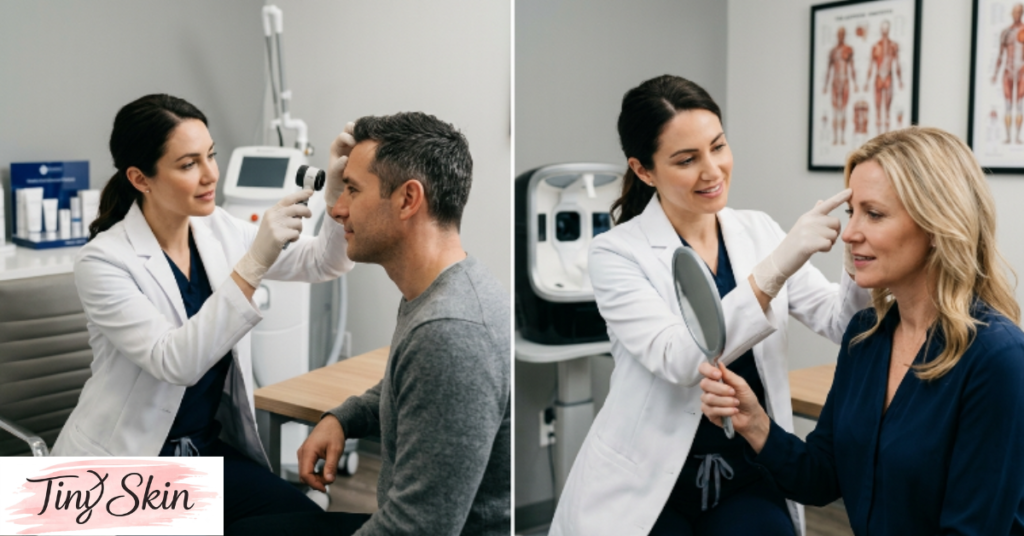
One of the more overlooked pieces of this puzzle is that dosing isn’t gender-neutral. Men generally have larger, denser facial muscles than women, and the corrugator and procerus are no exception. Because of this, male patients often need a higher glabella Botox dose to achieve the same visible softening — sometimes 30 to 40 units, compared to the more typical 20 to 25 units many women receive.
If you’re a man who tried Botox once, felt underwhelmed, and swore it “doesn’t work” on you, this might be exactly why. In reality, plenty of men just weren’t dosed high enough for their muscle mass the first time around. A good injector will ask about your frown strength and may even watch you frown hard during the consultation before committing to a final unit count.
What Affects Your Personal Botox Dosage for the Glabella
There isn’t a single formula, but a handful of factors consistently influence how many units of Botox for glabella your injector will recommend.
Muscle Strength and Facial Expressiveness
If you’re naturally a very expressive person — lots of animated frowning, concentrating, or squinting — your corrugator and procerus muscles are probably stronger than average. Stronger muscles need more product to achieve full relaxation.
Depth and Age of the Lines
Fine, early-stage lines that only show up when you frown (dynamic lines) usually respond well to standard or even slightly lower doses. Deeper lines that are visible even when your face is completely relaxed (static lines) may need a higher dose, more sessions, or in some cases a combination approach with dermal filler for the etched-in groove itself.
Treatment History
If this isn’t your first rodeo, your injector will often factor in how you responded last time. Didn’t last as long as you’d hoped? Muscle still moved more than expected at your one-month follow-up? That feedback directly shapes your next dose.
Your Aesthetic Goals
Some people want a completely smooth, still glabella. Others want a softened look that still allows some natural movement — sometimes called a “baby Botox” approach. Fewer units, more subtlety. Neither is right or wrong; it’s a personal preference that should absolutely be part of the conversation.
Signs You Might Be Under-Dosed or Over-Dosed
This is where a lot of the anxiety around Botox comes from, so let’s address it directly.
Signs of under-dosing:
- You can still frown fully and the “11” lines reappear at full strength
- Results seem to wear off noticeably before the 3-month mark
- Only part of the glabella softened, while one side still moves normally
Signs of over-dosing (or imprecise placement):
- Your eyebrows sit unnaturally high or arched (“Spock brow”)
- Heaviness or a mild droop in the brow, especially toward the inner corner
- A frozen, expressionless look in the upper face
- Difficulty raising your eyebrows normally
If either of these happens, don’t panic — Botox is temporary, and most side effects related to dosing resolve on their own within a few months. But it’s worth flagging at your follow-up so your injector can recalibrate next time.
Botox Units for Glabella vs. Other Toxin Brands
Not everyone uses Botox specifically — Dysport, Xeomin, Jeuveau, and Daxxify are all alternatives, and their “units” are not interchangeable with Botox’s. This trips people up constantly. Dysport, for example, typically requires a higher numerical unit count to achieve a comparable effect to Botox, because the units are measured differently between products. So if you’re comparing notes with a friend who says she got “50 units” for her glabella, always ask which brand she used before assuming that number applies to your Botox treatment.
What a Glabella Botox Appointment Actually Looks Like
For anyone who’s never had it done, here’s a practical walk-through so you know what to expect.
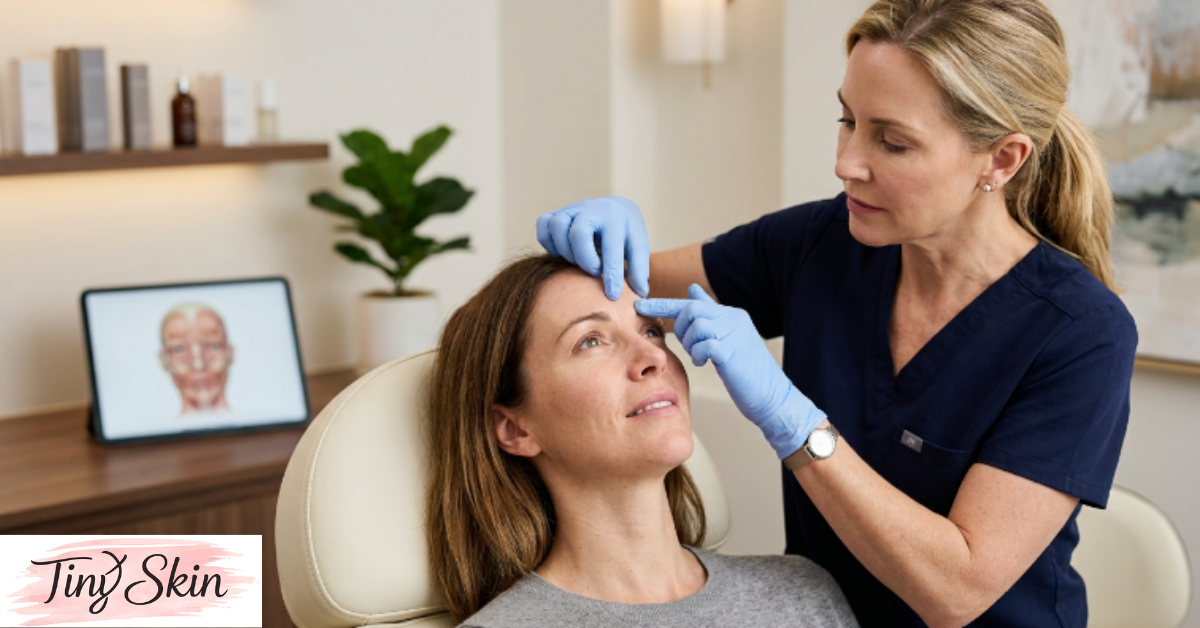
- Consultation and muscle assessment. Your injector will ask you to frown, raise your eyebrows, and relax, watching how the muscles move and where the lines fall.
- Marking injection points. Typically five points across the glabella — one at the procerus (midline) and two on each corrugator.
- The injections themselves. Each point receives a small amount, usually around 4 units, using a very fine needle. Most people describe it as a quick pinch rather than significant pain.
- Aftercare instructions. You’ll be told to stay upright for a few hours, avoid rubbing the area, and skip intense exercise for the rest of the day.
- Follow-up window. Full effects usually show up between 7 and 14 days later. Many practices will offer a touch-up appointment around the two-week mark if any spots need a bit more.
The whole appointment, injections included, usually takes under 20 minutes. It’s genuinely one of the quicker procedures in aesthetic medicine.
Common Mistakes People Make With Glabella Botox
First things first — going in with an exact number pulled from the internet and demanding your injector match it. Every face is different, and a responsible provider will adjust based on what they see in the room, not a number you read in an article (yes, even this one).
Another common misstep is choosing a provider based purely on price. Cut-rate Botox deals sometimes mean diluted product, inexperienced injectors, or rushed consultations — none of which serve you well when precision genuinely matters this much. Botox is priced per unit for a reason, and a suspiciously low per-unit rate is worth questioning.
People also tend to judge results too early. Botox doesn’t work instantly. If you’re checking the mirror obsessively on day three wondering why nothing’s changed, give it the full two weeks before deciding whether you need more.
Lastly — and this one’s easy to overlook — skipping the follow-up appointment. That two-week check-in is where minor asymmetries or under-treated spots get caught and corrected, often for free within many practices’ touch-up policies.
How to Maintain Your Results Between Treatments
Botox for the glabella typically lasts three to four months, though this varies based on your metabolism, muscle strength, and dose. A few habits can help you get the most out of each treatment cycle:
- Stay consistent with your appointment schedule rather than waiting until lines are fully back before rebooking — consistent treatment can train the muscle to relax more over time.
- Use a broad-spectrum sunscreen daily; UV exposure accelerates the formation of static lines that Botox alone can’t fully address.
- Pair your Botox with a solid retinoid-based skincare routine to support collagen and skin texture between sessions.
- Stay hydrated and avoid excessive alcohol in the 24 hours around your appointment, which can slightly increase bruising risk.
Talking to Your Injector: Questions Worth Asking
Walking into your consultation with the right questions can make a real difference in your results. Consider asking:
- Based on my muscle strength, how many units of Botox for glabella do you recommend, and why?
- Which brand of toxin will be used, and how does that affect the unit count compared to Botox?
- What’s your approach if I feel the result is too subtle or too strong at the two-week mark?
- Do you offer a complimentary touch-up window?
A confident, experienced injector won’t be bothered by these questions — if anything, they’ll appreciate a patient who’s done their homework.
Frequently Asked Questions
How many units of Botox are typically used for the glabella?
Most patients receive between 15 and 30 units, with 20 units being the FDA-approved standard dose split across five injection points. Men often need slightly more due to greater muscle mass.
Is 20 units of Botox enough for frown lines?
For many women and patients with average muscle strength, 20 units is sufficient to noticeably soften glabellar lines. However, patients with stronger corrugator muscles or deeper, long-standing lines may need a higher dose to see the same effect.
How many units of Botox does the glabella need for men specifically?
Men often require 30 to 40 units for the glabella because facial muscles tend to be denser and stronger than in women. This isn’t universal, but it’s a common pattern injectors account for during consultations.
How long does glabella Botox last?
Results typically last three to four months. Some patients find that consistent, regularly scheduled treatments extend the time between visits as the muscle weakens with repeated use.
Can too many units of Botox in the glabella cause problems?
Yes — overtreatment or imprecise placement can cause brow heaviness, an unnaturally arched “Spock brow” look, or reduced ability to raise the eyebrows. These effects are temporary and typically fade as the Botox wears off, but they’re worth discussing with your injector if they occur.
Does Dysport use the same unit count as Botox for the glabella?
No. Dysport and Botox measure units differently, so a Dysport dose for the glabella will typically be a higher number than the equivalent Botox dose. Always clarify which toxin brand a stated unit count refers to.
The Bottom Line
Figuring out how many units of Botox for glabella treatment you personally need really comes down to your muscle strength, your goals, and the experience of the person holding the syringe. The FDA-approved 20-unit baseline is a great starting point for the conversation, but it’s just that — a starting point, not a one-size-fits-all rule. Go into your consultation informed, ask questions, and be honest about the look you’re going for, whether that’s completely smooth or just softened.
If you’re still unsure where to start, book a consultation with a board-certified dermatologist or licensed injector who can assess your muscle strength in person and recommend a dose tailored specifically to you. That conversation, more than any number in an article, is what will get you the natural, refreshed result you’re actually after.
This article is for informational purposes only and isn’t a substitute for personalized medical advice. Always consult a licensed dermatologist or qualified injector before starting Botox treatment.

