

It’s 11 p.m. and you’ve just pulled your baby’s onesie up to change a diaper — and there it is. A cluster of tiny red bumps across their neck, chest, or the folds of their arms. Your stomach drops a little. Is this an allergic reaction? A fever coming on? Did I do something wrong?
Take a breath. You’re not alone — heat rash is one of the most common skin issues in babies, especially in warm weather or over-bundled nurseries, and it looks far scarier than it actually is. This guide walks you through exactly what’s happening on your baby’s skin, how to treat it gently at home, and — just as importantly — how to tell when it’s something that needs a doctor’s eyes instead of yours.
Everything here reflects widely accepted pediatric skincare guidance, written the way a friend who happens to be a doctor would explain it to you at 11 p.m.
Quick Answer: To treat baby heat rash, cool your baby down immediately, remove excess clothing, and let the skin air-dry. Avoid lotions or oils, which trap heat. Most heat rash clears within 24-48 hours with cooling and looser clothing — no special treatment needed unless it worsens.
Why Heat Rash Happens in the First Place
It’s a Plumbing Problem, Not a Skin Problem
Here’s the simple version: your baby’s sweat glands are still immature, and their ducts are narrower than an adult’s. When your baby overheats, sweat gets trapped under the skin instead of evaporating away. That trapped sweat causes tiny bumps or blisters — what doctors call miliaria, and what you know as heat rash or prickly heat.
Think of it like a garden hose that’s been stepped on. The water (sweat) is still trying to get through, but it backs up and bulges out wherever the flow gets blocked. That’s essentially what’s happening under your baby’s skin.
Why Babies Get It So Much More Than Adults
Babies also have more skin folds relative to their body size — think neck creases, chubby thighs, and armpits — and these warm, damp areas are prime real estate for heat rash. Overdressing, swaddling too tightly, or a hot car seat can all set the stage, even in mild weather.
Recognizing the Signs: What Heat Rash Actually Looks Like
Heat rash can show up a few different ways, and knowing which type you’re dealing with helps you respond with confidence instead of panic.
- Tiny, clear or white bumps that look like small water blisters (usually on the neck or upper body)
- Small red bumps, sometimes slightly raised, often in skin folds or under clothing lines
- Rash that appears suddenly after a warm car ride, a hot day, or being overdressed
- Mild itchiness or fussiness, but no fever
- Rash that’s worse in creases — neck, armpits, diaper area, or behind the knees
- No pus, no spreading redness, no warmth to the touch beyond the surrounding skin
A quick real-world example: Sarah, a first-time mom, noticed a patch of pink bumps on her son’s neck after a stroller walk on a humid afternoon. Her instinct was to slather on baby lotion. Instead, once she recognized it as classic heat rash, she cooled him down, switched him into a looser cotton onesie, and the bumps were noticeably faded by the next morning.
Step-by-Step: How to Treat Baby Heat Rash at Home
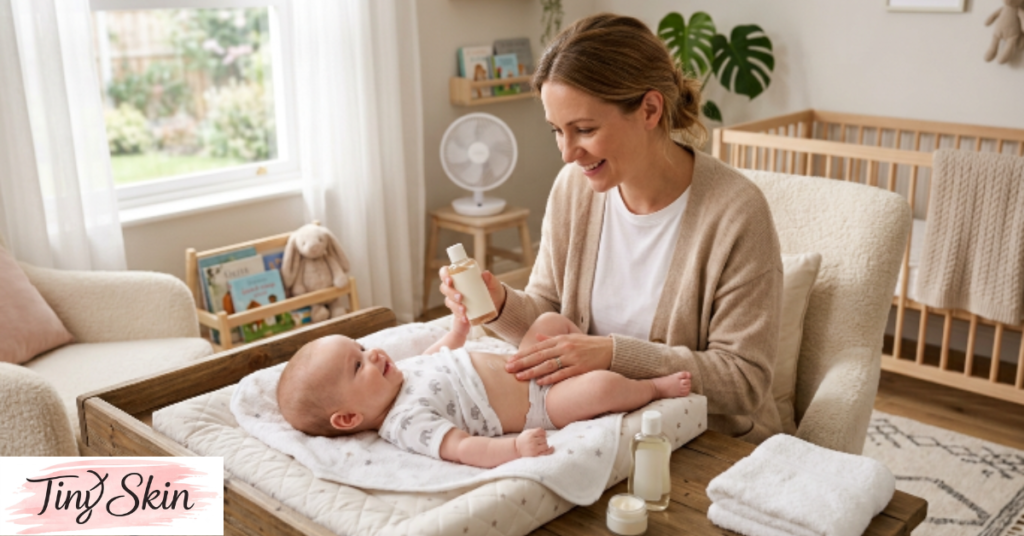
This is the part you actually came here for — so let’s get into exactly what to do, in order.
Step 1: Cool Your Baby Down Right Away
Move your baby to a cooler, well-ventilated room or shaded area as soon as you notice the rash. Why this works: heat rash is caused by trapped heat and sweat, so lowering your baby’s body temperature is the single most effective first step.
Try this today: Set a fan to circulate air in the nursery (not directly blowing on baby) and aim for a room temperature around 68-72°F (20-22°C).
Step 2: Remove Excess Clothing and Layers
Strip your baby down to a light, breathable layer — or even just a diaper if you’re at home. Why this works: it lets trapped sweat evaporate instead of pooling against the skin.
Try this today: Swap tight-fitting sleepers or swaddles for loose, 100% cotton clothing, especially overnight.
Step 3: Let the Skin Air-Dry Completely
After a bath or if the area feels damp, pat the skin dry gently and let it air out for a few minutes before dressing your baby again. Why this works: moisture left sitting on the skin can make trapped-sweat rashes worse, not better.
Try this today: Use a soft cotton muslin cloth to pat — never rub — the affected areas.
Step 4: Give a Cool (Not Cold) Bath
A lukewarm bath can help soothe irritated skin and physically rinse away sweat and residue. Why this works: it lowers skin temperature and clears pores without shocking your baby’s system.
Try this today: Keep bath time to 5-10 minutes and skip bubble baths or scented washes during a flare-up.
Step 5: Skip Heavy Lotions, Creams, and Oils
It’s tempting to want to “treat” the rash with a product, but thick creams and petroleum-based ointments can actually trap more heat and worsen things. Why this works (in reverse): the rash is caused by blocked pores, so anything pore-clogging works against you.
Try this today: If skin feels dry, use a light, fragrance-free, water-based moisturizer only — and only once the rash has started clearing.
Step 6: Dress for the Weather, Not for “Cute”
Many parents unknowingly overdress babies because they associate bundling with safety. Why this works: the general pediatric guideline is to dress baby in one layer more than an adult would wear in the same conditions — not several.
Try this today: Do the “back of the neck” check — if it feels sweaty or hot, remove a layer.
How to Choose the Right Ingredients for Sensitive, Rash-Prone Skin
Ingredients to Look For
When your baby’s skin needs a little extra care, look for products with:
- Fragrance-free formulas — reduces irritation risk on already-inflamed skin
- Colloidal oatmeal — known for calming and soothing irritated skin
- Zinc oxide (for diaper-area rash only) — creates a gentle protective barrier
- Water-based, lightweight moisturizers — hydrate without clogging pores
- Hypoallergenic labeling — formulated to minimize allergic reactions
Ingredients to Avoid During a Flare-Up
- Heavy petroleum or oil-based balms — can trap heat and sweat
- Added fragrances or dyes — common irritants for baby skin
- Alcohol-based wipes or products — can dry out and further irritate the area
- Talcum powder — can clog pores and, in some formulations, poses inhalation risks
This article is for informational purposes only; always consult your pediatrician for personalized advice.
Common Mistakes Parents (Unknowingly) Make
Overdressing “just in case.” Many parents add an extra layer out of instinct, especially with newborns — but this is one of the most common heat rash triggers. Babies regulate temperature differently than adults, and extra layers often do more harm than comfort.
Reaching for lotion immediately. It feels productive to “put something on it,” but as covered above, occlusive products can trap the very moisture causing the problem.
Using hot water for baths. Warm feels soothing to us, but for irritated, overheated skin, it can intensify redness and discomfort.
Ignoring the car seat factor. Car seats trap heat around the back and neck fast, even on mild days — and that’s a frequent, overlooked heat rash hotspot.
Ignoring skin folds during diaper changes. Neck and thigh creases can hold onto moisture long after a bath if they’re not dried thoroughly, quietly prolonging a rash that should be clearing up.
When to See a Doctor: Red Flags to Watch For
Most heat rash resolves on its own within a day or two once your baby cools down. But it’s important to know when home care isn’t enough. Call your pediatrician or seek medical care if you notice:
- Fever, along with the rash
- Rash that spreads rapidly or covers large areas of the body
- Pus-filled bumps, increasing warmth, or swelling — signs of possible infection
- Your baby seems unusually fussy, lethargic, or is feeding poorly
- The rash doesn’t improve after 2-3 days of cooling and home care
- Any rash accompanied by difficulty breathing (seek emergency care immediately)
Trust your instincts here. You know your baby better than any article ever could, and it’s always okay to call your pediatrician just to be safe, even if you’re not sure it’s an emergency.
This article is for informational purposes only; always consult your pediatrician for personalized advice.
Frequently Asked Questions
How long does baby heat rash usually last?
Most cases clear up within 24 to 48 hours once your baby is cooled down and dressed in breathable clothing. If it lingers past 3 days, it’s worth a quick check with your pediatrician.
Can heat rash spread to other parts of the body?
It can appear in new spots if your baby remains overheated, particularly in skin folds like the neck, armpits, and diaper area. It doesn’t “spread” like an infection, but new patches can develop under the same conditions.
Is heat rash contagious to other babies or siblings?
No, heat rash isn’t contagious. It’s caused by blocked sweat ducts and trapped heat, not by bacteria or viruses that pass between people.
Should I pop or scratch the tiny blisters?
No — never pop or scratch heat rash bumps. This can break the skin barrier and increase the risk of infection. Let them resolve naturally with cooling and gentle care.
Can heat rash happen in winter or air conditioning?
Yes, surprisingly often. Overbundling for cold weather or sitting near a heater can trap sweat just as easily as summer heat can, so it’s really about layering, not the season.
Is baby powder good for treating heat rash?
Most pediatric guidance now advises against talcum-based powders due to clogging and inhalation concerns. A cornstarch-based powder is sometimes used sparingly, but cooling and airing out the skin work better overall.
The Bottom Line
Heat rash looks alarming in the moment, but it’s almost always a simple, short-lived response to trapped heat and sweat — and it responds beautifully to cooling down, loosening up clothing, and letting your baby’s skin breathe.
You didn’t do anything wrong, and your baby is going to be just fine. Keep an eye on the red flags above, trust your gut, and don’t hesitate to loop in your pediatrician if anything feels off.
If you found this helpful, you might also want to check out our guide on building a gentle summer skincare routine for babies — or drop a comment below with what’s worked for your little one. We’d love to hear from you.

