
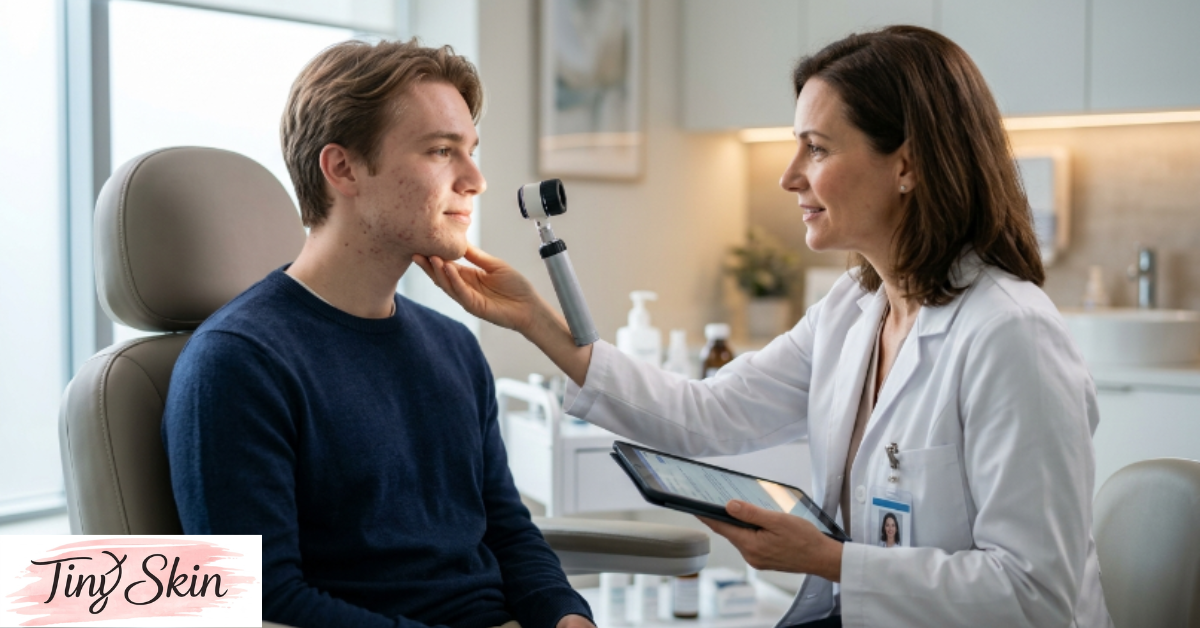

ANSWER: You should see a dermatologist for pimples when over-the-counter products fail after 8-12 weeks, breakouts are painful or cystic, or acne leaves dark marks and scars. A dermatologist can prescribe stronger treatments like retinoids, oral medication, or hormonal therapy tailored to your skin.
If you’ve spent months trying every drugstore cream, DIY mask, and “miracle” serum only to watch new pimples pop up anyway, you’re not alone. Searching for a dermatologist for pimples is often the last step people take after feeling frustrated, embarrassed, and honestly a little defeated by their skin. The good news? Persistent acne is rarely a mystery a trained professional can’t figure out. It’s just often bigger than what a tube of cream can fix on its own.
This guide walks you through why pimples keep coming back, what you can do at home first, and exactly when it’s time to book that dermatologist appointment.
Why Pimples Keep Coming Back: The Real Causes
Pimples aren’t just “dirty skin.” They’re the result of a few things happening under the surface at the same time.
Excess oil (sebum) production is usually the starting point. Your skin naturally makes oil to stay moisturized, but when it produces too much, it mixes with dead skin cells and clogs your pores.
Clogged pores trap that oil along with bacteria, specifically a strain called Cutibacterium acnes. This bacteria thrives in blocked pores and triggers inflammation, which is what turns a simple clogged pore into a red, swollen pimple.
Hormones play a massive role too. This is why breakouts often spike around your period, during puberty, or with conditions like PCOS. Hormonal shifts increase oil production, which sets the whole cycle in motion.
Genetics matter more than most people realize. If your parents dealt with acne, especially cystic acne, you may be more prone to it as well, regardless of how well you cleanse your face.
Other common triggers include:
- Stress, which raises cortisol and can increase oil production
- Diet, particularly high-sugar or high-dairy diets in some people
- Certain medications, like corticosteroids or some birth control pills
- Pore-clogging skincare or makeup products (labeled non-comedogenic products avoid this)
- Touching your face frequently, which transfers bacteria and oil
Understanding your specific trigger matters because it changes the solution. A dermatologist for pimples doesn’t just treat what’s visible on your skin — they try to identify what’s causing it in the first place.
Step-by-Step: What to Try Before (and Alongside) Seeing a Dermatologist
Before jumping straight to prescription treatments, it helps to build a solid, consistent routine. Many mild to moderate breakouts do improve with the right basics.
Step 1: Simplify Your Cleansing Routine
Wash your face twice a day, no more. Over-washing strips your skin’s natural barrier and can actually make oil production worse. Use a gentle, sulfate-free cleanser and avoid scrubbing hard — your fingertips are enough pressure.
Step 2: Introduce One Active Ingredient at a Time
Adding five new products in one week makes it impossible to know what’s working (or what’s irritating your skin). Start with one active ingredient, like salicylic acid, and give it at least four weeks before judging results.
Step 3: Never Skip Moisturizer, Even If You Have Oily Skin
This trips up a lot of people. Skipping moisturizer can make your skin overcompensate by producing even more oil. Choose a lightweight, oil-free, non-comedogenic formula.
Step 4: Apply Sunscreen Daily
Many acne treatments increase sun sensitivity, and sun exposure can darken post-acne marks, making them take longer to fade. A broad-spectrum SPF 30+ is non-negotiable.
Step 5: Track Your Skin for 8-12 Weeks
Skin cell turnover takes time. Most active ingredients need at least two full months before you can honestly judge whether they’re working. Take weekly photos in the same lighting so you’re not relying on memory alone.
Step 6: Know When to Escalate
If, after consistent effort, you’re still breaking out, dealing with painful cysts, or noticing scarring, that’s your sign to bring in a professional. This is exactly the point where a dermatologist for pimples becomes the smarter next step rather than continuing to guess.
One practical tip that helps many people: keep a simple skincare journal. Jot down what you used, when your period is (if applicable), and how your skin reacted. Patterns become obvious fast, and it gives your dermatologist real data to work with instead of vague memories.
Comparing Acne Treatment Options: What Actually Works
Not every pimple needs the same fix. Here’s a general breakdown of common treatment categories, from mildest to strongest.
| Treatment Type | Best For | How It Works | Where to Get It |
|---|---|---|---|
| Salicylic acid | Blackheads, mild breakouts | Exfoliates inside the pore, dissolves oil buildup | Over-the-counter |
| Benzoyl peroxide | Inflamed, red pimples | Kills acne-causing bacteria | Over-the-counter |
| Topical retinoids | Clogged pores, texture, mild-moderate acne | Speeds up cell turnover, prevents clogging | OTC (low strength) or prescription |
| Oral antibiotics | Moderate to severe inflammatory acne | Reduces bacteria and inflammation from within | Prescription only |
| Hormonal treatment (e.g., certain birth control, spironolactone) | Hormonal/jawline acne | Regulates oil-triggering hormones | Prescription only |
| Isotretinoin | Severe, cystic, scarring acne | Shrinks oil glands significantly | Prescription only, closely monitored |
Generally, over-the-counter options work well for mild acne, while moderate to severe or cystic acne usually needs a prescription-strength approach that only a dermatologist can provide safely.
Common Mistakes People Make When Dealing With Pimples
Even well-intentioned skincare routines can backfire. Watch out for these common missteps.
- Popping or picking at pimples. This pushes bacteria deeper into the skin and significantly increases scarring risk.
- Using too many active ingredients at once. Combining retinoids, acids, and benzoyl peroxide together often irritates skin rather than clearing it faster.
- Switching products too soon. Giving up after one week doesn’t allow enough time to see real results.
- Using harsh physical scrubs. These can create micro-tears in the skin, worsening inflammation.
- Skipping sunscreen while on acne treatment. This slows healing and darkens post-inflammatory marks.
- Self-diagnosing hormonal or cystic acne. These types often need targeted treatment that generic products can’t address.
- Ignoring the emotional toll. Persistent acne can affect confidence and mental health, and that’s a valid reason on its own to seek help.
When to See a Dermatologist
Home care genuinely helps many people, but there are clear signs it’s time for professional support.
See a dermatologist for pimples if you notice:
- No improvement after 8-12 weeks of a consistent OTC routine
- Painful, deep, or cystic breakouts, especially along the jawline or chin
- Acne that’s spreading rather than staying in one area
- Scarring or dark marks that keep accumulating
- Breakouts that seem tied to your menstrual cycle or other hormonal patterns
- Acne that’s affecting your confidence, mood, or daily life
- You suspect an underlying condition, such as PCOS, that may be driving your breakouts
A dermatologist can also run tests, review your medical history, and rule out other skin conditions that sometimes mimic acne, like folliculitis or rosacea. This kind of tailored evaluation is something no over-the-counter product can replace, which is exactly why seeing a specialist matters when at-home care stalls.
Frequently Asked Questions
How much does it cost to see a dermatologist for pimples?
Costs vary widely depending on your location, insurance coverage, and clinic. A general consultation can range from affordable with insurance to a higher out-of-pocket fee without it. Many clinics offer a free or low-cost initial consultation, so it’s worth calling ahead to ask.
Can a dermatologist clear acne permanently?
There’s no guaranteed permanent cure, since acne is influenced by ongoing factors like hormones and genetics. However, a dermatologist can significantly reduce breakouts and, in many cases, help you maintain consistently clear skin long-term with the right treatment plan.
Is it worth seeing a dermatologist for mild acne?
Yes, especially if mild acne isn’t responding to basic products or is starting to leave marks. Early treatment often prevents mild acne from progressing into something more severe and harder to treat.
What should I expect at my first dermatologist appointment for acne?
Expect a skin examination, questions about your medical history, current products, diet, and hormonal patterns, and a discussion of treatment options. Some dermatologists may also recommend blood work if hormonal acne is suspected.
Can diet really affect acne, or is that a myth?
For some people, diet does play a role, particularly high-glycemic foods and dairy in certain individuals. It’s not the cause for everyone, though, which is why a dermatologist can help determine whether diet is actually a factor in your specific case.
Conclusion
Pimples that won’t budge aren’t a sign you’re doing skincare wrong. They’re often a sign your skin needs support beyond what a drugstore aisle can offer. Building a consistent routine matters, but so does knowing your limits and recognizing when it’s time to bring in an expert. If you’ve been stuck in the same frustrating cycle for weeks with nothing to show for it, booking a consultation with a dermatologist for pimples could be the single most effective step you take toward finally clearing your skin.

