
Introduction
Waking up to deep, painful pimples along your jaw is frustrating. It feels even worse when you are well past your teenage years. If this sounds familiar, you are not alone. Hormonal acne affects many adult women, and it often shows up right before a period. So how to get rid of hormonal acne for good? The honest answer is that it takes the right skincare, smart daily habits, and sometimes medical treatment. In this guide, you will learn what causes these breakouts, how to spot them, and which treatments dermatologists trust. You will also find tips for Russian weather, ingredient tables, and a clear plan for when to see a doctor. Let’s start with the basics.
What Is Hormonal Acne and Why Does It Happen?
Hormonal acne is acne that flares because of changes in your hormones. The main players are androgens. Every woman makes these hormones, and they tell the oil glands in your skin to produce sebum. When sebum increases, it mixes with dead skin cells and blocks pores. Bacteria then thrive in the clogged pore, and your skin becomes red and inflamed.
How Hormones Trigger Breakouts
Interestingly, many women with hormonal acne have normal hormone levels. Their skin is simply more sensitive to androgens. Dermatologists note that this explains why two people can have similar blood tests but very different skin.
The process usually follows these steps:
- Androgen levels rise or swing.
- Oil glands make extra sebum.
- Dead skin cells clog the pores.
- Acne bacteria multiply in the trapped oil.
- The pore becomes swollen and painful.
Common Hormonal Triggers
Several life events can shake your hormone balance:
- Your monthly cycle, especially the week before a period
- Polycystic ovary syndrome (PCOS)
- Pregnancy and the months after birth
- Stopping birth control pills
- Perimenopause, which often begins in the 40s
- Ongoing stress, which raises the hormone cortisol
Moreover, some medicines can trigger breakouts. Always ask your doctor before you stop or change any prescription.
How to Tell If Your Acne Is Hormonal
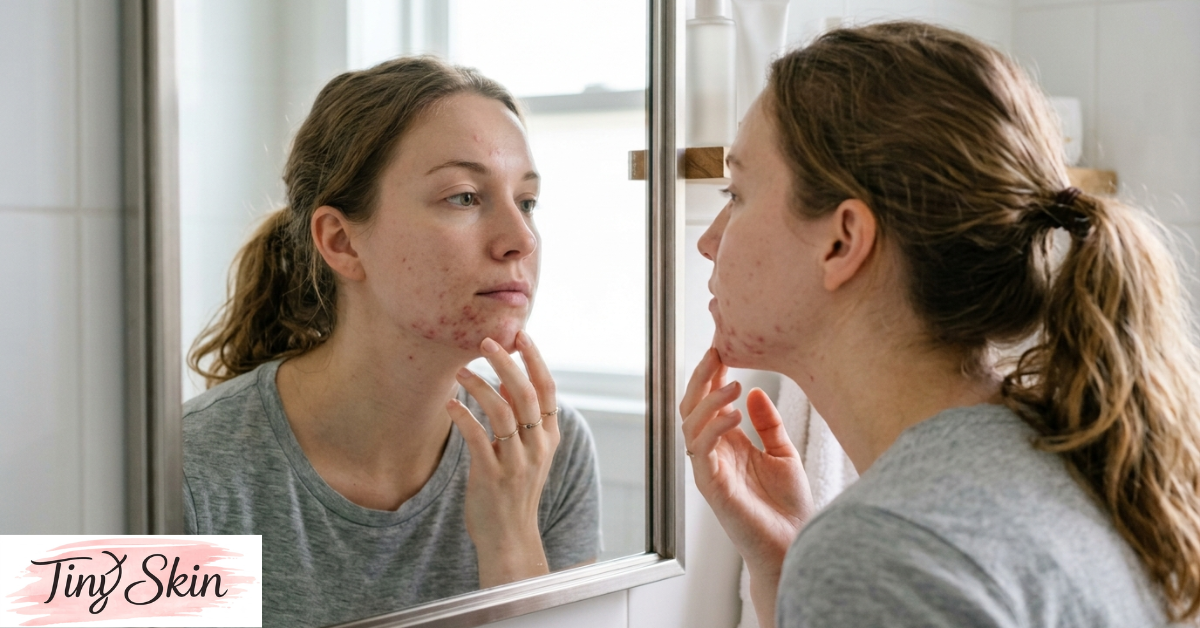
Not every pimple is hormonal. However, hormonal breakouts follow a recognizable pattern. Knowing that pattern helps you choose the right treatment instead of guessing.
Where and When Breakouts Appear
Hormonal acne often appears on the lower face. Check your jawline, chin, and neck. The pimples tend to be deep, tender bumps rather than small blackheads. Additionally, they often arrive 7-10 days before your period and improve afterward. Many women first notice them after age 20, even if their teenage skin was clear.
Table 1: Hormonal Acne vs. Typical Oily-Skin Acne
| Feature | Hormonal Acne | Typical Oily-Skin Acne |
|---|---|---|
| Main location | Jawline, chin, neck, lower cheeks | T-zone (forehead, nose, chin) |
| Pimple type | Deep, tender cysts and nodules | Blackheads, whiteheads, small red bumps |
| Timing | Flares before periods or during hormone changes | Steady, often worse in hot, humid weather |
| Response to basic care | Often returns after clearing | Usually improves with consistent cleansing and actives |
Signs of a Deeper Hormone Issue
Sometimes acne signals a wider condition such as PCOS. Watch for these signs:
- Irregular or missing periods
- Extra dark hair on the face, chest, or belly
- Thinning hair on the scalp
- Dark, velvety patches on the neck or armpits
- Acne that resists all treatment
If you notice two or more, book a medical visit. Early diagnosis protects your long-term health, not just your skin.
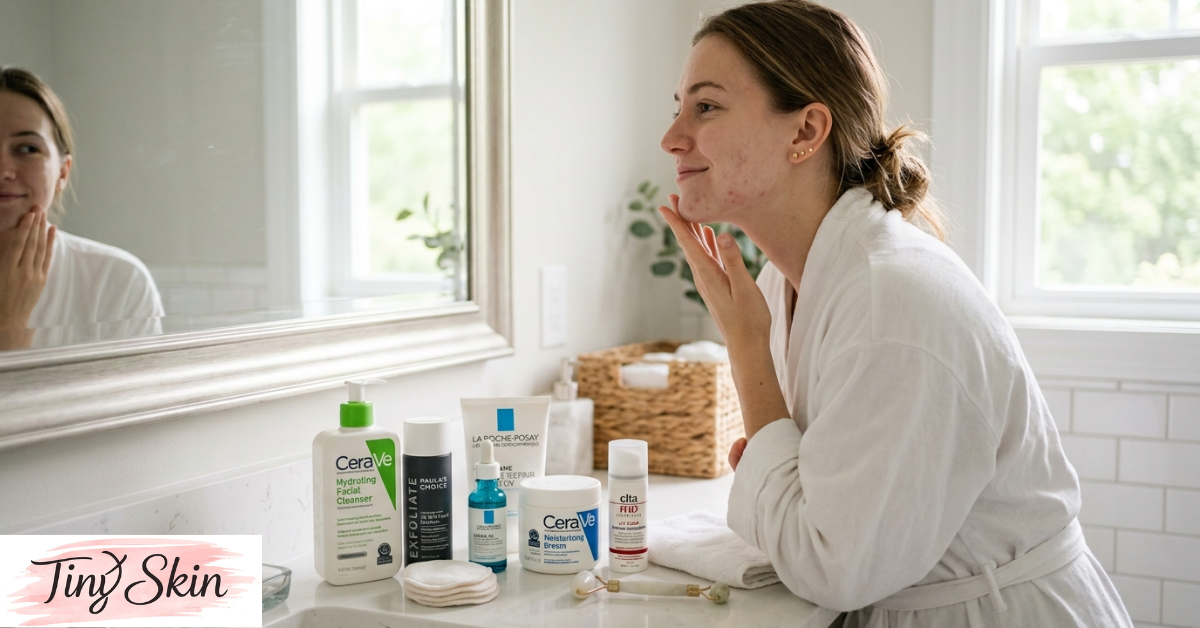
How to Get Rid of Hormonal Acne With a Simple Daily Routine
Skincare cannot stop hormone swings. However, the right routine calms inflammation and prevents new clogs. Keep it simple, because too many products can damage your skin barrier and make breakouts worse.
Morning Routine
- Wash with a gentle, fragrance-free cleanser.
- Apply niacinamide or azelaic acid.
- Use a light, non-comedogenic moisturizer.
- Finish with broad-spectrum SPF 30 or higher.
Evening Routine
- Cleanse to remove sunscreen and excess oil.
- Apply a pea-sized amount of adapalene, starting two or three nights a week.
- Dab benzoyl peroxide on active pimples only.
- Seal everything with a soothing moisturizer.
Key Ingredients Compared
Table 2: Common Acne Ingredients at a Glance
| Ingredient | How It Helps | Best For | Watch Out For |
|---|---|---|---|
| Adapalene | Unclogs pores and normalizes skin cell turnover | Deep clogs, recurring breakouts | Dryness, sun sensitivity; avoid in pregnancy unless your doctor advises |
| Benzoyl peroxide (2.5-5%) | Kills acne bacteria | Red, inflamed pimples | Dryness; bleaches towels and pillowcases |
| Salicylic acid (0.5-2%) | Exfoliates inside pores | Blackheads, oily skin | Over-drying if used too often |
| Azelaic acid | Reduces redness and fades dark marks | Sensitive skin, post-acne marks | Mild tingling at first |
| Niacinamide | Calms inflammation and supports the skin barrier | Daily support for all skin types | Rarely irritates |
Avoid harsh scrubs and alcohol-heavy toners. They strip your skin and often trigger even more oil.
Medical Treatments: How to Get Rid of Hormonal Acne When Skincare Is Not Enough
Over-the-counter products often fall short for deep, cyclical breakouts. In that case, a doctor can prescribe stronger options that target the hormonal cause. Knowing how to get rid of hormonal acne at this level means understanding each option’s benefits and risks.
Prescription Creams and Gels
Doctors may prescribe stronger retinoids such as tretinoin. They may also combine benzoyl peroxide with a topical antibiotic, which helps limit antibiotic resistance. Additionally, clascoterone is a newer cream that blocks androgen effects in the skin, although availability differs by country.
Hormone-Targeting Pills
Combined birth control pills can lower androgen activity. Spironolactone blocks androgen receptors and helps many adult women. However, spironolactone is unsafe in pregnancy. Pills also carry risks that your doctor must screen for, such as a history of blood clots.
Isotretinoin for Severe Cases
Isotretinoin reduces oil production dramatically and can clear stubborn, scarring acne. However, it causes serious birth defects. Doctors therefore require strict pregnancy prevention and regular check-ups.
Table 3: Medical Treatment Comparison
| Treatment | How It Works | Typical Time to Results | Key Considerations |
|---|---|---|---|
| Prescription retinoids | Unclog pores, speed cell turnover | 8-12 weeks | Dryness and sun sensitivity |
| Combined birth control pills | Lower androgen activity | About 3-6 months | Need medical screening; not for everyone |
| Spironolactone | Blocks androgen receptors | About 3-6 months | Unsafe in pregnancy; may cause irregular periods |
| Oral isotretinoin | Shrinks oil glands | Several months of treatment | Specialist supervision, lab monitoring, pregnancy prevention |
Diet and Lifestyle Habits That Support Clearer Skin
Food and habits will not replace medical care. Still, they can reduce flares and help your treatments work better. Small, steady changes beat extreme diets.
Foods to Watch
Studies suggest that high-glycemic foods, such as sweets, white bread, and sugary drinks, may worsen acne in some people. Some research also links skim milk to more breakouts. However, the evidence is modest, and results vary from person to person. Try these swaps for six weeks:
- Choose whole grains over white bread
- Eat more vegetables, legumes, and fish
- Limit sugary drinks and sweets
- Track any flare-ups in a notes app
Stress and Sleep
Stress raises cortisol, which can push oil glands into overdrive. Meanwhile, poor sleep makes stress harder to manage. Aim for seven to nine hours of sleep each night. Walking, stretching, and slow breathing exercises can also lower daily tension.
Daily Habits That Protect Your Skin
- Never pick or squeeze deep pimples
- Change your pillowcase once a week
- Wipe your phone screen regularly
- Shower soon after workouts
- Choose non-comedogenic makeup and hair products
Hormonal Acne Care in Russia: Climate, Products, and Specialists
Where you live affects your skin. Russian seasons bring unique challenges for acne-prone skin, so your routine should change with the weather.
Cold Winters and Dry Indoor Heating
Freezing air and central heating strip moisture from your skin. Damaged, dry skin can react with more redness and breakouts. Therefore, switch to a richer, fragrance-free moisturizer with ceramides. Pause strong exfoliants when your skin feels tight or stings.
Summer Sun and Dark Marks
Sunlight darkens the marks that pimples leave behind. Additionally, retinoids and some acids make skin more sun-sensitive. Wear SPF every day, even on cloudy days, and reapply when outdoors. Azelaic acid can help fade marks over time.
Finding Products and Doctors
Many pharmacies sell adapalene and benzoyl peroxide, although brand names and availability vary. Check the active ingredient on the label instead of relying on the brand. Prescription treatments require a doctor’s visit. Start with a dermatologist (дерматолог). If you notice hormone-related signs, add a gynecologist or an endocrinologist (эндокринолог) to your care team.
When to See a Doctor and What to Expect
Knowing how to get rid of hormonal acne also means knowing when to ask for help. Do not wait years for a routine to work if your skin is getting worse.
Which Specialist Should You See?
Begin with a dermatologist if your acne is deep, painful, or leaving scars. Consider a gynecologist or endocrinologist if you also have irregular periods, excess hair growth, or hair thinning. These specialists often work together, so ask for referrals.
Tests Your Doctor May Order
Your doctor may check blood levels of androgens such as testosterone and DHEA-S. They may also order a pelvic ultrasound if PCOS seems likely. However, not everyone needs tests, so let your doctor decide. Bring a list of your medicines, your period dates, and photos of your skin.
How Long Treatment Takes
Most treatments need 8-12 weeks to show clear results. Some skin may look worse in the first weeks as pores clear out. Stay consistent, take monthly photos, and avoid switching products too quickly. Progress is often slow, but it is real.
Key Takeaways
- Hormonal acne usually appears on the jawline, chin, and neck, often before your period.
- Extra androgen activity increases oil, clogs pores, and triggers inflammation.
- A gentle routine with adapalene, benzoyl peroxide, or azelaic acid helps many women.
- Persistent or deep acne may need prescription options such as spironolactone or hormonal pills.
- Diet, sleep, and stress management support your treatment, but they do not replace medical care.
- Knowing how to get rid of hormonal acne takes patience: expect 8-12 weeks before judging results.
FAQs
How long does hormonal acne last?
Hormonal acne can last months or years without treatment, because hormone shifts keep returning. With a consistent routine, many people see improvement within 8-12 weeks. Medical treatments may take three to six months. Cycle-related flares often improve once you treat the underlying cause. Ask a dermatologist for a personal timeline.
What is the fastest way to get rid of hormonal acne?
No single fast fix exists, but a combined approach works best. Use adapalene and benzoyl peroxide consistently, protect your skin barrier, and see a doctor about hormone-targeting options like spironolactone or birth control pills. Avoid picking, which causes scars and dark marks that last longer than the pimple itself.
Can you get hormonal acne in your 30s and 40s?
Yes. Adult acne is common, particularly in women. Hormone changes from PCOS, stress, pregnancy, and perimenopause can all trigger breakouts after 30. Adult skin is often drier and more sensitive, so choose gentle formulas and introduce actives slowly. A doctor can check whether an underlying condition contributes.
Which foods make hormonal acne worse?
Research suggests that high-glycemic foods, such as sweets, white bread, and sugary drinks, may worsen acne for some people. Skim milk has also been linked to breakouts in some studies. However, triggers differ from person to person. Track your meals for several weeks and discuss patterns with your doctor before cutting entire food groups.
Do birth control pills help hormonal acne?
Some combined birth control pills can reduce acne by lowering androgen activity. Dermatologists and gynecologists often prescribe them for women who also want contraception. However, they are not suitable for everyone, especially people with certain clotting or migraine histories. Your doctor will review your health before recommending a specific pill.
Is spironolactone safe for hormonal acne?
Doctors widely prescribe spironolactone for adult women with hormonal acne, and it works well for many. However, it is unsafe during pregnancy and can cause side effects like irregular periods, dizziness, or high potassium. Your doctor will decide whether it fits you and may monitor you during treatment.
Conclusion
Hormonal breakouts feel personal, but they are common and treatable. Now you know how to get rid of hormonal acne step by step. Build a gentle routine with adapalene, benzoyl peroxide, or azelaic acid. Support your skin with better sleep, less stress, and smart food choices. Ask a doctor about prescription options when needed. Remember that patience matters, because most treatments need at least 8-12 weeks. If your acne is deep, scarring, or paired with irregular periods, do not wait. Book an appointment with a dermatologist or endocrinologist today, and take the first step toward calmer, clearer skin.
Medical disclaimer: This article is for education only and does not replace professional medical advice. Consult a qualified doctor before starting any prescription or hormonal treatment.

