

A small red patch on your loved one’s heel can look harmless. Within days, it can become a deep, painful wound. That patch is often the first sign of a bed sore. If you care for an older parent, a bedridden relative, or a wheelchair user, you need to know how this problem starts. A bed sore, also called a pressure ulcer, forms when constant pressure cuts off blood flow to the skin. Many families in Russia provide care at home, so early knowledge matters. The good news is that most bed sores are preventable. In this guide, you will learn the causes, the four main stages, prevention steps, and treatment options. You will also learn when to call a doctor. Let’s begin with the basics.
What Is a Bed Sore and Why Does It Form?
A bed sore is an injury to the skin and the tissue under it. It develops when pressure presses on one spot for too long. This pressure squeezes small blood vessels. Blood cannot reach the area, so skin cells lose oxygen and begin to die.
Pressure Ulcer, Pressure Injury, Decubitus Ulcer: Same Problem
Doctors use several names for a bed sore. You may read “pressure ulcer,” “pressure injury,” or “decubitus ulcer” in medical sources. In Russia, people also say “пролежни” (prolezhni). All these terms describe the same condition. Bed sore is simply the everyday name.
Three Forces Behind Skin Damage
Pressure is not the only cause. Dermatology and nursing guidelines describe three main forces:
- Pressure: body weight pushes skin against bone and a hard surface.
- Shear: skin stays still while the bone beneath it slides, for example when a person slips down in a raised bed.
- Friction: skin rubs against sheets or clothing.
Moisture from sweat or urine also weakens skin. As a result, damp skin breaks down faster.
Where Bed Sores Usually Appear
Bed sores usually form over bony areas with little padding:
- Lying on the back: tailbone, heels, shoulder blades, elbows, back of the head.
- Lying on the side: hip bone, knees, ankles, ear.
- Sitting: tailbone, sit bones, shoulder blades.
Fragile skin can break down within a few hours of constant pressure. Therefore, daily skin checks matter more than most families expect.
Who Is at Risk of Developing Bed Sores?
Anyone who cannot change position easily can develop a bed sore. However, some people face a much higher risk.
Main Risk Factors
Several factors raise the chance of skin breakdown:
- Limited mobility after stroke, spinal cord injury, fracture, or severe illness
- Loss of sensation, so the person cannot feel pain or shift weight
- Poor nutrition or low fluid intake
- Moist skin from incontinence or heavy sweating
- Diabetes or poor circulation
- Older age, because aging skin is thinner and drier
Importantly, a person can have several risk factors at once. Each one adds to the total risk.
Risk Scores Nurses Use
Nurses often use tools such as the Braden Scale to estimate risk. It scores sensation, moisture, activity, mobility, nutrition, and friction. A lower score means a higher risk. Ask your care team for the score. It helps you plan prevention. Scores change as health changes. Therefore, repeat the assessment after surgery, illness, or a hospital stay.
Hospital, Nursing Home, and Home Care
A bed sore can start anywhere. Additionally, even a short hospital stay can trigger one, especially after surgery or a long wait on a hard stretcher. Caregivers often notice the first sign before anyone else does. Therefore, check your relative’s skin whenever they return home from a hospital.
Bed Sore Stages: How to Recognize Each One
Doctors classify a bed sore into four main stages. Early recognition lets you act before the wound deepens.
Table 1: Stages of a Bed Sore at a Glance
| Stage | What You See | Depth | What to Do |
|---|---|---|---|
| Stage 1 | Intact skin that looks red or darker and stays discolored when pressed; may feel warm, firm, or painful | Skin surface | Remove pressure; tell the care team |
| Stage 2 | Shallow open sore or blister with a pink or red base | Partial skin loss | See a doctor or nurse; use a protective dressing |
| Stage 3 | Deep crater; fat may show | Full skin loss | Seek urgent medical care |
| Stage 4 | Very deep wound; muscle, tendon, or bone may show | Reaches muscle or bone | Seek urgent hospital care |
| Unstageable | Wound base covered by yellow, brown, or black dead tissue | Unknown | Get a professional assessment |
Stages 1 and 2: The Early Warning Signs
At stage 1, the skin stays intact. It looks red on light skin. However, on dark skin, redness is harder to see. Look for purple or dark patches instead. Also feel for warmth, firmness, or swelling compared with nearby skin. At stage 2, the skin opens or forms a blister.
Stages 3 and 4: Deep Wounds
Stage 3 and 4 wounds destroy deeper layers. They often cause drainage, odor, and a high infection risk. Moreover, they can take months to heal. Doctors also describe a deep tissue injury, a dark purple or maroon area that can worsen quickly. Treat these wounds as serious medical conditions.
How to Prevent Bed Sores: Daily Care Steps
Prevention works better than treatment for any bed sore. Dermatologists and wound-care nurses agree on a few key habits.
Reposition Often
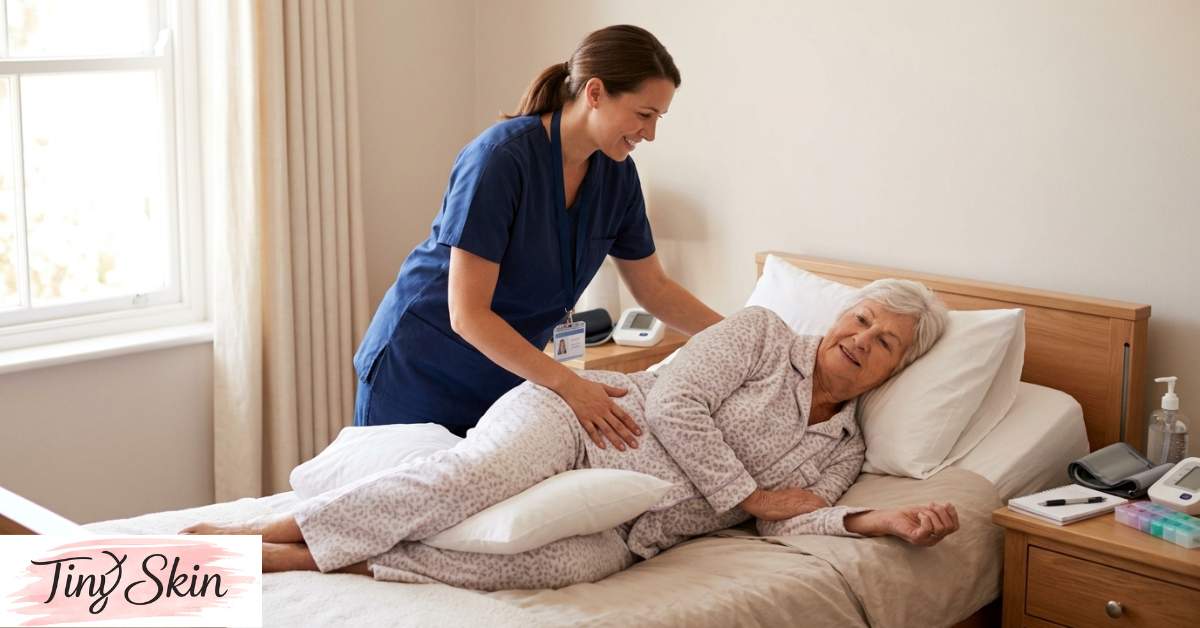
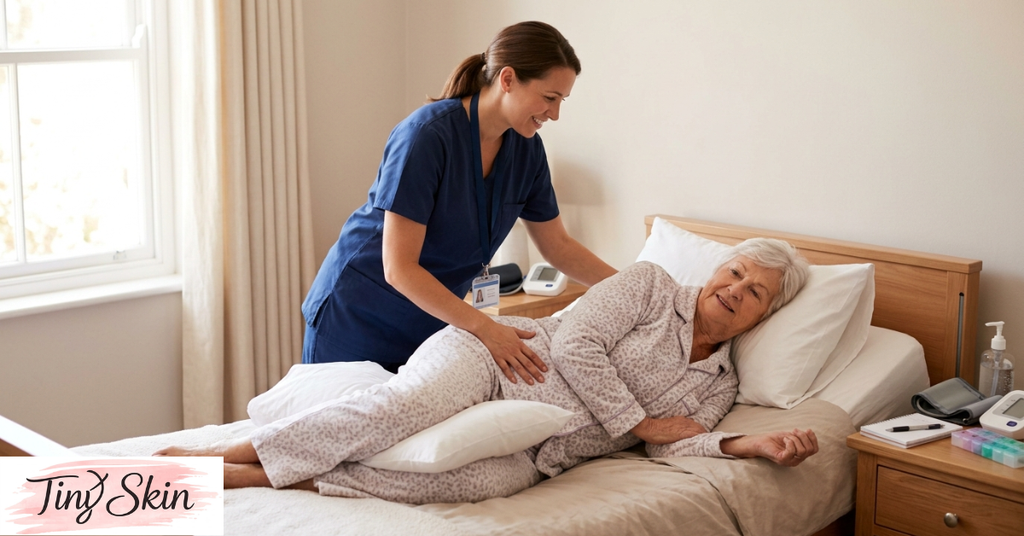
Change the position of a bedridden person at least every two hours. Do it more often if the skin shows redness. Use this simple routine:
- Turn the person onto one side at about a 30-degree angle, not flat on the hip bone.
- Place pillows between the knees and ankles.
- Float the heels off the mattress with a pillow under the calves.
- Keep the head of the bed as low as medically allowed to reduce sliding.
- Lift the person during moves instead of dragging them across sheets.
Also keep sheets smooth and dry, because wrinkles and crumbs press into skin.
Check and Care for the Skin
Inspect all bony areas every day. Use a mirror or flashlight for hard-to-see places. On darker skin, compare the temperature and firmness of the area with nearby skin. Clean the skin with a mild cleanser and warm water. Pat it dry gently. Use a barrier cream if moisture is a problem. Importantly, do not massage red or bony areas. Massage can damage fragile tissue.
Support Healing From Within
Skin needs fuel to stay strong. Ask a doctor or dietitian about enough calories, protein, and fluids. Studies suggest that good nutrition supports wound healing, although supplements are not a cure. Never start high-dose vitamins without medical advice.
Best Mattresses and Cushions for Bed Sore Prevention
The right support surface spreads body weight over a larger area. Consequently, it lowers pressure on bony spots. However, no mattress replaces regular turning.
Table 2: Support Surfaces Compared
| Surface | How It Works | Best For | Keep in Mind |
|---|---|---|---|
| Standard foam mattress | Basic cushioning | Low risk, mobile people | Gives little protection to frail skin |
| High-specification foam | Molds to the body and spreads weight | Moderate risk | Still needs repositioning |
| Alternating-pressure air mattress | Air cells inflate and deflate in cycles | High risk | Needs power; check that it works |
| Low-air-loss or air-fluidized bed | Moving air reduces pressure and moisture | Very high risk or stage 3-4 wounds | Costly; usually prescribed |
Choosing a Wheelchair Cushion
People who sit for long hours also develop bed sores. Pick a foam, gel, or air cushion that fits the chair and the person. Avoid ring or donut cushions, because they concentrate pressure around the sore. In addition, remind the person to shift weight every 15 to 30 minutes.
Protect the Heels
Heels carry little padding. Therefore, use a pillow under the lower legs or special heel-protection boots. Pharmacies and medical equipment stores in Russia often stock these items. Ask your doctor which option suits your situation.
Bed Sore Treatment at Home and With Your Doctor
Treatment depends on the stage. However, every plan starts with the same step: take pressure off the area. Doctors and wound-care nurses guide the rest of the plan.
First Steps at Home
For stage 1, keep weight off the red area. Keep the skin clean and dry. Reposition more often. Wash gently, pat dry, and use a protective dressing only if a nurse advises it. Moreover, check the area again after a few hours. Call a doctor if the redness does not fade or the skin opens.
Medical Treatment Options
A healthcare team may use several of these tools together:
- Wound cleaning: clinicians rinse with saline or clean water.
- Moist dressings: foam or hydrocolloid dressings protect the wound and support healing.
- Debridement: a professional removes dead tissue so healthy tissue can grow.
- Antibiotics: doctors prescribe them only for infection.
- Pain control: pain relief makes repositioning easier.
- Surgery: deep stage 4 wounds may need surgical repair.
Healing time varies. Stage 2 wounds may close within weeks, while stage 3 and 4 wounds often need months.
What to Avoid
Do not apply alcohol, hydrogen peroxide, or herbal pastes without medical approval. They can irritate healthy tissue. Likewise, never let the person lie directly on the wound. Finally, do not try to treat a bed sore at stage 2 or higher alone.
Bed Sore Complications and When to Call a Doctor
An untreated bed sore can lead to serious illness.
Possible Complications
Open wounds let bacteria enter the body. Because of this, early care protects both comfort and life. Possible complications include:
- Cellulitis: a skin and soft-tissue infection
- Osteomyelitis: an infection of the bone
- Sepsis: a life-threatening reaction to infection
- Skin cancer: very rare, in wounds that last many years
Warning Signs
Call the doctor if you notice:
- Pus or thick drainage
- Foul smell
- Spreading redness, warmth, or swelling
- New or worsening pain
- Fever or chills
Early reporting often prevents a hospital stay. Also tell the doctor about any new sore, even a small one.
When It Becomes an Emergency
Seek emergency help if the person has fever with confusion, a fast heartbeat, or very low energy. In Russia, call 103 for an ambulance or 112 for the general emergency number. Older adults may show fewer signs of infection. Consequently, confusion or sudden weakness can be the only clue. Do not wait to see if it improves. Meanwhile, keep pressure off the wound.
Key Takeaways
- A bed sore forms when pressure, shear, friction, and moisture damage skin over bony areas.
- Stage 1 shows as skin that stays red or darker when pressed, so act at once.
- Reposition bedridden people at least every two hours and check their skin daily.
- Choose a pressure-relieving mattress or cushion, and avoid donut-style rings.
- Never massage red areas or use harsh home remedies on open wounds.
- Call a doctor for open skin, pus, odor, or fever. Call emergency services for fever with confusion.
FAQs
What causes a bed sore?
A bed sore forms when constant pressure blocks blood flow to the skin. Shear and friction add to the damage, while moisture weakens the skin further. People who cannot move easily face the highest risk, especially over bony areas such as the tailbone, heels, and hips.
What does the first stage of a bed sore look like?
Stage 1 appears as intact skin that looks red on light skin or purple and darker on deeper skin tones. The area stays discolored when you press it. It may feel warm, firm, or painful. Remove pressure right away and tell a healthcare professional.
How long does a bed sore take to heal?
Healing time depends on the stage and the person’s health. A stage 1 area may improve within days once pressure stops. Stage 2 wounds often close within weeks. However, stage 3 and 4 wounds can take months and may need surgery. Good nutrition and consistent pressure relief speed recovery.
Can bed sores be prevented?
Yes, most bed sores are preventable. Reposition the person at least every two hours, use a pressure-relieving mattress or cushion, and check the skin daily. Keep skin clean and dry, and support good nutrition. Consequently, consistent daily habits matter more than any single product or cream.
Should I massage a red area to improve circulation?
No. Current wound-care guidelines advise against massaging red or bony areas. Massage can injure fragile skin and deeper tissue. Instead, remove pressure from the area, keep the skin clean and dry, and ask a nurse or doctor to assess it. Reposition the person more often.
When should I see a doctor about a bed sore?
See a doctor if redness does not fade after you remove pressure, if the skin blisters or opens, or if you notice pus, odor, or fever. Treat any open bed sore as a medical problem. Older adults may show few infection signs, so confusion can be an early warning.
Conclusion
A bed sore can develop quickly, yet you can often stop it with simple habits. Check the skin every day. Reposition your loved one regularly. Choose the right mattress and cushion, and support good nutrition. If you spot a stage 1 area, remove pressure immediately. If the skin opens, seek medical help without delay. Remember, early action protects comfort, dignity, and health. Caring for someone at home is demanding, so ask for help from nurses and family members. Ready to take the next step? Book a visit with your doctor or a wound-care specialist today, and share this guide with other caregivers who need it.
Medical disclaimer: This article provides general information and does not replace professional medical advice, diagnosis, or treatment. Always consult a qualified healthcare provider about a specific wound.

