

Introduction
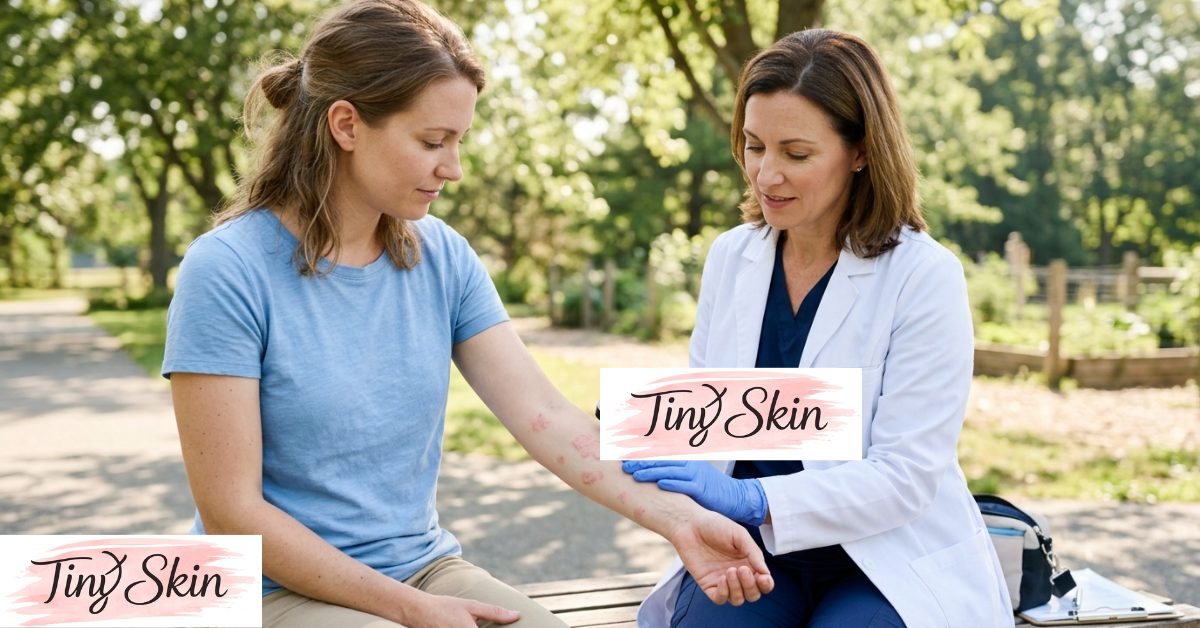
You enjoy a sunny day outdoors. A few hours later, your skin turns red, itchy, and bumpy. It looks like a sunburn, but it feels different. This may be photoallergy, an immune reaction to sunlight combined with a substance on or in your skin.
Many people in Russia notice it after the first warm days of spring or a summer trip to the south. Photoallergy can surprise you because the trigger is often a product you use every day, such as sunscreen or perfume.
In this guide, you will learn what causes photoallergy, how to spot the symptoms, and how doctors confirm it. You will also find safe relief steps and prevention tips. However, always see a dermatologist for a firm diagnosis.
What Is Photoallergy and Why Does It Happen?
How Photoallergy Works
Photoallergy is a delayed immune reaction. First, a substance on your skin absorbs ultraviolet (UV) light. The light changes the structure of that substance. Your immune system then treats the changed molecule as a threat and attacks it.
The result is an itchy, eczema-like rash. Importantly, your body needs a first exposure to become sensitive. The rash usually appears on later exposures.
Photoallergy vs. “Sun Allergy”
Many people use the term “sun allergy” for several different conditions. Polymorphic light eruption is the most common one, and it is not a true contact allergy. Photoallergic contact dermatitis is rarer. Dermatologists separate these conditions because treatment and prevention differ.
Who Has a Higher Risk?
Anyone can develop photoallergy. However, your risk rises if you:
- Apply scented or medicated products before going outside
- Use topical pain-relief gels
- Take certain medicines
- Have a history of eczema or sensitive skin
- Spend long hours in strong sunlight, such as at the beach
Photoallergy vs. Phototoxic Reaction: Key Differences
Doctors often compare photoallergy with phototoxic reactions. Both involve light and a chemical, yet they work differently. This table shows the main points.
| Feature | Photoallergy | Phototoxic Reaction |
|---|---|---|
| Immune system involved | Yes | No |
| First exposure | Needs earlier sensitization | Can happen the first time |
| Amount of substance needed | Small amount | Larger amount |
| Typical onset | 24 to 72 hours | Minutes to a few hours |
| Appearance | Itchy, eczema-like, may blister | Sunburn-like, burning or stinging |
| Spread | May reach covered skin | Stays on exposed skin |
| Common causes | Sunscreen filters, ketoprofen gel, fragrances | Doxycycline, St. John’s wort, some plant juices |
Why the Difference Matters
Photoallergy may spread beyond sun-exposed areas and last for weeks. A phototoxic reaction usually stays on exposed skin and fades faster. Therefore, the right label helps you pick the right treatment.
Mixed Reactions
Some substances can cause both types. Additionally, a rash can look unclear at first. A doctor should decide which reaction you have, especially if it keeps returning.
Photoallergy Symptoms: What to Look For
Early Signs
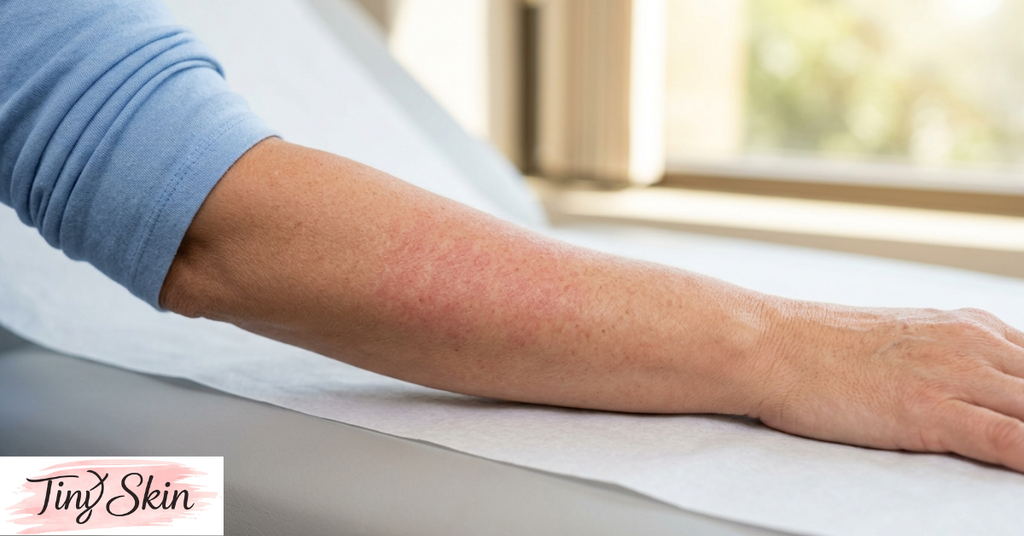
Photoallergy symptoms often start 24 to 72 hours after sun exposure. At first, you may feel itching or mild burning. Redness follows. Because of this delay, many people never connect the rash with the sun.
Typical Rash Appearance
The rash often looks like eczema rather than a plain sunburn. You may notice:
- Red, itchy patches
- Small bumps or tiny blisters
- Weeping or crusting skin
- Dry, scaly patches as the rash heals
Common Body Areas
In photoallergy, the rash usually appears where light hits your skin. These areas include the face, ears, neck, “V” of the chest, forearms, and backs of the hands. Moreover, the rash may spread to covered skin in stronger cases.
Skin under a watch strap or clothing often stays clear. This sharp border is a helpful clue for your doctor.
Common Photoallergy Triggers in Everyday Products
Most triggers sit in your bathroom cabinet or medicine box. Dermatology references list several well-known groups. The table below summarizes them.
| Trigger Group | Examples | Where You May Find Them |
|---|---|---|
| Sunscreen filters | Octocrylene, benzophenone-3 (oxybenzone) | Sunscreens, lip balms, day creams |
| Topical NSAIDs | Ketoprofen | Pain-relief gels and patches |
| Fragrance ingredients | Certain perfume compounds | Perfumes, aftershaves, scented lotions |
| Some medicines | Check the leaflet or ask your doctor | Tablets, creams, injections |
Sunscreen Ingredients
Ironically, some UV filters cause photoallergy. Studies suggest this is uncommon, so you should not skip sun protection. Instead, choose another filter type if one product irritates you.
Medicines and Herbal Products
Ketoprofen gel is a classic cause of photoallergy. Additionally, some oral medicines make skin more sensitive to light. St. John’s wort (zveroboy) is popular in Russian herbal teas. It mainly causes phototoxic reactions, yet it still deserves caution in summer.
Fragrances and Cosmetics
Perfume applied before sun exposure can trigger photoallergy in sensitive people. Therefore, apply fragrance to clothing, not exposed skin, on sunny days.
How Doctors Diagnose Photoallergy
Medical History and Exam
Your dermatologist will ask about your products, medicines, and recent sun exposure. The pattern of the rash gives strong clues. Bring your sunscreen, cosmetics, and medicine boxes to the visit.
Photopatch Testing
Photopatch testing is the standard method to confirm photoallergy. The doctor applies small amounts of suspected substances to your back in two sets. Then they expose one set to a controlled dose of UVA light. If the exposed patches react, the substance is likely the culprit.
Ruling Out Other Conditions
Several conditions look similar. These include polymorphic light eruption, contact dermatitis, and lupus-related photosensitivity. As a result, self-diagnosis is risky. Seek care quickly if you have fever, joint pain, widespread blistering, or swelling of the face.
Photoallergy Treatment and Home Relief
First Steps at Home
Follow these steps when you suspect photoallergy:
- Move out of the sun and cover the area.
- Stop using the suspected product.
- Apply a cool, clean, damp cloth for 10 to 15 minutes.
- Wash gently with a mild, fragrance-free cleanser.
- Use a plain, bland moisturizer to protect the skin barrier.
Medical Treatment
Dermatologists often prescribe topical corticosteroids for photoallergy rashes. Oral antihistamines may reduce itching. Severe cases sometimes need a short course of oral steroids. However, you should use these medicines only under medical guidance.
What to Avoid
Do not scratch or pop blisters. Additionally, avoid home remedies such as lemon juice, essential oils, or toothpaste. These can irritate damaged skin and may cause further reactions. Most mild rashes improve within one to three weeks once you remove the trigger and avoid sun.
Photoallergy Prevention for Sunny Days
Identify and Remove the Trigger
Prevention starts with the culprit. After a positive photopatch test, you will receive a list of substances to avoid. Read ingredient labels every time you buy sunscreen, cosmetics, or gels.
Smart Sun Protection
Sun protection still matters. Dermatologists recommend:
- Wide-brimmed hats and UV-protective sunglasses
- Lightweight long sleeves in strong sun
- Shade between 11:00 and 16:00
- Broad-spectrum SPF 30 or higher, from a product that suits you
Choose Sunscreen for Sensitive Skin
Mineral sunscreens with zinc oxide or titanium dioxide rarely cause photoallergy. Many pharmacies in Russia stock fragrance-free options made for sensitive skin. Test a new product on a small area of your inner forearm first. Meanwhile, tell your doctor and pharmacist about every medicine you take before a vacation in a sunny region.
Key Takeaways
- Photoallergy is a delayed immune reaction that needs both a trigger substance and UV light.
- Symptoms appear 24 to 72 hours after exposure and look like an itchy, eczema-like rash.
- Common triggers include sunscreen filters, ketoprofen gels, and fragrances.
- Photopatch testing is the most reliable way to confirm photoallergy.
- Treatment includes trigger removal, cool compresses, and doctor-guided steroid creams.
- Mineral sunscreen, protective clothing, and shade help prevent repeat reactions.
FAQs
What is photoallergy?
Photoallergy is an immune reaction that happens when sunlight changes a substance on your skin. Your body then attacks that changed substance. The result is an itchy, red, eczema-like rash. It appears one to three days after sun exposure and may spread beyond sun-exposed areas.
How long does photoallergy last?
Most photoallergy rashes heal within one to three weeks after you stop using the trigger and avoid the sun. However, repeated exposure can extend the reaction for months. Therefore, identifying and removing the trigger is essential for lasting recovery.
Can sunscreen cause photoallergy?
Yes, but it is uncommon. Some chemical UV filters, such as octocrylene or oxybenzone, can trigger photoallergy in sensitive people. Mineral sunscreens with zinc oxide or titanium dioxide are usually better tolerated. Ask your dermatologist for suitable products if you suspect a reaction.
Is photoallergy the same as a sunburn?
No. Sunburn comes from too much UV light and appears within hours. Photoallergy involves your immune system and a trigger substance. It usually shows up later, itches strongly, and looks like eczema. Sunburn mostly burns and stings.
How do I know if I have photoallergy or polymorphic light eruption?
The two look alike, so only a doctor can tell for sure. Polymorphic light eruption usually appears in spring after the first strong sun and needs no product trigger. Photoallergy follows contact with a specific substance. Photopatch testing helps separate them.
Can photoallergy go away on its own?
Mild photoallergy often clears on its own once you remove the trigger and protect your skin from sun. Nevertheless, it can return if you meet the trigger again. See a dermatologist if the rash is severe, spreads, or does not improve in two weeks.
Conclusion
Photoallergy can ruin a sunny holiday, but you can manage it. Learn the symptoms, check your products, and remove the trigger. Cool compresses, gentle skin care, and sun protection help your skin recover. Moreover, mineral sunscreen and smart habits lower your risk of repeat reactions.
However, a rash that keeps returning needs a professional opinion. Photopatch testing can identify the exact culprit. Book a visit with a dermatologist before your next sunny season, and protect your skin with a plan made for you.

