


If you’ve typed “black dermatologist near me” into Google more than once this month, you’re definitely not alone. More and more people are realizing that finding a dermatologist who actually understands melanin-rich skin isn’t a nice-to-have — it’s essential. And honestly? That realization is long overdue.
Here’s the thing: skin of color behaves differently. It scars differently, it reacts to certain treatments differently, and conditions like hyperpigmentation, keloids, and pseudofolliculitis barbae (razor bumps) show up more often and look different than they do in textbooks written decades ago with lighter skin tones as the default. If you’ve ever sat in a dermatologist’s office and felt like your concerns were being brushed off, or worse, treated with advice that clearly wasn’t tailored to your skin type, you already know why this search matters.
In this guide, we’ll walk through exactly how to find a black dermatologist near me (or one who specializes in skin of color, if that’s not an option in your area), what to expect during your visit, common skin concerns for Black patients, and how to make the most of your appointment. Whether you’re dealing with acne scarring, eczema, or just want a provider who gets it, this article has you covered.
Why Searching for a Black Dermatologist Near Me Actually Matters
Let’s address the elephant in the room first: is it really necessary to specifically look for a Black dermatologist, or would any board-certified dermatologist do?
In an ideal world, every dermatologist — regardless of their own background — would be equally trained to treat every skin tone. In reality, that’s not always the case. Dermatology as a field has historically underrepresented darker skin tones in its training materials, clinical trials, and even textbook photography. A 2020 study published in the International Journal of Women’s Dermatology found that a huge percentage of dermatology textbook images feature lighter skin, leaving a real gap in how future dermatologists learn to recognize conditions on darker skin.
This isn’t about assuming a white dermatologist can’t treat you well — plenty are excellent with skin of color. It’s about increasing your odds of walking into an office where the provider has deep, hands-on experience with your specific skin concerns. When you search for a black dermatologist near me, you’re often looking for someone who has built a career around understanding conditions like:
- Post-inflammatory hyperpigmentation (dark marks left behind after acne or injury)
- Keloid scarring
- Pseudofolliculitis barbae (ingrown hairs from shaving)
- Melasma
- Traction alopecia and other hair-related scalp conditions
- Vitiligo, which can present very differently on deeper skin tones
Sound familiar? If any of these have been a source of frustration for you, you already understand why representation in dermatology isn’t just symbolic — it’s practical.
How to Actually Find a Black Dermatologist Near Me
Okay, so you’re convinced this search matters. Now, how do you actually find one? This is a mistake a lot of people make: they just Google “dermatologist near me” and hope for the best, without using the tools specifically built for this purpose.
Use Specialized Directories
There are a handful of directories built specifically to connect patients with Black physicians, including dermatologists:
- The Black Derm Directory — a free, searchable database of Black dermatologists across the U.S.
- Association of Black Women Physicians — helpful if you’re specifically looking for a Black woman dermatologist.
- Skin of Color Society — not exclusively Black dermatologists, but a strong resource for finding providers who specialize in treating melanin-rich skin.
Ask Your Primary Care Physician for a Referral
This sounds obvious, but a lot of people skip it. Your primary care doctor likely has a referral network, and many will happily point you toward a Black dermatologist near me if you simply ask. Don’t be shy about being specific — say exactly what you’re looking for.
Check Insurance Directories (But Verify Independently)
Insurance company directories are notoriously outdated. That said, they’re still worth checking as a starting point. Search your insurer’s provider directory, then cross-reference the names against Google reviews and the specialized directories mentioned above. This double-checking step saves you from showing up to an appointment only to find the doctor retired two years ago (yes, this happens more than you’d think).
Search Social Media and Patient Communities
Believe it or not, some of the best recommendations come from Black skincare communities on Instagram, TikTok, and Reddit. Search hashtags like #blackdermatologist or #skinofcolor, or ask in local Facebook groups. Real patient experiences often tell you more than a five-star rating ever could.
What to Expect During Your First Visit
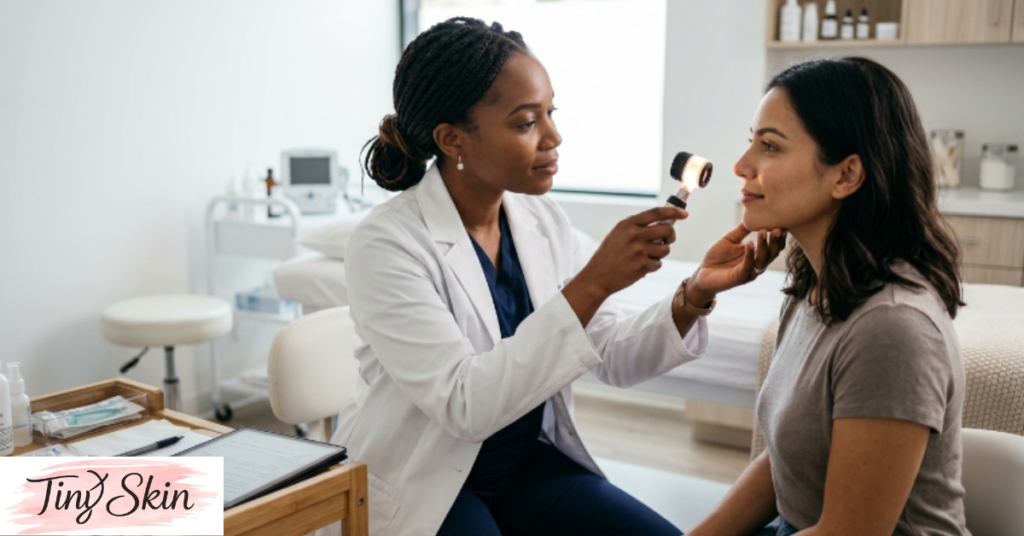
First appointments can feel a little nerve-wracking, especially if you’ve had less-than-ideal experiences in the past. Here’s what a good first visit typically looks like.
A Thorough Skin History
A good dermatologist will ask about your full skin history — not just the issue you came in for. This includes past reactions to products, your skincare routine, family history of skin conditions, and any scarring patterns you’ve noticed.
A Personalized Treatment Plan
Cookie-cutter advice is a red flag. If a dermatologist recommends the exact same routine to every patient regardless of skin tone or concern, that’s worth noting. A provider experienced with skin of color will factor in your melanin levels when recommending things like chemical peels, laser treatments, or retinoid strength — because these treatments carry different risks (like hyperpigmentation) for darker skin.
Realistic Expectations
In reality, most skin concerns don’t resolve overnight. A trustworthy dermatologist will set realistic timelines — for example, telling you that dark spots from acne can take three to six months to fade with consistent treatment, rather than promising instant results.
Common Skin Concerns Black Patients Should Discuss With Their Dermatologist
Let’s get into specifics. These are the concerns that come up most often, and that a black dermatologist near me search is usually trying to solve for.
Hyperpigmentation and Dark Spots
This is probably the number one concern. Because melanin-rich skin produces more pigment in response to inflammation, even minor irritation — a pimple, a bug bite, a scrape — can leave behind a dark mark that lingers for months. Ingredients like azelaic acid, niacinamide, and vitamin C can help, but consistency and sun protection matter more than any single product.
Keloid Scarring
Keloids — raised, thickened scars that extend beyond the original wound — are significantly more common in people with darker skin. If you’re prone to keloids, it’s important to mention this before getting piercings, tattoos, or even minor surgical procedures, since prevention is far easier than treatment.
Razor Bumps and Ingrown Hairs
Pseudofolliculitis barbae, commonly known as razor bumps, disproportionately affects people with curlier hair textures. A dermatologist familiar with this condition can recommend shaving techniques, laser hair removal options, or topical treatments that actually address the root cause instead of just masking symptoms.
Eczema and Dryness
Eczema can look different on darker skin — instead of the classic red patches often shown in medical textbooks, it may appear more purple, gray, or ashen, and is sometimes missed or misdiagnosed as a result. This is exactly where experience with skin of color makes a real difference.
Hair and Scalp Conditions
Traction alopecia, caused by tight hairstyles like braids or weaves, and central centrifugal cicatricial alopecia (CCCA) are conditions that a dermatologist unfamiliar with Black hair care practices might miss entirely. If you’re experiencing hair thinning, don’t wait — early intervention makes a huge difference in outcomes.
Home Care Tips to Support Your Dermatology Treatment
Your dermatologist visit is just one part of the equation. What you do at home matters just as much.
- Wear sunscreen daily, even if you have deep skin tone. This is one of the biggest myths in skincare — the idea that melanin alone protects against UV damage. It offers some protection, but not enough to skip sunscreen entirely.
- Avoid picking at breakouts. Easier said than done, we know. But picking is one of the fastest ways to trigger hyperpigmentation.
- Introduce new products slowly. Patch test anything new, and don’t layer five active ingredients at once hoping for faster results. Your skin barrier will thank you.
- Moisturize consistently, especially if you’re using retinoids or acids, which can be drying.
- Be patient with results. Skin cell turnover takes weeks, not days.
Dos and Don’ts When Searching for the Right Dermatologist
Do:
- Read multiple reviews, not just the top one or two.
- Ask about the provider’s specific experience with your skin concern during a phone consultation, if offered.
- Bring photos of past flare-ups to your appointment — skin conditions can look different depending on the day.
Don’t:
- Assume all dermatologists have equal training in treating skin of color.
- Settle for a provider who dismisses your concerns without explanation.
- Wait until a condition worsens to seek treatment — early intervention is almost always easier and cheaper.
Common Mistakes People Make When Choosing a Dermatologist
First things first: not checking board certification. Anyone can call themselves a “skin specialist,” but a board-certified dermatologist has completed rigorous, standardized training. Always verify this through the American Board of Dermatology’s website.
Another common mistake? Only searching for a black dermatologist near me once a problem has already gotten serious, rather than building a relationship with a provider proactively. Annual skin checks matter, especially since skin cancer, though less common in darker skin, is often diagnosed at a later, more dangerous stage in Black patients — often because it’s caught later.
When to See a Dermatologist Right Away
Some situations shouldn’t wait for a routine appointment. See a dermatologist promptly if you notice:
- A mole that’s changed shape, size, or color
- A wound that isn’t healing properly
- Sudden, unexplained hair loss
- Severe or worsening acne that’s not responding to over-the-counter treatment
- Any skin change accompanied by pain, bleeding, or rapid growth
Frequently Asked Questions
How do I find a black dermatologist near me if there aren’t any in my city?
If you can’t find one locally, look into telehealth dermatology platforms — many now offer virtual consultations with Black dermatologists regardless of location. The Black Derm Directory and Skin of Color Society both list providers who offer remote visits.
Is it necessary to see a Black dermatologist specifically, or just one experienced in skin of color?
Not necessarily. What matters most is that the provider has genuine, demonstrated experience treating melanin-rich skin. Many patients simply prefer a Black dermatologist for the added comfort and cultural understanding, but the priority should always be expertise.
Does insurance cover visits with a Black dermatologist?
Coverage depends on your insurance plan, not the dermatologist’s background. Check whether the provider is in-network, and confirm copay details before your visit.
What questions should I ask during my first dermatology appointment?
Ask about their experience treating your specific concern, what results you can realistically expect and by when, and what home care routine they’d recommend alongside any prescribed treatment.
Can a dermatologist help with dark spots from old acne scars?
Yes. Treatments like chemical peels, topical retinoids, and in some cases laser therapy can significantly fade post-inflammatory hyperpigmentation, though results take time and consistency.
How often should I see a dermatologist for routine skin checks?
Most dermatologists recommend an annual full-body skin exam, though this can vary based on your personal and family history of skin conditions.
Final Thoughts
Finding the right dermatologist shouldn’t feel like a shot in the dark, and it definitely shouldn’t require settling for advice that doesn’t fit your skin. Whether you’re dealing with stubborn dark spots, scalp concerns, or just want a provider who understands your skin from the first appointment, taking the time to search for a black dermatologist near me — or a provider genuinely experienced in treating skin of color — is worth the effort.
Start with the directories mentioned above, ask for referrals, and don’t be afraid to switch providers if something doesn’t feel right. Your skin deserves care that’s informed, respectful, and tailored to you. As always, this article is meant to inform, not replace professional medical advice — when in doubt, consult a board-certified dermatologist about your specific skin concerns.

