
Late at night, staring at a fresh breakout in the bathroom mirror, a lot of people reach for the same thing: that brown bottle of rubbing alcohol sitting in the medicine cabinet. It’s cheap, it’s already in the house, and it definitely feels like it’s doing something the second it touches your skin. That sharp sting? Surely that means it’s killing the pimple, right?
Not exactly. And if you’ve been using rubbing alcohol for acne, you’re not alone — but you might be doing more harm than good without realizing it.
This is one of those skincare habits that gets passed down from generation to generation, or picked up from some old forum post, without anyone really questioning whether it’s a good idea. So let’s actually break it down: what rubbing alcohol does to acne-prone skin, why it seems to work at first, why dermatologists generally advise against it, and what you should be using instead if you want real, lasting results.
By the end of this article, you’ll know exactly where rubbing alcohol fits (if anywhere) in an acne routine — and what actually clears breakouts without wrecking your skin barrier in the process.
What Is Rubbing Alcohol, Exactly?
Before we get into whether rubbing alcohol for acne is a smart move, it helps to know what’s actually in the bottle.
Rubbing alcohol is typically isopropyl alcohol diluted with water, usually somewhere between 60% and 91% concentration. It’s sold as a household antiseptic — the kind of thing used to disinfect cuts, clean thermometers, or wipe down surfaces. It’s not formulated for facial skin. It was never meant to be.
That distinction matters a lot more than most people realize. Just because something is antibacterial doesn’t mean it belongs on your face. Bleach is antibacterial too, and nobody’s dabbing that on a pimple.
Why People Turn to Rubbing Alcohol for Acne in the First Place
Here’s the thing — the appeal makes sense on the surface. Rubbing alcohol dries out oil almost instantly, and for a lot of people, oily skin feels directly connected to breakouts. So when a pimple pops up, the logic goes: dry it out, kill the bacteria, done.
There’s also that immediate sensory feedback. The tingling, slightly burning sensation tricks your brain into thinking the product is “working.” Sound familiar? A lot of harsh skincare products rely on that same psychological trick — if it stings, it must be effective. In reality, that sting is often just irritation, not progress.
Add in the fact that rubbing alcohol is inexpensive and already sitting in most households, and it’s easy to see why it became a go-to emergency fix for so many people, especially teenagers dealing with their first serious breakouts.
Does Rubbing Alcohol Actually Help Acne?
This is where things get complicated. In the very short term, rubbing alcohol can:
- Reduce surface oil almost immediately
- Kill some surface bacteria on contact
- Make a pimple look slightly less red or inflamed for a few hours
But here’s what it doesn’t do: it doesn’t address the actual causes of acne, which typically involve clogged pores, excess sebum production deeper in the skin, hormonal factors, and bacteria that live below the surface — not just on top of it.
So while rubbing alcohol for acne might offer a temporary cosmetic improvement, it’s not treating the breakout at its root. It’s more like turning off a smoke alarm instead of putting out the fire.
The Short-Term Fix vs. Long-Term Damage Problem
This is a mistake a lot of people make: confusing “it feels like it’s working” with “it’s actually fixing the problem.” Rubbing alcohol strips oil so aggressively that your skin often overcompensates by producing even more sebum to make up for the sudden dryness. That can lead to a frustrating cycle — dry, tight skin during the day, followed by an oily rebound a few hours later, followed by more breakouts.
Why Dermatologists Generally Advise Against It
If you’ve ever mentioned using rubbing alcohol for acne to a dermatologist, chances are you got a raised eyebrow. There’s a reason for that.
Rubbing alcohol is what’s called a “damaging” or “drying” antiseptic when used on facial skin. It doesn’t just remove excess oil — it disrupts the skin barrier, the protective layer that keeps moisture in and irritants out. Once that barrier is compromised, skin becomes more vulnerable, not less.
Common issues linked to regular rubbing alcohol use on the face include:
- Excessive dryness and flaking
- Redness and visible irritation
- A weakened moisture barrier, which can worsen sensitivity over time
- Increased risk of post-inflammatory hyperpigmentation, especially on darker skin tones
- Rebound oiliness from stripped, overcompensating skin
- Micro-tears or increased sensitivity to sunlight and other products
None of this means rubbing alcohol is “toxic” or dangerous in the way some scare-tactic articles online might suggest. It’s a legitimate antiseptic for wounds and surfaces. The issue is context — facial, acne-prone skin is simply a different environment than a cut on your knee, and it needs to be treated differently.
What Happens to Your Skin Barrier When You Use It Too Often
It’s worth slowing down on this point, because it’s the real crux of the issue.
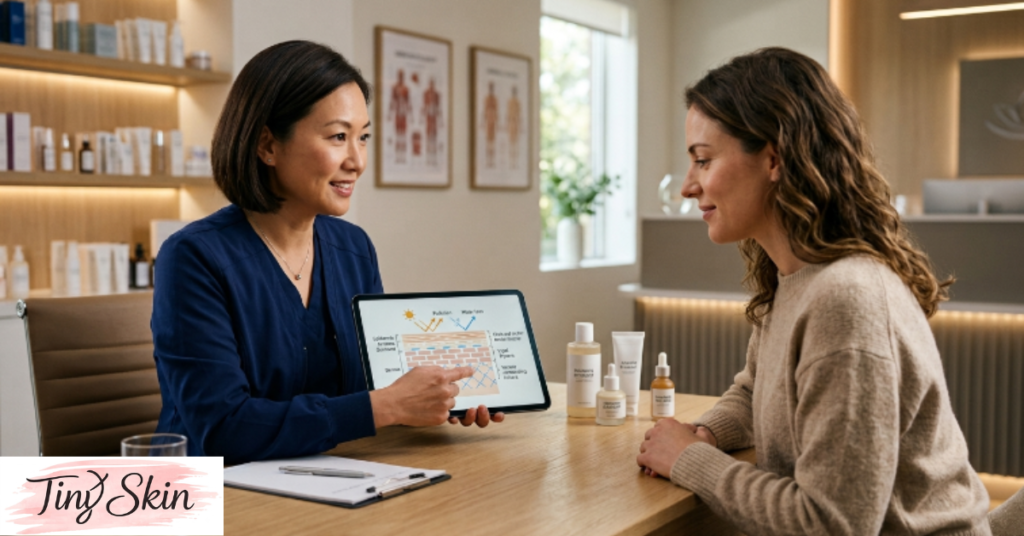
Your skin barrier is made up of lipids — fats that hold skin cells together and keep everything sealed and protected. Alcohol is a solvent. It dissolves those lipids on contact. That’s exactly why it works so well as a disinfectant — but it’s also exactly why it’s rough on skin that already tends to be sensitive or inflamed.
Once the barrier is compromised, acne-prone skin often gets worse, not better, because:
- Inflammation increases, which can make active breakouts more painful and visible
- Bacteria and environmental irritants penetrate more easily
- The skin’s natural healing process slows down
- Existing acne scars and marks may take longer to fade
If you’ve noticed your skin looking more irritated, patchy, or reactive after using rubbing alcohol on breakouts, this is likely why.
Safer, More Effective Alternatives to Rubbing Alcohol for Acne
The good news? You don’t need harsh solvents to get clear skin. There are ingredients that are actually formulated for acne-prone skin, backed by real research, and far gentler on your barrier.
Salicylic Acid
A beta-hydroxy acid that penetrates into the pore lining, helping dissolve the buildup of oil and dead skin cells that leads to clogged pores in the first place. It’s one of the most reliable over-the-counter acne ingredients out there, and it doesn’t come with the same barrier-stripping side effects as rubbing alcohol.
Benzoyl Peroxide
This targets acne-causing bacteria directly and reduces inflammation. Start with a lower concentration (2.5% to 5%) if you’re new to it — higher percentages don’t necessarily work faster, they just tend to irritate skin more.
Niacinamide
Great for people whose skin gets irritated easily. It helps calm redness, supports the skin barrier, and can help regulate oil production over time without stripping the skin.
Tea Tree Oil (Properly Diluted)
Often mentioned as a “natural” alternative, and there’s some research supporting its antibacterial properties. That said, it still needs to be diluted and patch-tested — undiluted tea tree oil can irritate skin almost as much as alcohol can.
Dos and Don’ts When Dealing With Breakouts
Do:
- Cleanse with a gentle, non-stripping cleanser twice a day
- Spot-treat with salicylic acid or benzoyl peroxide
- Moisturize, even if your skin is oily — dehydrated skin often produces more oil, not less
- Use sunscreen daily, especially if you’re using active ingredients
- Be patient — most acne treatments take 4 to 6 weeks to show real results
Don’t:
- Reach for rubbing alcohol, toothpaste, or lemon juice as spot treatments
- Pick or pop pimples, which increases scarring risk
- Over-exfoliate in an attempt to speed things up
- Layer too many active ingredients at once
- Skip moisturizer because your skin feels oily
Common Mistakes People Make When Treating Acne at Home
A lot of frustration around acne comes from well-meaning but misguided habits. Beyond rubbing alcohol, here are a few other patterns worth rethinking:
Switching products too often. If you try a new treatment for three days and move on because you don’t see instant results, you’re not giving your skin enough time to actually respond.
Treating acne like it’s purely a hygiene issue. Acne isn’t caused by dirty skin — it’s largely driven by hormones, genetics, and oil production. Over-washing or over-scrubbing tends to backfire.
Ignoring the rest of the routine. Spot treatments only go so far. A consistent cleanser, moisturizer, and sunscreen routine does more heavy lifting than most people give it credit for.
DIY remedies from social media. Toothpaste, baking soda, apple cider vinegar, and yes, rubbing alcohol — these trends resurface constantly because they’re cheap and accessible, not because they’re effective.
How to Prevent Breakouts Before They Start
Treating acne is one thing; preventing it is a longer game, but it’s usually more sustainable.
- Stick to a consistent routine rather than switching products constantly
- Change pillowcases every few days to reduce bacteria buildup against your skin
- Avoid touching your face throughout the day
- Manage stress where you can — cortisol spikes are genuinely linked to breakouts
- Watch your skincare and makeup labels for “non-comedogenic” formulas
- Don’t skip sunscreen, since sun damage can worsen post-acne marks and inflammation
None of this is glamorous advice, but it’s the boring consistency that actually moves the needle over time.
When to See a Dermatologist
If you’ve tried consistent, gentle treatment for 8 to 12 weeks and you’re not seeing improvement — or if your acne is cystic, painful, or leaving noticeable scarring — it’s genuinely worth booking a dermatologist appointment. Some forms of acne, particularly hormonal or cystic acne, respond much better to prescription treatments like topical retinoids, oral medications, or professional extractions than anything available over the counter.
There’s no shame in needing backup here. Acne is a medical condition, not a personal failing, and dermatologists deal with it every single day.
Frequently Asked Questions
Is rubbing alcohol good for popping pimples?
Not really. While it may kill some surface bacteria, using rubbing alcohol for acne after popping a pimple can irritate the open skin further and slow down healing. A gentle antiseptic or spot treatment with salicylic acid is a safer choice.
Can rubbing alcohol cause acne scars?
Indirectly, yes. Because it irritates skin and disrupts the barrier, it can increase the likelihood of prolonged redness or post-inflammatory hyperpigmentation, especially if used repeatedly on the same spot.
How often is it safe to use rubbing alcohol on acne?
Dermatologists generally recommend avoiding it altogether for facial acne. Occasional, very light use might not cause visible harm for everyone, but consistent use tends to worsen breakouts over time rather than improve them.
What can I use instead of rubbing alcohol for pimples?
Salicylic acid, benzoyl peroxide, and niacinamide are all more effective, skin-friendly alternatives that target acne without stripping the skin barrier.
Does rubbing alcohol dry out acne fast?
It dries out the surface quickly, but that’s not the same as clearing the acne. Often, the skin rebounds with extra oil production, which can lead to more breakouts down the line.
Is isopropyl alcohol the same as rubbing alcohol for skin care?
Yes, isopropyl alcohol is the main active ingredient in most rubbing alcohol products. Regardless of the name on the label, it’s still too harsh for regular use on acne-prone facial skin.
Final Thoughts
At the end of the day, using rubbing alcohol for acne is one of those quick fixes that feels effective but tends to cause more problems than it solves. It dries out the skin, disrupts the natural barrier, and often leads to a frustrating cycle of irritation and rebound oiliness — without actually addressing what’s causing the breakouts in the first place.
The good news is that clearer skin doesn’t require harsh, medicine-cabinet shortcuts. A consistent routine built around proven ingredients like salicylic acid, benzoyl peroxide, and niacinamide, paired with good habits like moisturizing and wearing sunscreen, will get you far better results over time. And if things aren’t improving after a few months, a dermatologist can help you figure out what’s really going on.
Your skin didn’t get this way overnight, and it won’t clear up overnight either — but with the right approach, it will get there.

