
Introduction
If your periods keep changing, your skin suddenly breaks out along your jawline, or new hair appears where it didn’t before, you’re not imagining things. These can all be PCOS symptoms, and they affect millions of women worldwide, including many across Russia who often go undiagnosed for years.
Polycystic Ovary Syndrome (PCOS) is one of the most common hormonal conditions in women of reproductive age. However, its symptoms are frequently mistaken for stress, diet, or “just genetics.” That delay in recognition can mean years of frustration.
This guide breaks down the real, evidence-based signs of PCOS, explains how it shows up on your skin, and helps you understand when it’s time to talk to a doctor.
What Is PCOS? A Quick Overview
Polycystic Ovary Syndrome is a hormonal disorder that affects how the ovaries work. It’s one of the leading causes of irregular ovulation in women aged 15 to 45. Despite the name, many women with PCOS don’t actually have cysts on their ovaries at all.
Doctors describe PCOS as a syndrome because it involves a cluster of symptoms rather than one single cause. It typically involves a combination of elevated androgens (male hormones present in all women), irregular ovulation, and metabolic changes like insulin resistance.
Why PCOS Is Often Misunderstood
Many women assume PCOS only affects fertility. In reality, it influences skin, hair, weight, mood, and long-term metabolic health too.
How Common Is PCOS?
Gynecologists and endocrinologists widely consider PCOS one of the most frequently diagnosed hormonal conditions in women of childbearing age, though exact rates vary by population and diagnostic criteria used.
PCOS Is a Spectrum, Not One Fixed Pattern
Symptoms range from mild to severe. Some women have very obvious signs; others have subtle ones that build up gradually over years.
Common PCOS Symptoms You Shouldn’t Ignore
Recognizing PCOS symptoms early can help you seek treatment before complications develop. Symptoms vary from woman to woman, but certain patterns appear frequently.
Menstrual Cycle Changes
Irregular periods are often the first noticeable sign. This can include:
- Cycles longer than 35 days
- Fewer than 8 periods per year
- Unpredictable bleeding patterns
- Very light or unusually heavy flow
Excess Hair Growth (Hirsutism)
Elevated androgens can cause coarse, dark hair to grow on the face, chest, or back. This affects a significant portion of women diagnosed with PCOS.
Weight and Metabolic Symptoms
Many women with PCOS experience:
- Difficulty losing weight, especially around the abdomen
- Sugar cravings linked to insulin resistance
- Fatigue after meals
Additionally, some women notice hair thinning on the scalp, a pattern sometimes called female-pattern hair loss.
PCOS and Skin: What Your Face Is Telling You
Skin is often one of the most visible indicators of hormonal imbalance. Dermatologists frequently see patients whose skin concerns turn out to be linked to an underlying hormonal condition like PCOS.
Hormonal Acne Along the Jawline
Unlike typical teenage acne, PCOS-related acne tends to appear along the jawline, chin, and lower cheeks. It’s often deep, cystic, and resistant to standard over-the-counter treatments.
Uneven Skin Texture and Oiliness
Excess androgens increase oil (sebum) production. This can lead to:
- Enlarged pores
- Uneven skin texture
- Persistent shine, especially in the T-zone
Darkened Skin Patches (Acanthosis Nigricans)
Some women develop dark, velvety patches of skin, usually on the neck, armpits, or groin. This is strongly associated with insulin resistance and should never be ignored.
📌 Key Takeaways
- Irregular or missed periods are often the earliest warning sign.
- Hormonal acne along the jawline is different from typical breakouts.
- Excess facial or body hair growth (hirsutism) is linked to elevated androgens.
- Dark, velvety skin patches can signal insulin resistance.
- Weight changes and fatigue frequently accompany PCOS.
- A proper diagnosis requires blood tests and a doctor’s evaluation, not just symptom-spotting.
PCOS Symptoms vs. Other Conditions: How to Tell the Difference
Many PCOS symptoms overlap with other hormonal or skin conditions, which is why self-diagnosis can be misleading. The table below compares common symptoms.
Table 1: PCOS Symptoms vs. Similar Conditions
| Symptom | PCOS | Thyroid Disorder | Simple Adult Acne |
|---|---|---|---|
| Irregular periods | Very common | Possible | Not typical |
| Jawline/chin acne | Common, often cystic | Rare | Possible, usually milder |
| Excess facial/body hair | Common (hirsutism) | Rare | Not related |
| Rapid weight change | Gradual weight gain | Weight gain or loss | Not related |
| Fatigue | Common | Very common | Not related |
| Dark skin patches | Possible | Rare | Not related |
Why Professional Testing Matters
Because symptoms overlap, doctors use blood tests, ultrasounds, and clinical criteria, not appearance alone, to diagnose PCOS accurately.
Common Misdiagnosis Patterns
Women are sometimes told their acne or weight changes are “just lifestyle,” delaying proper hormonal evaluation for years.
Why Early Differentiation Helps Treatment
Correctly identifying PCOS versus another condition changes the entire treatment approach, from medication to skincare routine.
Hormonal Causes Behind PCOS Symptoms
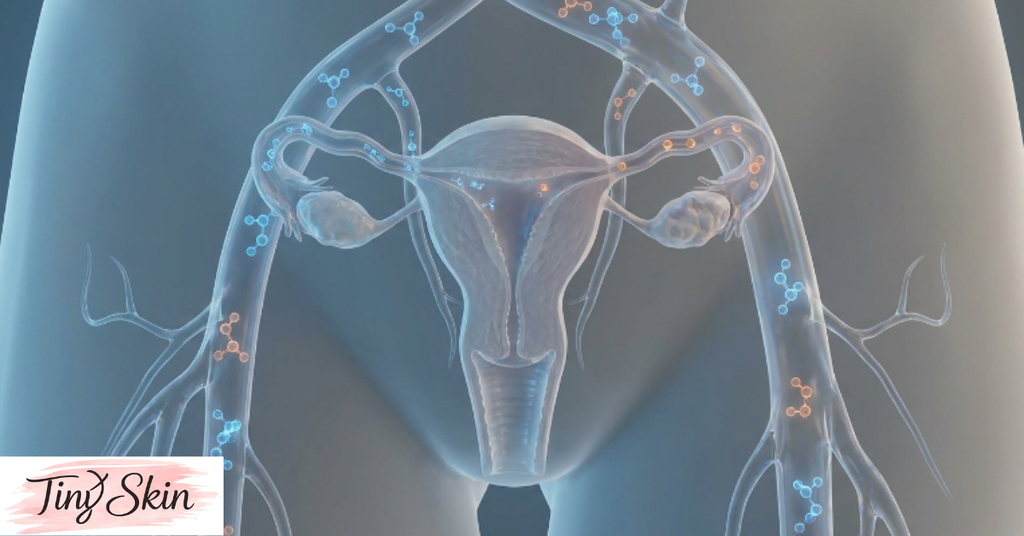
Understanding what drives PCOS symptoms helps explain why treatment often targets hormones directly rather than just the visible symptoms.
Elevated Androgens
Androgens like testosterone are naturally present in women in small amounts. In PCOS, levels run higher than typical, which drives acne, hirsutism, and hair thinning.
Insulin Resistance
Many women with PCOS have cells that respond less efficiently to insulin. The body compensates by producing more insulin, which can further raise androgen levels, creating a cycle that worsens skin and metabolic symptoms.
Chronic Low-Grade Inflammation
Research has linked PCOS to mild, ongoing inflammation, which may contribute to both skin issues and long-term metabolic risk.
Moreover, genetics play a role. Women with a mother or sister who has PCOS face a higher likelihood of developing it themselves.
How Doctors Diagnose PCOS
There isn’t one single test for PCOS. Instead, doctors typically rely on a combination of clinical criteria, most commonly the Rotterdam criteria, which requires at least two of three features to be present.
The Three Diagnostic Criteria
- Irregular or absent ovulation
- Clinical or lab-confirmed signs of high androgens
- Polycystic-appearing ovaries on ultrasound
Blood Tests Typically Ordered
Doctors often check testosterone levels, thyroid function, and insulin or glucose markers to rule out overlapping conditions.
Why Self-Diagnosis Isn’t Reliable
Because symptoms mimic other hormonal disorders, an accurate diagnosis requires professional evaluation, not just symptom-checking online.
Managing PCOS Symptoms Naturally and Medically
While PCOS has no single cure, many symptoms can be managed effectively with the right combination of lifestyle changes and medical treatment.
Lifestyle Approaches
- Balanced, lower-glycemic meals to help manage insulin levels
- Regular physical activity, even moderate walking helps
- Consistent sleep schedule to support hormone regulation
- Stress management, since cortisol can worsen hormonal imbalance
Medical and Dermatological Treatments
Dermatologists and gynecologists often recommend a combined approach. The table below compares common treatment options.
Table 2: PCOS Symptom Management Options
| Symptom | Common Approach | Who Typically Recommends It |
|---|---|---|
| Irregular periods | Hormonal birth control or cycle regulation therapy | Gynecologist |
| Hormonal acne | Topical retinoids, targeted skincare, sometimes oral medication | Dermatologist |
| Excess hair growth | Anti-androgen medication, laser hair reduction | Dermatologist/Endocrinologist |
| Insulin resistance | Diet changes, metformin (if prescribed) | Endocrinologist |
| Skin texture and oiliness | Gentle exfoliation, non-comedogenic products | Dermatologist |
Skincare Tips for Hormonal Skin
Choose non-comedogenic products, introduce exfoliation gradually to avoid irritation, and always pair active ingredients with sunscreen.
When to See a Doctor About PCOS Symptoms
Some signs call for prompt medical attention rather than a wait-and-see approach.
Red Flag Symptoms
- Periods absent for more than 3 months
- Sudden, severe acne unresponsive to treatment
- Rapid, unexplained weight gain
- New dark skin patches
What to Expect at Your First Appointment
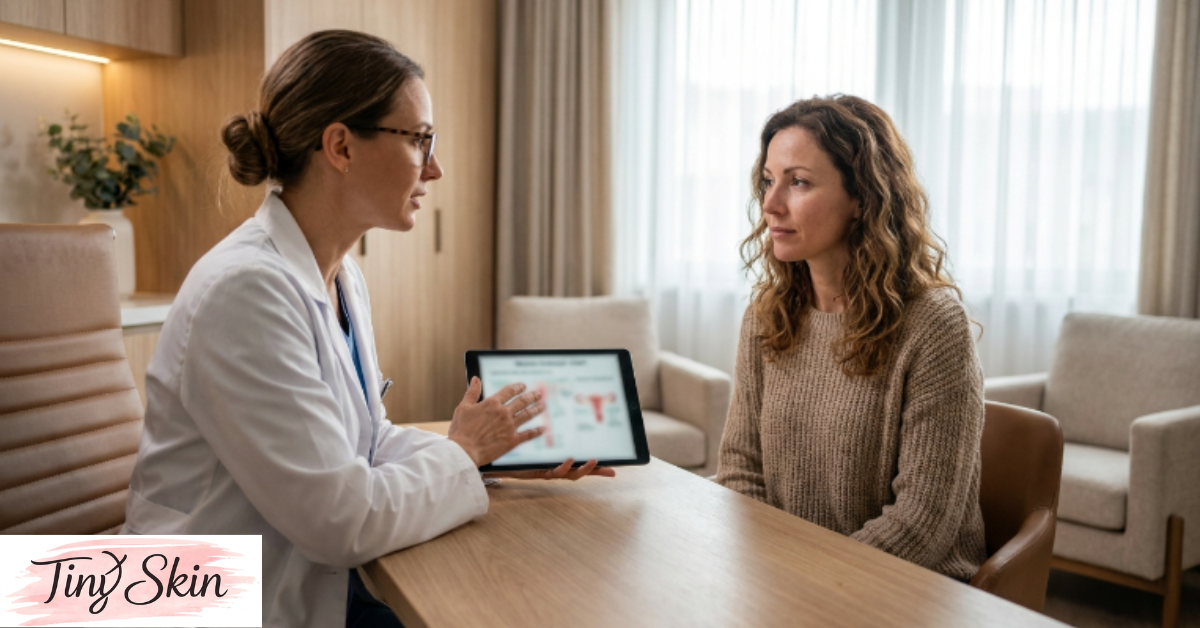
Your doctor will likely ask about your cycle history, review your skin and hair changes, and order blood work or an ultrasound.
Building a Long-Term Care Plan
PCOS is a long-term condition. However, with consistent monitoring, most women manage symptoms effectively and reduce long-term health risks.
FAQs
What are the earliest signs of PCOS?
The earliest signs are usually irregular periods, sudden jawline acne, and unexpected hair growth on the face or body. Some women also notice gradual weight gain or difficulty losing weight, even without changing their diet or activity level significantly.
Can you have PCOS without irregular periods?
Yes. While irregular periods are common, some women ovulate regularly but still have elevated androgens or polycystic ovaries. This is why doctors use multiple criteria, not just cycle regularity, to diagnose PCOS accurately.
Does PCOS acne look different from regular acne?
Often, yes. PCOS-related acne tends to cluster along the jawline and chin, appears cystic or deep, and frequently resists standard over-the-counter acne treatments. However, an accurate comparison requires dermatological evaluation.
Is PCOS the same as having ovarian cysts?
Not exactly. Despite the name, many women with PCOS don’t have visible cysts, and having ovarian cysts doesn’t automatically mean you have PCOS. The condition is defined by hormonal and metabolic patterns, not cysts alone.
Can lifestyle changes reduce PCOS symptoms?
Yes, for many women. A balanced diet, regular exercise, and stress management can improve insulin sensitivity and reduce some symptoms. However, lifestyle changes typically work best alongside medical guidance, not as a replacement for it.
Should I see a dermatologist or a gynecologist for PCOS symptoms?
Both, ideally. A gynecologist or endocrinologist typically manages the hormonal and metabolic side, while a dermatologist addresses skin and hair symptoms. Many women benefit from a coordinated care approach between specialists.
Conclusion
PCOS symptoms can show up gradually, through irregular periods, stubborn jawline acne, or unexpected hair changes, making them easy to dismiss at first. However, recognizing these patterns early gives you the best chance at effective management and long-term health.
If any of the symptoms described here sound familiar, don’t wait for them to worsen. Book an appointment with a gynecologist or dermatologist to get proper testing and a personalized treatment plan. Your skin and your hormones are both trying to tell you something, it’s worth listening.

