

Introduction
Noticing that your breasts look narrow, elongated, or unevenly shaped can feel confusing and isolating. Many women don’t even know there’s a medical name for it. Tubular breasts, also called tuberous breasts or constricted breast syndrome, are a natural variation in breast development that affects a meaningful number of women worldwide.
This condition isn’t caused by anything you did wrong, and it isn’t dangerous. However, it can affect self-confidence and how clothes and swimwear fit. In this guide, we’ll explain what tubular breasts are, why they develop, and what treatment options actually work — based on real medical understanding, not myths.
What Are Tubular Breasts?
A Brief Medical Definition
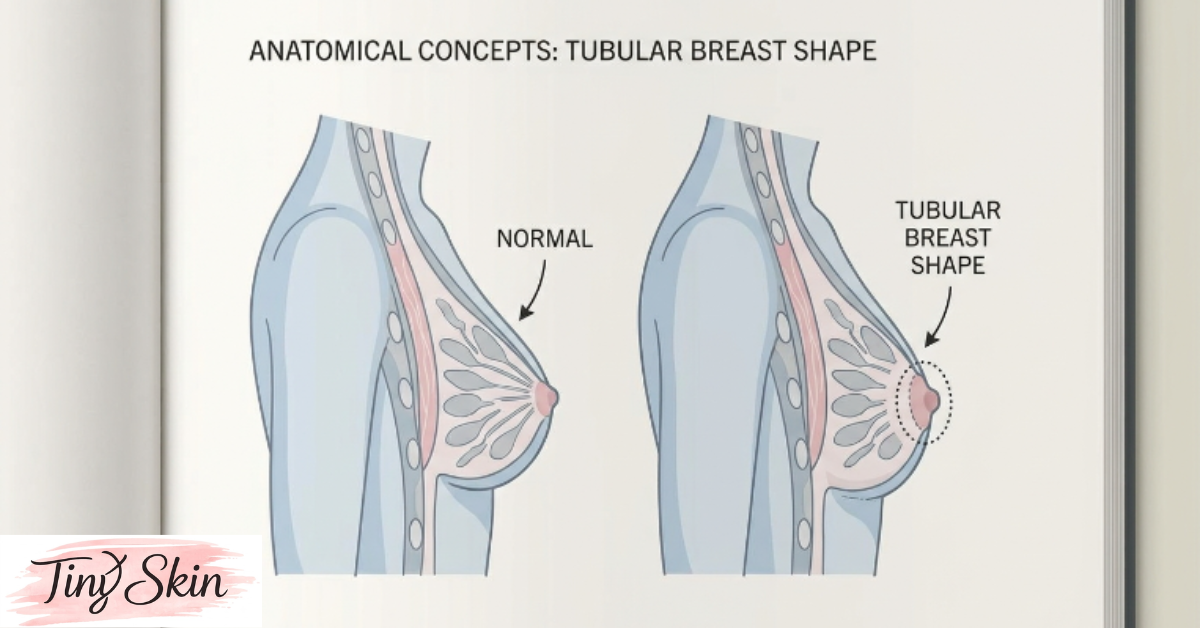
Tubular breasts describe a breast shape where the tissue develops in a narrow, tube-like form instead of the typical rounded shape. The breast base tends to be constricted, and the tissue often grows outward through the areola rather than filling out the lower breast.
Why the Name “Tuberous” Is Used
Doctors also call this condition tuberous breast deformity because the shape can resemble a tuber or root vegetable. This name is purely descriptive and doesn’t imply anything abnormal about a woman’s health.
How Common Is It?
Exact prevalence is hard to pin down since many mild cases go undiagnosed. Dermatologists and plastic surgeons note that tubular breasts exist on a spectrum, ranging from barely noticeable to more pronounced asymmetry. Mild variations are considered a normal part of human diversity in breast shape.
Additionally, tubular breasts can appear in one breast only or both, and severity often differs between the two sides.
What Causes Tubular Breasts?
Genetic and Developmental Factors
Most specialists agree tubular breasts result from how breast tissue develops during puberty. Specifically, the connective tissue that normally allows the breast to expand outward and downward may be tighter than usual, restricting growth into a rounded shape.
Hormonal Influences During Puberty
Hormones guide breast development from the first signs of puberty through the late teens. If glandular tissue grows unevenly during this window, it can result in the narrow, constricted base typical of tubular breasts.
Is It Hereditary?
There is no confirmed single genetic cause, but some women report that a mother or sister has a similar breast shape. This suggests a possible hereditary link, though more research is needed to confirm it definitively.
Importantly, tubular breasts are not linked to diet, exercise, weight, or anything a person can control during adolescence.
Common Signs and Symptoms
Visual Characteristics
Common features include:
- A narrow breast base with limited width
- Increased space between the breasts
- A “droopy” or elongated appearance even in younger women
- Minimal breast tissue in the lower pole (underside)
Areola-Related Changes
- Puffy, enlarged, or herniated areolas
- Areolas that appear disproportionately large compared to breast size
- Nipple projection that seems more pronounced than the surrounding tissue
Asymmetry Between Breasts
It’s common for one breast to be more affected than the other. As a result, many women with tubular breasts also deal with noticeable size or shape asymmetry, which can add to self-consciousness.
How Tubular Breasts Are Diagnosed

Physical Examination
A plastic surgeon or breast specialist typically diagnoses tubular breasts through a visual and physical exam. They assess the breast base width, skin envelope, areola size, and the degree of lower pole constriction.
Photographic Assessment
Doctors often take standardized photos from multiple angles. This helps document the degree of constriction and plan any future treatment with precision.
Ruling Out Other Conditions
Because breast asymmetry can stem from other causes, such as scoliosis-related chest wall differences or prior injury, a thorough evaluation helps confirm that tubular breast deformity — rather than another condition — is responsible for the appearance.
Consulting a board-certified specialist ensures an accurate diagnosis rather than self-diagnosing from online photos alone.
Types and Grades of Tubular Breast Deformity
Plastic surgeons commonly classify tubular breasts using a grading system based on how much of the lower breast is affected.
| Grade | Description | Typical Presentation |
|---|---|---|
| Grade I | Mild constriction, lower-inner quadrant affected | Slight narrowing, often barely noticeable |
| Grade II | Both lower quadrants affected, adequate skin | Moderate constriction with some areola puffiness |
| Grade III | Severe constriction, skin envelope deficient | Pronounced tubular shape, significant areola herniation |
| Grade IV | Minimal breast base, severe deficiency | Extremely narrow base, most complex to correct |
Grade I: Mild Cases
These are the most subtle and often don’t require treatment unless the woman personally wants a change in appearance.
Grade II and III: Moderate to Significant Cases
These grades usually show visible areola herniation and asymmetry, and many women seek surgical correction at this stage.
Grade IV: Severe Cases
This is the most complex form, often requiring staged surgical approaches for the best results.
Key Takeaways
- Tubular breasts are a natural variation in breast shape, not a disease or disorder.
- The condition results from constricted connective tissue during puberty, not lifestyle factors.
- Symptoms range from mild narrowing to significant areola herniation and asymmetry.
- Diagnosis is graded on a scale from I (mild) to IV (severe).
- Treatment options include surgical correction, non-surgical support, and psychological care.
- A board-certified plastic surgeon should always confirm diagnosis and discuss options.
Treatment Options for Tubular Breasts
Surgical Correction
Surgery is the most effective way to reshape tubular breasts. Common techniques include:
- Breast augmentation surgery using implants to fill out the lower pole
- Tissue reshaping, where the surgeon releases constricted tissue bands internally
- Areola reduction, to correct herniation and resize enlarged areolas
- Fat grafting, transferring fat from another body area to smooth contours
Many surgeons combine two or more of these techniques in a single procedure, depending on the grade of deformity.
Non-Surgical Approaches
For milder cases, some women choose:
- Supportive or padded bras to create a more rounded appearance
- Consultation-only monitoring, especially for teenagers whose breasts are still developing
- Postponing decisions until breast development is fully complete, usually by the late teens
What to Expect From Recovery
Recovery from tuberous breast correction surgery typically involves:
- Several days of rest before returning to light activity
- A few weeks before resuming strenuous exercise
- Swelling and final results settling in over a period of months
Your surgeon will provide a personalized recovery timeline based on the specific technique used.
Emotional Impact and Coping Strategies
Why It Affects Self-Esteem
Many women describe feeling self-conscious in swimwear, fitted clothing, or intimate situations because of tubular breast shape. This emotional impact is valid and shouldn’t be dismissed as purely cosmetic.
Talking to a Professional
A mental health counselor or therapist can help process feelings of body image distress, particularly if concerns are affecting daily confidence or relationships.
Connecting With Others
Online communities and support groups allow women to share experiences with tubular breasts. Hearing that this is a common, manageable condition often reduces feelings of isolation.
Moreover, understanding that this is a recognized medical condition — not a personal flaw — can be an important step toward self-acceptance or informed treatment decisions.
Choosing the Right Specialist
Look for Board Certification
Always choose a board-certified plastic surgeon with specific experience treating tubular breast deformity, since it requires specialized surgical skill compared to standard augmentation.
Ask About Before-and-After Cases
Request to see previous patient results for tuberous breast correction specifically. This helps set realistic expectations for your own outcome.
Comparing Treatment Approaches
| Factor | Surgical Correction | Non-Surgical Management |
|---|---|---|
| Best for | Moderate to severe cases (Grade II-IV) | Mild cases (Grade I) or teens still developing |
| Results | Permanent reshaping | Temporary visual adjustment only |
| Recovery time | Several weeks | None required |
| Cost | Higher, one-time procedure | Lower, ongoing (bras, garments) |
| Addresses areola herniation | Yes | No |
Discussing both pathways with a specialist ensures you choose the option that fits your goals, budget, and comfort level.
FAQs
Are tubular breasts a serious medical condition?
No. Tubular breasts are a variation in breast shape, not a disease. They don’t pose health risks, though some women choose treatment for cosmetic or psychological reasons related to self-confidence.
Can tubular breasts fix themselves without surgery?
Breast shape can continue changing until development is complete in the late teens. However, once fully developed, tubular breasts typically don’t change shape without surgical intervention.
Does breastfeeding work normally with tubular breasts?
Many women with tubular breasts breastfeed successfully, though some experience reduced glandular tissue, which can affect milk supply. Discussing this with a lactation consultant beforehand is recommended.
At what age can tuberous breast correction surgery be done?
Surgeons generally recommend waiting until breast development is complete, often around age 18, unless a doctor advises otherwise for medical reasons.
Is tubular breast correction covered by insurance?
Coverage varies. Some insurers cover correction if there’s documented physical or psychological impact, while others classify it as elective cosmetic surgery. Always check with your provider directly.
How do I know if I have tubular breasts or just naturally asymmetrical breasts?
Only a qualified specialist can confirm this through a physical exam. Tubular breasts have specific features like a constricted base and areola herniation that differ from general asymmetry.
Conclusion
Tubular breasts are a natural, non-harmful variation in breast development, not a flaw or something to feel ashamed of. Understanding the causes, signs, and available treatments can help you make informed, confident decisions about your body.
Whether you choose surgical correction, supportive garments, or simply want reassurance, the most important step is speaking with a qualified specialist. Book a consultation with a board-certified plastic surgeon today to discuss your options and find the path that feels right for you.

